Cultivating Resilience: Institutional Seed Development and Climate Adaptation in the Kurdistan Region
In Erbil, a biological re-engineering is underway. Scientists vet 385 varieties of wheat and barley, some for up to twelve years, in a methodical pursuit of drought resistance. It is a slow, scientific hedge against the rising volatility of a warming, water-stressed world.
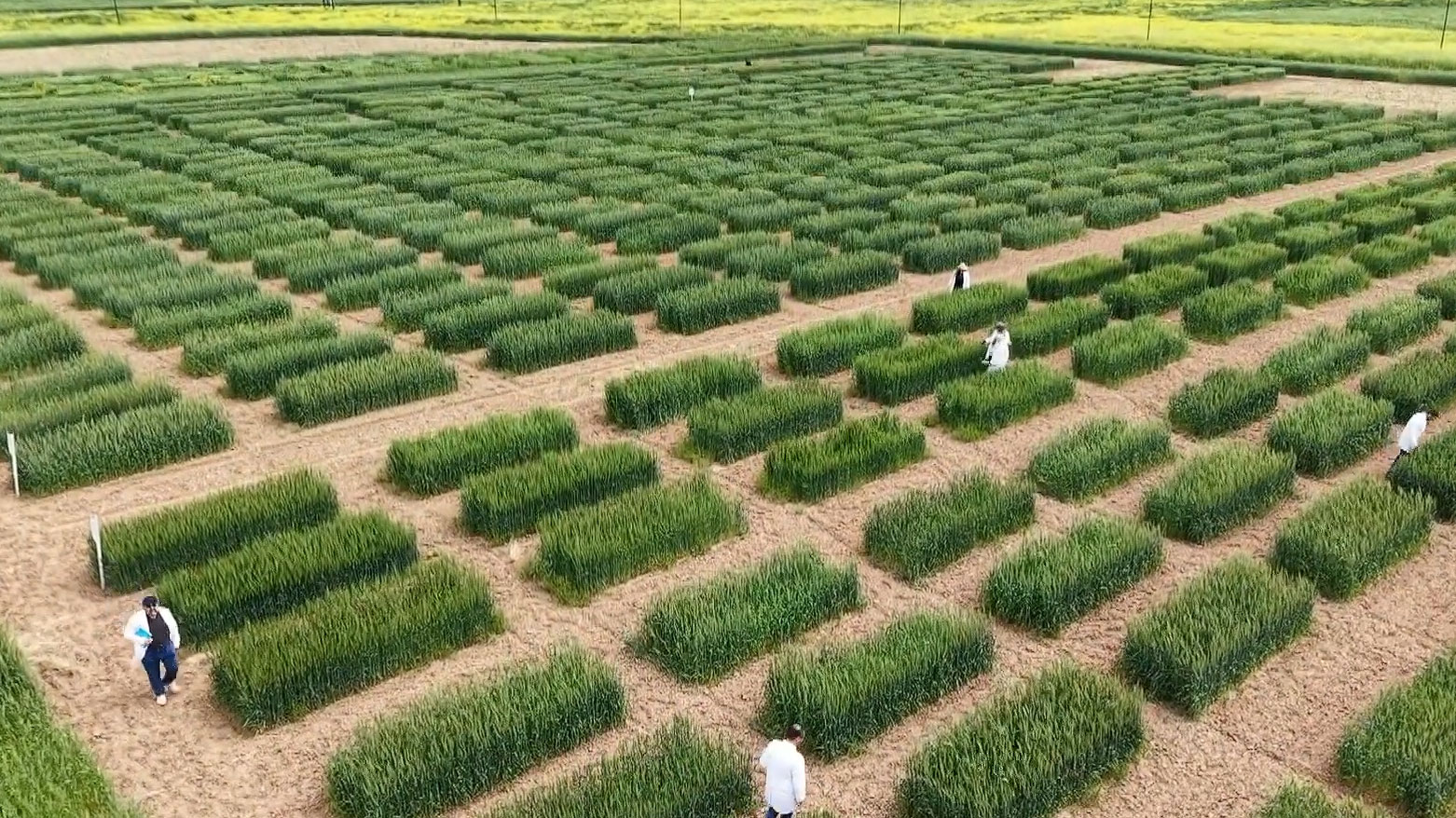
ERBIL (Kurdistan24) - The Middle East is currently facing an era of severe and compounding climate volatility, pushing agricultural resilience to the forefront of regional stability. In environments defined by shifting rainfall patterns and rising temperatures, seed sovereignty has transitioned from a localized agronomic concern to a central pillar of global food security strategy.
Across regional governance systems, the development of institutional science is increasingly deployed not merely as a technical pursuit, but as a critical governance tool designed to stabilize domestic food supplies and insulate economies from escalating environmental shocks.
In the Kurdistan Region, a sustained scientific intervention is currently underway to re-engineer the biological foundation of the local agricultural sector.
Overseen by the Directorate of Agricultural Research in Erbil, researchers are conducting rigorous, multi-year trials on 385 distinct varieties of wheat and barley crops.
According to recent reporting by Kurdistan24's correspondent Azar Farooq on Tuesday, this research operates across a 15-dunam (3.7 acre) expanse of dedicated agricultural land.
The breeding and testing cycles, which range from three to twelve years per variety, are explicitly engineered to isolate traits for drought resistance, pest resilience, and broader climate adaptation. This methodical effort answers a systemic regional requirement: the need to secure reliable agricultural yields amid critical rainfall deficiencies.
The Kurdistan Region Government (KRG) utilizes its regional agricultural directorates as the primary incubators for crop experimentation. However, the ultimate regulatory objective of these institutions intersects directly with the broader Iraqi federal state.
Establishing formal, accredited seed types requires rigorous validation and subsequent registration with federal authorities in Baghdad. This bureaucratic bridge, from regional experimentation to federal certification, is critical. Seed certification regulates the agronomic integrity of commercial markets, ensuring that local agricultural economies are anchored by reliable, federally recognized genetics rather than vulnerable imported strains.
What appears as crop experimentation is, in effect, a long-term strategy for agricultural sovereignty under climate constraint.
By investing heavily in the localized development of climate-adapted seed varieties, the KRG is systematically seeking to reduce structural dependency on imported agricultural inputs.
This governance logic utilizes agricultural science infrastructure to embed institutional resilience into the agrarian economy.
Developing domestic capacity to breed, test, and distribute proprietary seed strains functions as a state-building mechanism, providing an institutional hedge against future supply chain disruptions and climate emergencies.
The daily execution of this strategy demands a synthesis of field observation and laboratory diagnostics.
Across the research site, scientists systematically monitor the architectural development of the crops in real time.
The field cultivation operates in strict tandem with precise laboratory analysis, where researchers verify the physical integrity and quality of the emerging crop spikes—or ears—while measuring baseline growth rates. This dual-track system enables researchers to identify structural vulnerabilities in the crops before they are approved for mass distribution.
This integrated approach is heavily focused on preventive intervention.
According to Sattar Abdullah, the head of the Planning Department in Agricultural Research, testing protocols are specifically designed to detect early indicators of dangerous plant pathogens, explicitly targeting threats such as nematodes and fungal diseases like rust.
When experimental crops display clear symptoms of infection and fail to respond to conventional agricultural treatments, the directorate initiates advanced technical interventions. Abdullah noted that researchers utilize targeted chemical seed treatments, such as the application of "Raxil," prior to planting.
This secondary protocol ensures that the final product distributed to farmers remains biologically safe and has survived rigorous stress-testing.
The institutional discipline required to manage this system is reflected in its lengthy temporal horizons.
Abd al-Samad Mohammed, the Director of Agricultural Research in Erbil, stated that the production of high-quality seeds is not an instantaneous regulatory process, but a deliberate, labor-intensive technical sequence.
Varieties are continually vetted to ensure they demonstrate an exceptional ability to tolerate rain deficiency and drought. Certain strains require up to a dozen years of continuous trials, while the absolute minimum baseline for any variety to be accredited and released to farmers is three years.
This methodical timeline has yielded verified regulatory outcomes. The KRG directorate has successfully registered eight distinct varieties of wheat seeds and two varieties of barley seeds with Iraq’s federal government, making them officially available to local farmers.
Furthermore, the directorate is currently preparing to register two additional seed varieties during the current calendar year. This expansion of federally accredited seed types demonstrates the institutional maturity of the Erbil directorate, framing its progress not as a sudden breakthrough, but as the accumulation of structural capacity aimed at local self-sufficiency.
Looking ahead, the trajectory of Erbil’s agricultural research outlines specific structural scenarios for the region. A continuous expansion of registered, drought-resistant varieties holds the potential to significantly elevate agricultural self-sufficiency within the Kurdistan Region, actively altering regional food dependency patterns.
If scaled successfully, these specialized seed systems could be integrated across the broader Iraqi agricultural sector, offering a functional blueprint for nationwide climate adaptation. However, these projections carry inherent systemic risks.
Should funding or administrative capacity falter, the compounding pace of Middle Eastern climate stress could outstrip the lengthy three- to twelve-year development cycles required to commercialize new seed strains, leaving local agrarian markets vulnerable to environmental shifts that move faster than institutional science.
Ultimately, the enduring viability of regional governance in a warming, water-stressed environment will depend upon the intersection of institutional science and temporal discipline, where the long horizon of agricultural resilience solidifies the very foundation of state capacity.