New Kirkuk Governor Reduces Deputy's Powers Days After Assuming Office
Days after assuming office, Kirkuk's new governor formally curtailed his deputy's authority, transferring control of the Property and Citizen Affairs departments back to the governor's office.
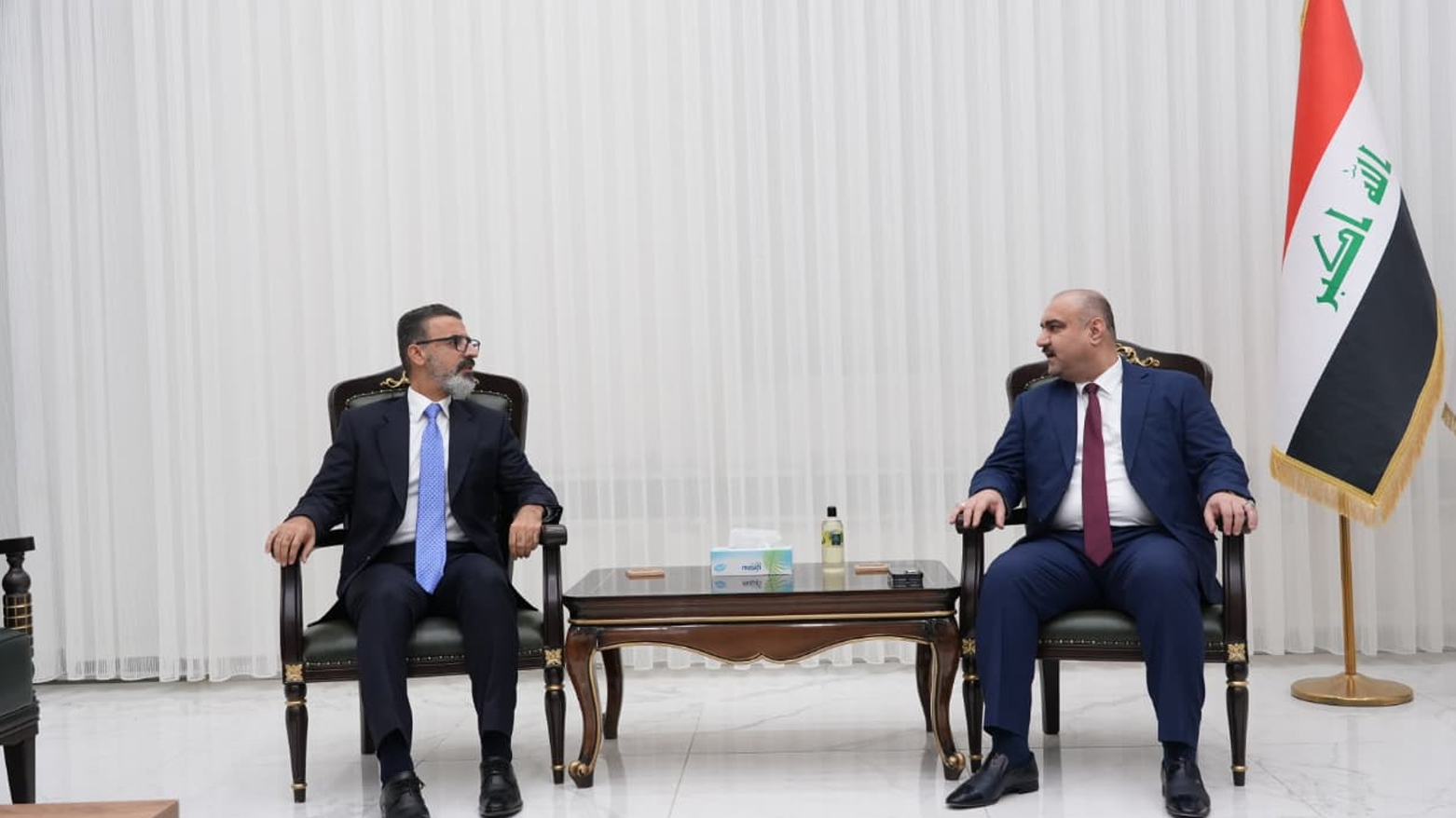
ERBIL (Kurdistan24) - The Governor of Kirkuk, Mohammed Samaan, has issued a new administrative order reducing a portion of the First Deputy Governor's powers within the governorate's administrative structure.
The decision, enacted on Sunday, officially separates both the "Property" and "Citizen Affairs" departments from the First Deputy Governor's office. Going forward, these critical local governance departments will be directly linked to, and managed by, the Kirkuk Governor's office.
The reduction of the deputy's authority marks the first major administrative recalibration by the newly installed Kirkuk administration. It reflects an immediate consolidation of executive power by the incoming governor, who assumed the post just days prior following a highly contested, multi-factional political agreement in Baghdad.
The transfer of departmental oversight reverses delegations made by the previous governor, indicating a sharp shift in how local resources and citizen services will be managed within the Kurdistani and demographically complex province.
Reversal of Delegated Powers
According to information obtained by Kurdistan24 from a source within the Kirkuk Governorate, the previous governor, Rebwar Taha, had transferred a portion of the governor's executive powers to the First Deputy's office before officially leaving his post.
The new Governor of Kirkuk, Mohammed Samaan, who represents the Turkmen Front and was appointed as part of a prior agreement with the Patriotic Union of Kurdistan (PUK), has formally decided to return those specific powers to the governorship.
Consequently, the authority has been taken back from Rebwar Taha, who currently serves as the Deputy Governor of Kirkuk under the newly established power-sharing arrangement.
This administrative step is framed within a broader context of changes initiated by the new Kirkuk administration, signaling the beginning of a new distribution of power and departmental management within the governorate's headquarters (Diwan).
The Governance Handover
The administrative reshuffle directly follows a fundamental restructuring of Kirkuk's local government. On Thursday, Apr. 16, 2026, the Kirkuk Provincial Council held an official meeting to formalize changes to the province's executive structure.
During the session, the council formally accepted the resignation of Rebwar Taha from his position as Governor of Kirkuk.
Subsequently, 12 out of the 14 attending council members voted to elect Mohammed Samaan, head of the Iraqi Turkmen Front, as the new Governor.
During the same meeting, the council appointed Nashat Shawez as Deputy Chairman of the Kirkuk Provincial Council, completing the council's legal and administrative framework.
The transition materialized a political pact originally negotiated on Aug. 10, 2024, at Baghdad's Rasheed Hotel. That agreement was structured through an alliance between the PUK, the Babylon Movement, and a faction of Arab representatives.
The agreement outlined a rotational governance model for the province, which historically has struggled to achieve administrative consensus among its Kurdish, Arab, and Turkmen populations.
The Political Exchange and Structural Opposition
According to informed political sources, the rotation of the strategic provincial office was part of a geopolitical exchange designed to secure external legislative backing for the PUK's candidate in the Iraqi federal presidential election.
The arrangement, brokered alongside figures including Progress Party leader Mohammed al-Halbousi and Asa'ib Ahl al-Haq Secretary-General Qais al-Khazali, mandated that the PUK would surrender the governorship in exchange for legislative support to elect the new President of Iraq.
Under the established timeline of this agreement, the Turkmen component will govern Kirkuk for an initial period of seven months.
Following this term, the executive office is scheduled to transfer to a Sunni Arab representative, who will retain authority until the next provincial elections.
In compensation for relinquishing the governorship, the PUK secured several compensatory administrative and security positions within the province, including the post of Deputy Governor, the command of the Kirkuk Police Directorate, and the mayoralties of the Dibis and Daquq districts.
The Kurdistan Democratic Party (KDP) has categorically rejected the administrative handover and boycotted the provincial council session that installed the new governor.
KDP officials characterized the process as an "illegal" political exchange executed outside the will of the people of Kirkuk.
Ali Hussein, a KDP Politburo member, detailed the party's structural objections, arguing that the PUK bypassed the established post-2003 political principles of internal Kurdish consensus.
By relying on external political alliances to secure the federal presidency, the KDP asserts that the PUK empowered federal Arab and Turkmen parties to extract the Kirkuk governorship, thereby compromising the geopolitical standing and constitutional rights of the Kurdistan Region in the Kurdistani territories.
Soran Kamaran, Kurdistan24 correspondent, contributed to this report.