Afghan Allies Stranded in Qatar Face Uncertain Future Amid U.S. Policy Shift
Families evacuated after Taliban takeover warn of danger in return or relocation options
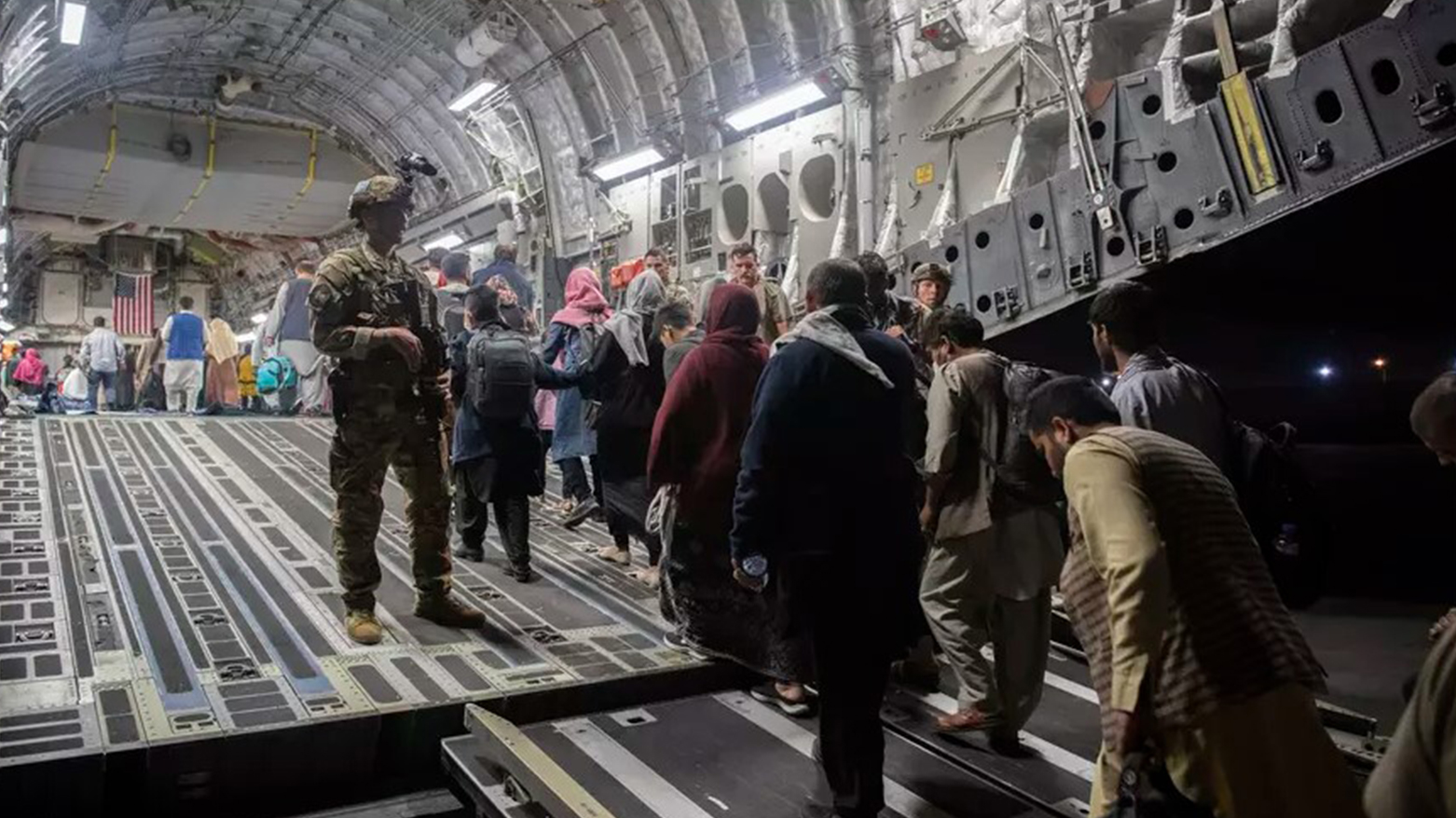
ERBIL (Kurdistan24) — More than 1,100 Afghan nationals who once supported U.S. forces remain stranded in limbo at a former American military base in Qatar, as shifting U.S. immigration policies leave their future increasingly uncertain.
The group, composed of interpreters, contractors, and their families, has spent over a year confined within Camp As Sayliyah (CAS) on the outskirts of Doha. Originally intended as a temporary transit site following the 2021 U.S. withdrawal from Afghanistan, the facility has effectively become a long-term holding camp after refugee processing was halted.
“We are all living in extreme anxiety. We feel that we are in limbo,” said Rasouly, a former interpreter who has been at the camp for 19 months, speaking by phone. Like others interviewed, he used a pseudonym due to fears of reprisals against relatives still in Afghanistan or jeopardizing resettlement prospects.
The uncertainty deepened after U.S. President Donald Trump paused refugee admissions in January 2025 and later suspended Afghan immigration cases altogether. With pathways to resettlement in the United States effectively closed, residents say they are left with no viable options.
Campaign groups now warn that Washington is considering a controversial plan to relocate the Afghans to the Democratic Republic of Congo, or alternatively encourage their return to Taliban-controlled Afghanistan.
Advocacy organization AfghanEvac confirmed that the proposal is under discussion within the administration. In an open letter circulated this week, camp residents firmly rejected both options.
“We have been in enough wars. We cannot take our children into another one,” the letter stated. “We also cannot return to Afghanistan. The Taliban will kill many of us for what we did for the United States.”
Residents say no formal communication has been provided regarding relocation plans, but reports alone have triggered widespread distress. Shabnam, who arrived at CAS in early 2025 with her young son, said the lack of clarity has intensified fear within the camp.
“Our concern is safety. We are asking for a better and safer country where we can rebuild our lives,” she said, noting that her child has never left the facility since arrival.
Others described an atmosphere dominated by rumors and psychological strain. Mahmoud, who has lived at CAS for over a year, said speculation about relocation or camp closure is constant.
“Rumors such as sending people to the Democratic Republic of Congo are being spread to increase psychological pressure,” he said.
The U.S. State Department has not confirmed Congo as a destination but indicated that third-country resettlement could provide safety and a fresh start. Meanwhile, Afghan authorities have publicly encouraged nationals abroad to return, claiming the country is secure—an assertion widely disputed by those in exile.
According to the United Nations, former Afghan officials and security personnel continue to face arbitrary detention and mistreatment upon return, reinforcing fears among CAS residents.
Security concerns have also extended beyond Afghanistan. During recent regional tensions, Iranian missile activity targeting U.S. assets in the Gulf raised alarm within the camp. Residents reported hearing explosions and witnessing aerial interceptions nearby.
“In one incident, debris nearly landed inside the camp,” Shabnam said. “It reminded us of Afghanistan—the fear, the uncertainty.”
Living conditions within CAS further compound the strain. Families are housed in cramped, windowless units and are only permitted to leave under exceptional medical circumstances. Residents described feeling “helpless” during security incidents.
Earlier this year, U.S. authorities offered financial incentives for voluntary return to Afghanistan, with payments reportedly reaching $4,500 per primary applicant. Around 150 individuals accepted the offer, according to officials.
For many, however, the risks outweigh any financial compensation. “Security is not something that can be negotiated,” Rasouly said. “Even if they offered $50,000, I cannot go back. My life is in danger.”
As policy decisions remain unresolved, the Afghans at Camp As Sayliyah continue to wait—caught between a past they cannot return to and a future that remains out of reach.