Iran Offers Deal to Reopen Strait, Postpone Nuclear Talks
Iran has proposed reopening the Strait of Hormuz while delaying nuclear talks, as President Trump maintains a naval blockade and calls for remote negotiations over in-person diplomacy.
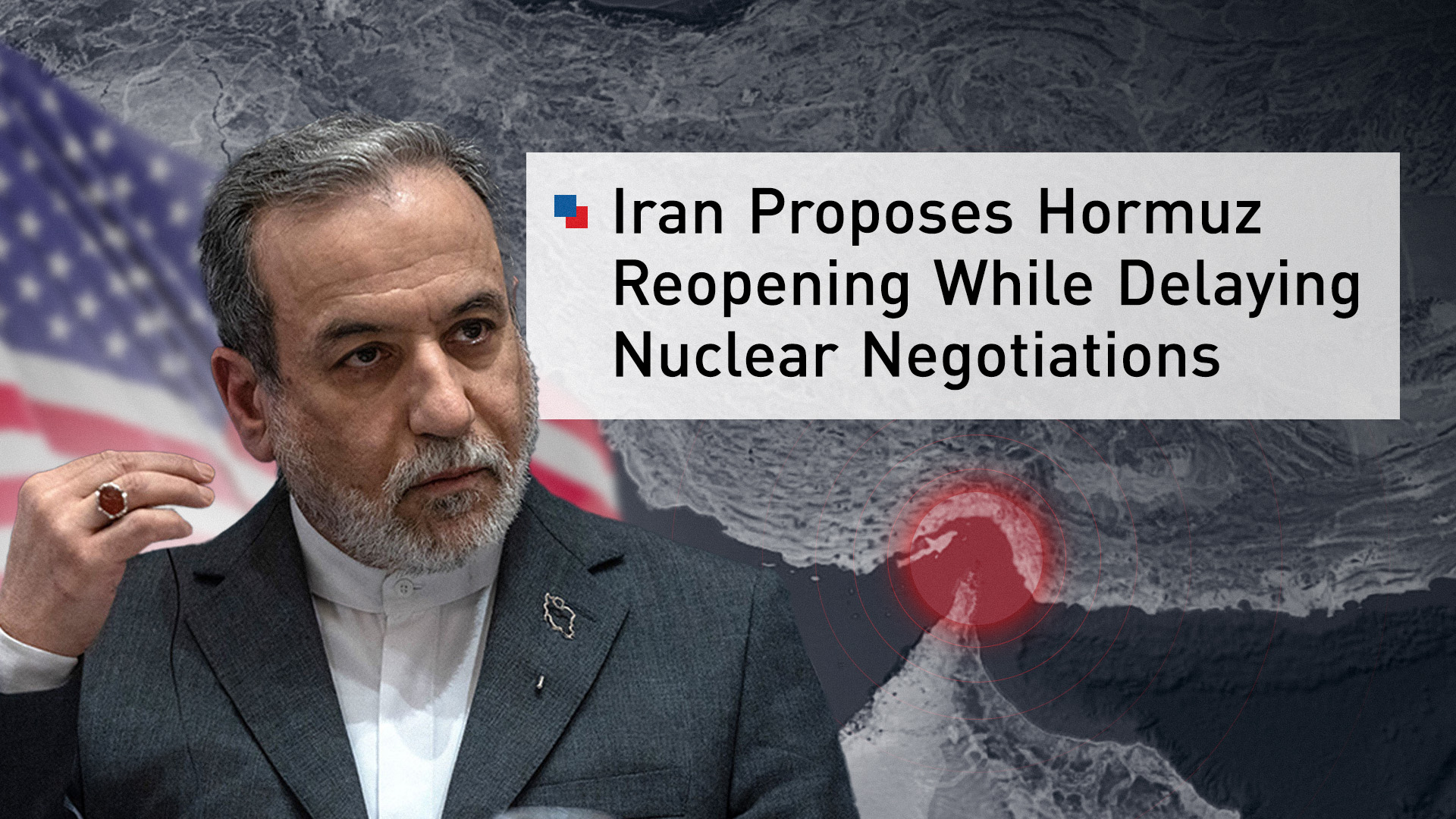
ERBIL (Kurdistan24) - Iranian officials have presented a proposal to the United States through intermediaries to reopen the Strait of Hormuz while delaying nuclear negotiations, according to a U.S. official and sources with knowledge of the matter.
The proposal suggests a sequenced approach to de-escalation, prioritizing the restoration of maritime traffic and a formal end to hostilities over the long-standing dispute regarding Tehran's nuclear program.
This development coincided with Iranian Foreign Minister Abbas Araghchi's brief return to Islamabad on Sunday, as Pakistan continues its role as a primary mediator between the two nations.
While the regional leadership attempted to reignite ceasefire negotiations, U.S. President Donald Trump clarified his preference for remote diplomacy over in-person meetings, stating that the sides can "talk by phone" rather than dispatching high-level envoys on long-haul flights.
Araghchi's return to the Pakistani capital followed a stop in Muscat, Oman, as he prepares for further discussions with Russian President Vladimir Putin in Moscow.
A Sequenced Framework for De-escalation
The new Iranian proposal seeks to break a diplomatic stalemate caused by deep internal divisions within the Iranian leadership regarding potential nuclear concessions.
Axios reported that the proposal focuses on solving the immediate crisis in the Strait of Hormuz, the world's most critical energy chokepoint, and lifting the U.S. naval blockade of Iranian ports.
According to the Associated Press, approximately one-fifth of all traded oil and natural gas passes through the strategic waterway, making its stability vital for the global economy.
The Iranian framework suggests that a long-term ceasefire or a permanent end to the war should precede nuclear talks. Under this arrangement, negotiations regarding the U.S. demand for Iran to suspend uranium enrichment and remove its stockpile would be deferred to a later stage.
One source told Axios that the new proposal was delivered to Washington via Pakistani mediators.
What appears as a limited de-escalation proposal is, in effect, an attempt to restructure the negotiation framework by isolating the most contentious issues.
By separating the nuclear file from the maritime crisis, Tehran seeks to alleviate the economic pressure of the U.S. blockade while avoiding a definitive resolution on its enriched uranium stockpile, estimated by U.N. watchdogs at 440 kilograms of 60% purity, which remains the primary war objective for the Trump administration.
Stalled Envoys and Remote Diplomacy
The push for a new framework follows the collapse of a planned top-level meeting in Islamabad.
The White House had initially signaled that envoys Steve Witkoff and Jared Kushner would travel to Pakistan for face-to-face talks, but President Trump canceled the mission Saturday evening.
According to the Associated Press, Trump cited a lack of progress and expressed reluctance to send his team on an "18-hour flight to sit around talking about nothing."
Despite the cancellation of the envoys' trip, indirect diplomacy has intensified. President Trump told journalists on Saturday that within 10 minutes of his decision to scrap the flight, Iran sent a "much better" proposal. However, the White House has remained cautious.
Spokesperson Olivia Wales told Axios that the U.S. "holds the cards" and will not allow Iran to obtain a nuclear weapon.
Trump indicated in a Fox News interview that he intends to maintain the naval blockade, which has severely restricted Iran's oil exports.
He suggested that the internal pressure on Iran's energy infrastructure is reaching a critical point, claiming that "vast amounts of oil" trapped in the system could cause lines to "explode from within" if they remain closed for more than three days.
Regional Mediation and Strategic Interests
The diplomatic maneuvers involve a network of regional intermediaries, including Pakistan, Oman, Egypt, Türkiye, and Qatar.
While Araghchi's visit to Islamabad ended with no formal progress on a face-to-face meeting, the Associated Press noted that Pakistani officials continue to act as "go-betweens" to bridge the significant gaps between the two adversaries.
In Oman, Araghchi reportedly discussed a mechanism for collecting tolls from vessels passing through the Strait of Hormuz.
Iran's joint military command has maintained a defiant posture, warning on Saturday that it would deliver a "strong response" if the U.S. continues what it described as "naval blockades, banditry, and piracy."
Conversely, the U.S. military has received "shoot and kill" orders from the president targeting small boats suspected of placing mines in the strait.
The human and economic cost of the conflict, which began with U.S.-Israeli strikes on February 28, remains substantial.
According to the Associated Press, at least 3,375 people have been killed in Iran, with thousands more casualties in Lebanon. Global energy markets remain volatile; Brent crude was trading at $107.75 per barrel on Sunday, nearly 48% higher than pre-war levels.
The Looming Security Assessment
The White House is expected to convene a Situation Room meeting on Monday with the president's national security and foreign policy team to assess the Iranian proposal.
The meeting will focus on the current stalemate and whether to engage with Tehran's sequenced approach or continue the "maximum pressure" strategy of the naval blockade.
While the April 7 ceasefire has largely held, the absence of a permanent settlement leaves the global economy vulnerable to further shocks.
Pakistani political analyst Syed Mohammad Ali noted to the Associated Press that the ceasefire's survival suggests a mutual desire to end the conflict, but warned that tensions "cannot be eased overnight."