Merz says, US 'Humiliated' in Iran Conflict, Questions Strategy
Germany’s chancellor said Iran is “Humiliating” the U.S., questioning Washington’s strategy and lack of a clear exit plan
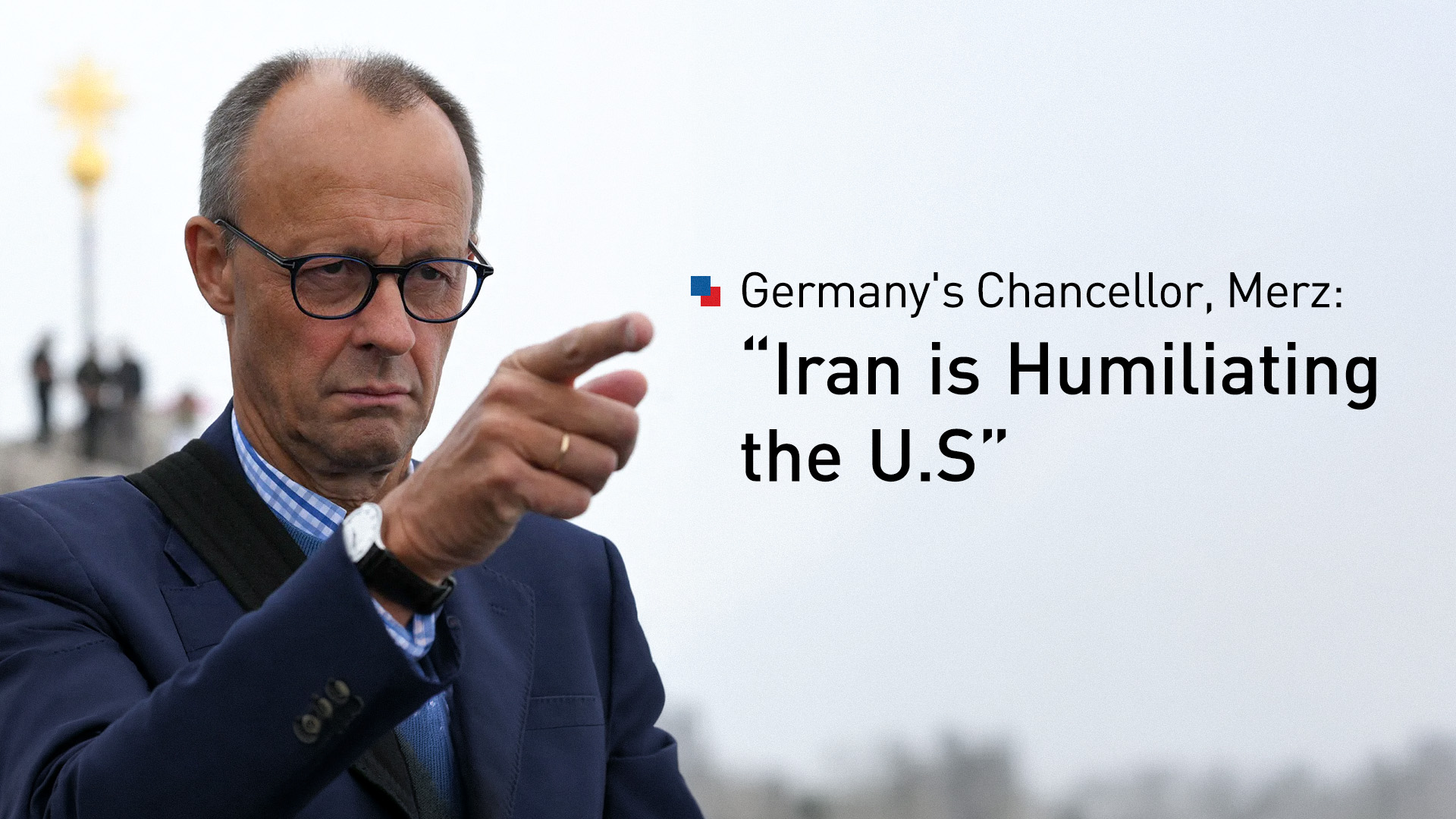
ERBIL (Kurdistan 24) - German Chancellor Friedrich Merz sharply criticized the United States’ handling of the Iran conflict on Monday, saying Tehran’s leadership is “humiliating” Washington and exposing a lack of clear strategy, while underscoring growing tensions between the U.S. and its NATO allies.
Speaking to students in the town of Marsberg in North Rhine-Westphalia on Monday, Merz pointed to recent diplomatic efforts that failed to produce results.
“The Iranians are obviously very skilled at negotiating, or rather, very skilful at not negotiating, letting the Americans travel to Islamabad and then leave again without any result,” he said.
His remarks come after U.S. President Donald Trump canceled a planned visit on Saturday, by envoys Steve Witkoff and Jared Kushner to Pakistan, a move that effectively halted momentum toward a second round of talks with Iran.
“An entire nation is being humiliated by the Iranian leadership, especially by these so-called Revolutionary Guards,” Merz added, expressing hope that the conflict would end quickly.
Merz also questioned Washington’s broader approach, saying he could not identify a clear exit strategy.
“At the moment, I do not see what strategic exit the Americans will choose,” he said, warning that the conflict risks deepening further without a defined path forward.
The German leader further revealed that European allies were not consulted before the United States and Israel launched strikes on Iran on February 28.
“Germans and Europeans were not consulted before the U.S. and Israel started attacking Iran,” Merz said, adding that he had conveyed his concerns directly to Trump.
“If I had known that it would continue like this for five or six weeks and get progressively worse, I would have told him even more emphatically,” he added, drawing comparisons to previous U.S. interventions in Iraq and Afghanistan.
Merz also pointed to growing economic and security consequences for Europe, stating that the conflict is costing Germany “a lot of money, a lot of taxpayers' money and a lot of economic strength.”
On the security front, he said there were indications that the Strait of Hormuz had been at least partially mined.
“We have offered, also as Europeans, to send German minesweepers to clear the strait, which has obviously been mined in part,” he said.
The remarks come amid increasing friction within NATO, after President Donald Trump criticized alliance members for not deploying naval forces to help reopen the Strait of Hormuz. In remarks made on Friday, Trump said the United States did not need allied assistance while also expressing frustration over what he described as limited support from NATO partners.
The waterway remains largely disrupted, contributing to volatility in global energy markets.
European allies, while expressing concern over maritime security, have signaled that any military involvement would require clear mandates and coordination. Germany has indicated readiness to contribute to a potential international mission, but only under parliamentary approval and appropriate conditions.
The divergence reflects broader strains within the alliance, which have intensified not only over the Iran conflict but also due to ongoing disagreements regarding Ukraine, defense spending, and strategic priorities.
The conflict, which began on February 28, has expanded across multiple fronts, including direct military strikes, proxy engagements, and disruptions in the Strait of Hormuz — a critical route for global oil and gas supplies. Diplomatic efforts have struggled to gain traction, with an initial round of U.S.-Iran talks in Islamabad ending without agreement and follow-up negotiations delayed.
Recent developments, including the cancellation of U.S. envoy travel and Iran’s continued diplomatic outreach to partners such as Russia, have further complicated efforts to de-escalate the situation.
Merz’s comments reflect mounting European concern over both the direction of the conflict and the cohesion of Western alliances, as the war continues to test diplomatic, military, and economic resilience.