Israel Issues New Evacuation Warnings in Southern Lebanon as Ceasefire Holds
Hezbollah’s Low-Cost Drone Tactics Complicate Israeli Military Response
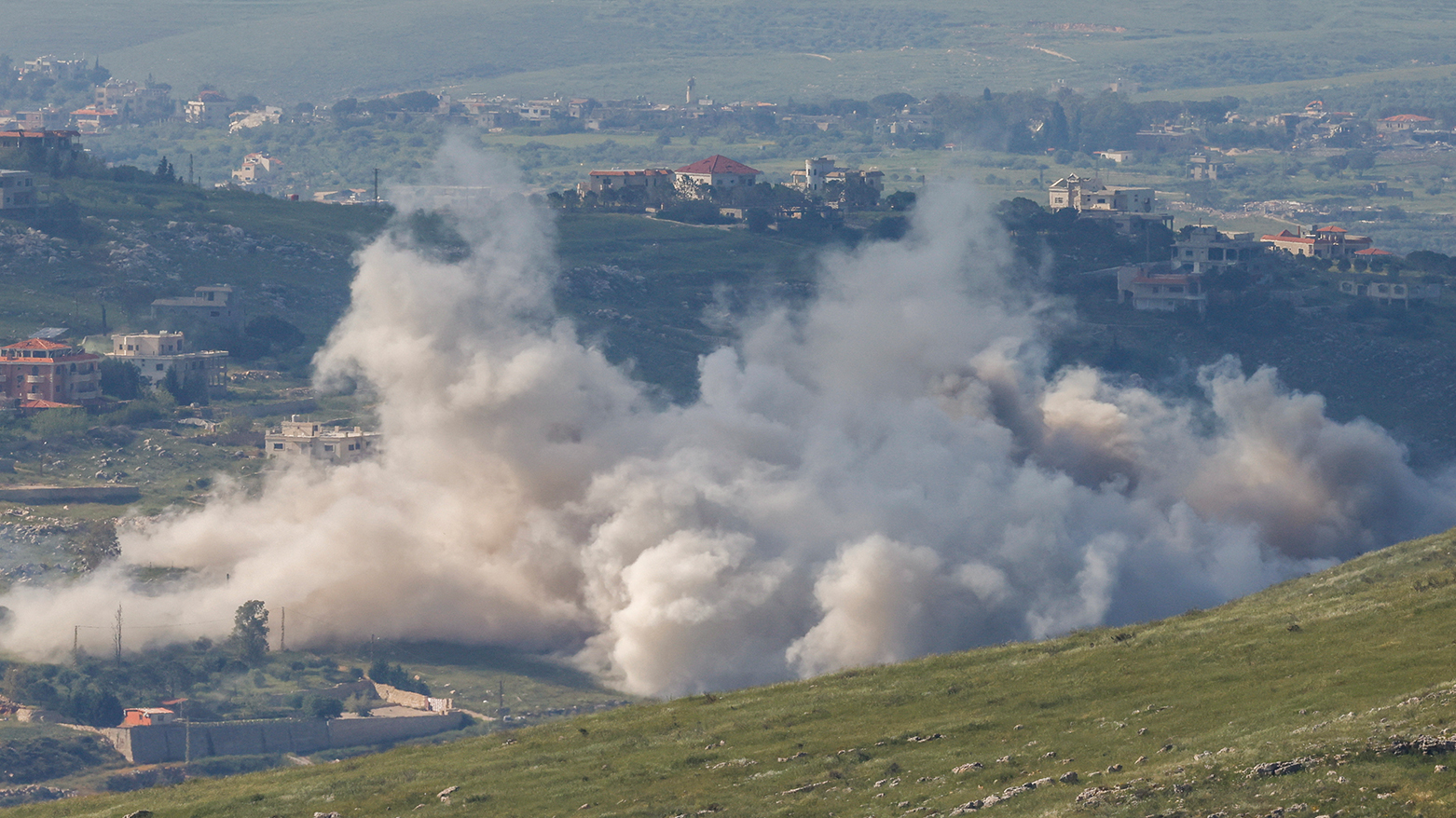
ERBIL (Kurdistan24) — The Israeli military on Sunday issued fresh evacuation warnings to residents in southern Lebanon, extending beyond areas currently under Israeli troop deployment, despite an existing truce aimed at halting hostilities with the Iran-backed group Hezbollah.
In a statement posted on X, the Israeli military’s Arabic-language spokesman Avichay Adraee urged civilians to immediately leave their homes.
“For your safety, you must evacuate your homes immediately and move away from the villages and towns by at least 1,000 meters into open areas,” he said.
The warning covered more than 10 villages and towns, including the city of Nabatieh, located several kilometers north of the Litani River—an area beyond the zone where Israeli forces are currently stationed.
The move underscores ongoing instability in southern Lebanon, where sporadic violence has persisted despite a ceasefire in place since mid-April. Both Israel and Hezbollah have repeatedly accused each other of violating the truce.
The renewed warnings come as Israeli forces face mounting challenges from Hezbollah’s use of low-cost fiber-optic drones, which military experts say are reshaping the tactical landscape.
According to Israeli military statements, at least two soldiers and one civilian contractor have been killed in explosive drone attacks in under a week, with several others wounded.
The incidents highlight vulnerabilities even within one of the region’s most technologically advanced militaries.
Orna Mizrahi, a senior researcher at the Institute for National Security Studies, described the devices as small and inexpensive, likening them to “children’s toys.” She noted that the military had not fully prepared for such low-tech threats.
Unlike conventional drones that rely on GPS or radio signals—and can therefore be jammed—these devices are tethered to operators via fiber-optic cables stretching dozens of kilometers. This makes them largely immune to electronic warfare countermeasures.
“They cannot be detected by electronic intelligence means or blocked through electronic warfare,” said Arie Aviram, who has studied the technology extensively.
Piloted using first-person view systems, often through screens or virtual reality headsets, the drones require limited training while offering high precision and speed, enabling them to strike targets with little warning.
Experts say Hezbollah’s growing reliance on such drones reflects a broader shift toward asymmetrical warfare, exploiting cost disparities and operational blind spots.
Production costs for fiber-optic drones range from a few hundred dollars to around $4,000, with components easily sourced online. In contrast, intercepting them with advanced air defense systems or fighter jets imposes significantly higher costs on Israel.
Hezbollah media official Youssef al Zein recently publicly admitted the group is manufacturing the drones domestically. “We are aware of the enemy’s superiority, but at the same time we are exploiting its weak points,” he said.
Potential countermeasures, such as laser-based systems like Israel’s Iron Beam, remain limited in deployment. Israeli defense authorities have also issued public calls for new technologies to counter fiber-optic-controlled drones.
On the ground, Israeli troops have begun implementing improvised defenses, including protective netting and physical barriers on military vehicles.
A senior Israeli military official said the army is drawing lessons from conflicts such as the war in Ukraine, where similar drone tactics have become widespread.
Despite these efforts, officials acknowledge that no single solution has proven fully effective. “It’s a threat that we’re still adapting to,” the official said, emphasizing ongoing efforts to refine operational responses.
As tensions persist, Sunday’s evacuation warnings signal the continued fragility of the ceasefire and the likelihood of further escalation in southern Lebanon, where civilians remain caught between evolving military strategies and an uncertain security environment.