Telegraph Op-Ed Calls Kurdistan Region Key to Middle East Stability
Former British officer, in an op-ed published in The Telegraph, argues Kurdistan Region is a key stabilizing force, urging renewed UK military and diplomatic engagement based on its security role, energy potential, and historical ties.
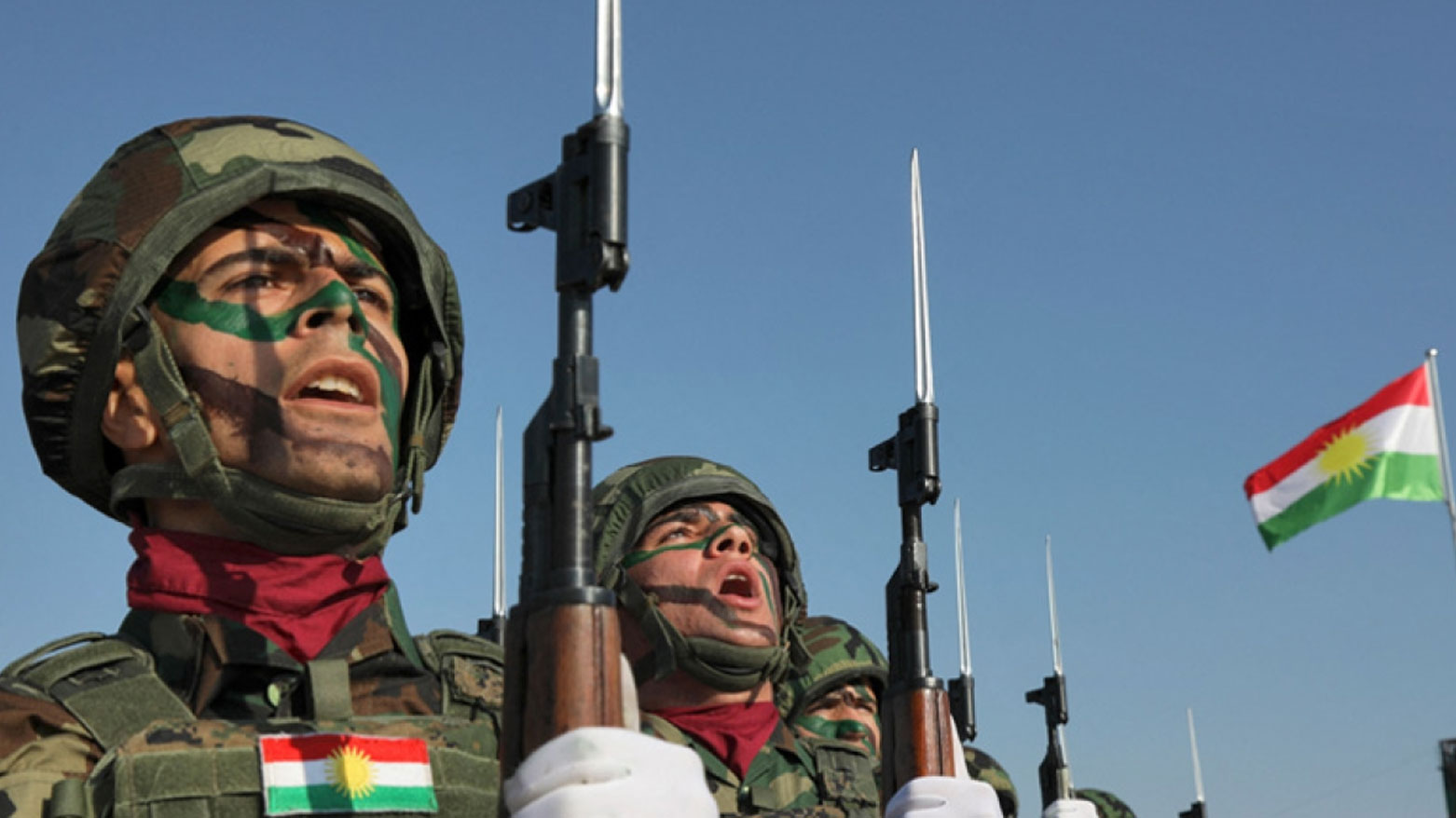
ERBIL (Kurdistan24) - A former British Army officer has argued in an opinion article published by The Telegraph that the Kurdistan Region represents a crucial foundation for stability in the Middle East and requires renewed British engagement.
Writing in his op-ed for the British newspaper, Hamish de Bretton-Gordon asserted that the Kurdistan Region functions as a strategic and secure anchor within a volatile geopolitical environment.
The author, who served as a British Army officer for 23 years and commanded the UK's Joint Chemical, Biological, Radiological and Nuclear Regiment, drew upon his direct experience working alongside Kurdish forces to build his case for enhanced diplomatic and military support from London.
In his Telegraph column, de Bretton-Gordon argued that the stability of the Kurdistan Region is not an accident but the result of effective governance and strong security forces.
He framed the region as a rare "island of stability" that offers unique strategic and energy advantages to the West, particularly in contrast to the broader complexities of Iraq and the surrounding Middle East.
According to the op-ed, the historical relationship between the United Kingdom and the Kurdistan Region provides a strong foundation for future policy decisions.
De Bretton-Gordon contended that by reinforcing its partnership with the Kurdistan Regional Government (KRG) and supporting the Peshmerga, the UK could effectively counter destabilizing regional influences and secure alternative energy routes.
Peshmerga Role in Anti-ISIS Campaign
A central theme of the opinion piece is the military capability and historical contribution of the Peshmerga.
De Bretton-Gordon stated that he stood alongside Kurdish armed forces between 2015 and 2017 during the conflict against the Islamic State (ISIS). Based on this experience, he characterized the Peshmerga as "among the most determined and capable fighters" he has encountered during his military career.
According to the author, the Peshmerga served as the "backbone of the campaign on the ground."
While acknowledging the role of international air power and coordination, de Bretton-Gordon wrote that it was the Kurdish forces, operating alongside elements of the Iraqi army, who ultimately defeated the self-declared caliphate.
The Telegraph column noted that this victory occurred within a complex regional framework.
De Bretton-Gordon mentioned that Iran and its associated militias also operated against coalition forces in southern Iraq during this period. According to his analysis, these same militias continue to exert what he described as a "malign influence" against Western and Kurdish interests today.
Historical UK Involvement
The op-ed extensively referenced the historical ties between the United Kingdom and the Kurdish people.
De Bretton-Gordon argued that the current stability of the Kurdistan Region is rooted in decisive actions taken by previous British governments.
Specifically, the author highlighted the policies implemented by Prime Minister John Major following the 1991 Gulf War.
According to the article, the establishment of safe havens and the enforcement of a no-fly zone over Kurdish-populated areas were strategic interventions that prevented the potential annihilation of the Kurdish population by Saddam Hussein.
De Bretton-Gordon asserted that the stark contrast between the current state of northern Iraq and the rest of the country can be traced directly to those 1991 decisions.
The author also noted that this historical connection was recently reaffirmed during the launch of the Kurdistan Society in the UK.
According to his account of a dinner at the Traveller's Club in London, KRG Foreign Minister Safeen Dizayee openly acknowledged Britain's historical role.
Furthermore, de Bretton-Gordon reported that praise was also extended to former Prime Minister Tony Blair.
The op-ed argued that, from a Kurdish perspective, the 2003 invasion of Iraq removed Saddam Hussein and established the conditions necessary for the Kurdistan Region to flourish economically and politically prior to the rise of ISIS.
To underscore the depth of the security relationship, de Bretton-Gordon highlighted a specific metric: since 1991, not a single British service member has been killed or injured in the Kurdistan Region despite a frequent UK presence.
He argued this fact speaks volumes about the region's friendly posture toward international partners.
Strategic and Energy Considerations
In addition to military history, the op-ed argued that the Kurdistan Region holds significant geographic and diplomatic value.
According to de Bretton-Gordon, the KRG is uniquely positioned to play a constructive role in shaping the future of the Middle East. He noted that many senior Kurdish figures were educated in the UK, creating an alignment of values and strategic outlook.
The Telegraph column also suggested that the Kurdistan Region possesses a unique capacity to influence regional dynamics.
The author argued that proximity to Iran, combined with deep cultural ties to Iranian Kurds, provides the KRG with potential diplomatic leverage.
Energy security formed another critical component of de Bretton-Gordon's argument.
He wrote that the Kurdistan Region's oil pipeline to Türkiye represents a vital strategic asset.
According to the op-ed, this northern energy corridor offers a practical and politically significant alternative route, particularly if transit through the Strait of Hormuz becomes compromised. De Bretton-Gordon characterized the pipeline as a clear example of Kurdish foresight and ingenuity under pressure.
Call for Renewed Engagement
The conclusion of the opinion piece presented a direct policy recommendation for the British government.
Given the strategic factors outlined in the article, de Bretton-Gordon argued there is a "compelling case" for renewed British engagement with the Kurdistan Region.
As the UK considers its role in securing global maritime routes like the Strait of Hormuz, the author suggested that London should adopt a broader strategic view.
He wrote that supporting the Peshmerga, not merely as a fighting force but as a stabilizing regional partner, could prove instrumental in countering the influence of Iran and its militia network.
According to de Bretton-Gordon, while such a foreign policy approach may sound ambitious, it requires the kind of leadership Britain has previously demonstrated in its relationship with Kurdistan.
The op-ed concluded by asserting that decisive intervention, supported by strong alliances, has historically shaped regional outcomes for the better, citing the current stability of the Kurdistan Region as proof of this concept.