Kurdistan President, Iraqi Judicial Council Head Call for Constitutional Governance
Kurdistan Region President Nechirvan Barzani and Iraqi Supreme Judicial Council head Faiq Zidan stress rule of law and judicial independence as key to resolving disputes, amid ongoing coordination in Baghdad to finalize Iraq’s new government and ensure inclusive representation.
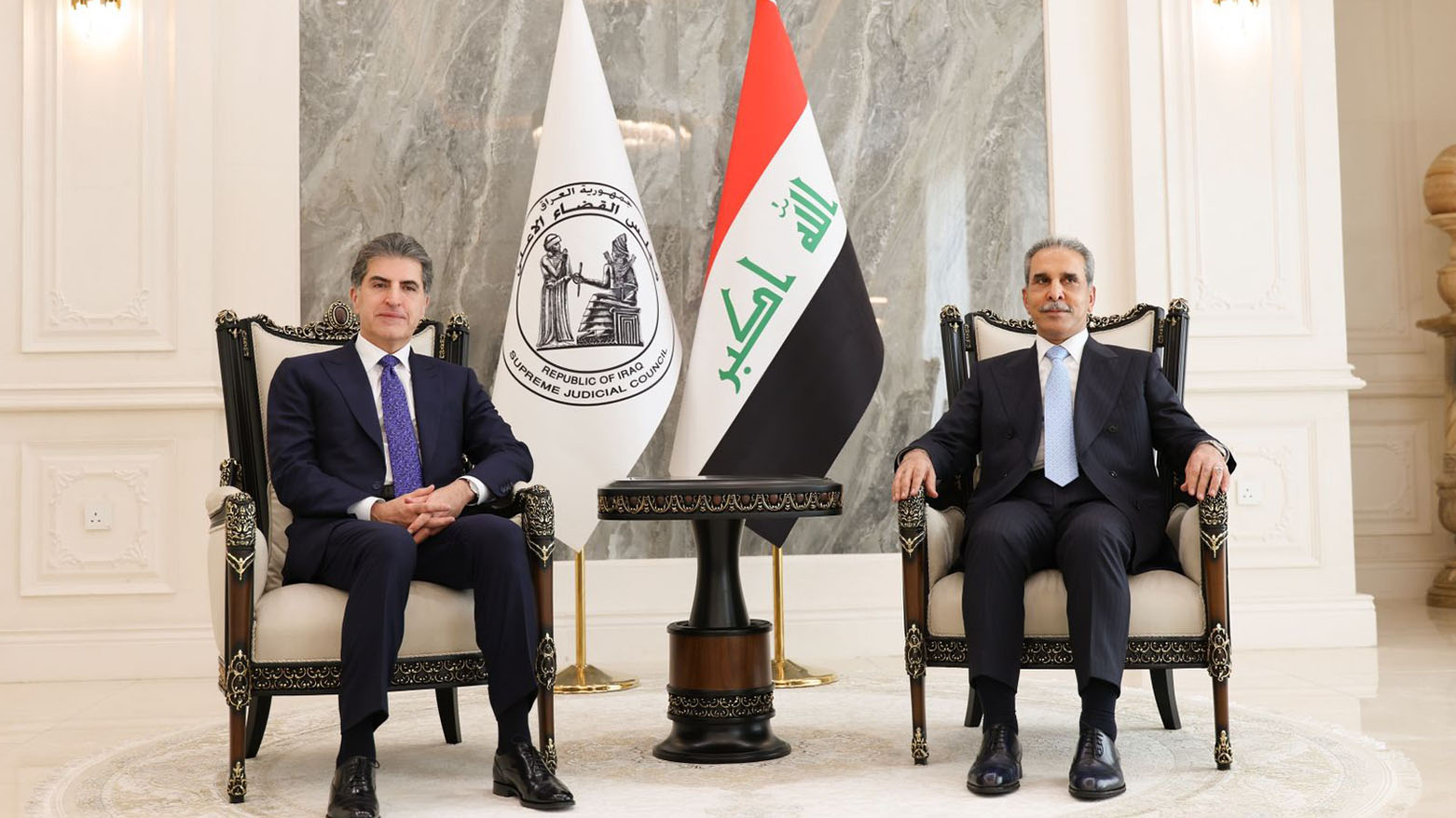
ERBIL (Kurdistan24) - Kurdistan Region President Nechirvan Barzani and the President of the Iraqi Supreme Judicial Council, Judge Faiq Zidan, met in Baghdad to emphasize that adherence to the rule of law and the constitutional framework represents the only viable path to resolving the country's outstanding problems.
During the Tuesday afternoon meeting, the two officials reviewed Iraq's general political conditions.
According to a formal statement, both sides emphasized that the independence of the judiciary functions as a fundamental pillar for protecting state authorities and institutions, ensuring stability, and securing the constitutional rights of all national components.
The talks highlighted the importance of safeguarding the legal and constitutional entity of the Kurdistan Region as part of a broader commitment to institutional governance.
The emphasis on institutional processes aligned with broader regional discussions regarding the country's political transition.
Earlier on Tuesday, President Barzani engaged in detailed talks concerning the Iraqi government formation process and regional conditions during a meeting with Qais al-Khazali, the Secretary-General of the Asa'ib Ahl al-Haq movement.
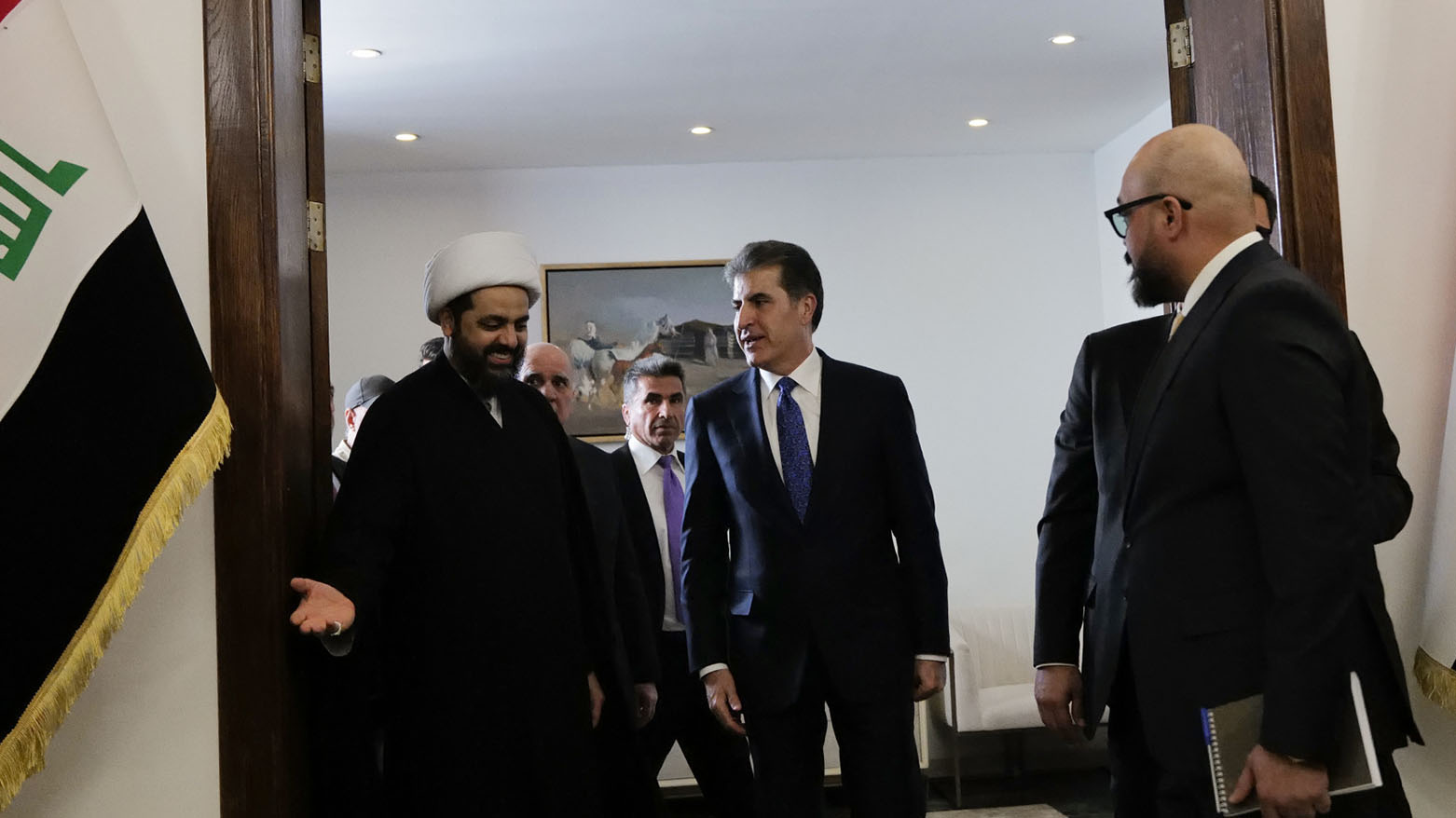
According to reports detailing the meeting, Kurdistan Region President Barzani and al-Khazali reviewed the general political scene and the ongoing efforts to form the new federal government. The discussions also encompassed recent regional developments and their potential repercussions on Iraq's security landscape.
Both leaders reportedly emphasized the necessity of reaching common understandings and maintaining coordination among various political forces to overcome current obstacles and meet the aspirations of the Iraqi public.
Rule of Law Emphasized in Baghdad Talks
The dialogue between President Barzani and Judge Zidan focused heavily on the structural role of the judiciary in facilitating political progress.
According to the meeting statement, Kurdistan Region President Barzani expressed his high appreciation for the role of the judicial authority in maintaining political stability and protecting the supreme national interests of Iraq.
Kurdistan Region President Barzani specifically thanked Zidan for his role in addressing disputes and fostering a language of understanding between differing political factions.
The two sides also discussed mechanisms to enhance cooperation and coordination between federal judicial institutions and their counterparts in the Kurdistan Region, reinforcing the theme that operating within the bounds of the constitution remains paramount to dispute resolution.
On the second day of his visit, President Nechirvan Barzani and his delegation also met with Abdul Hussein Al-Mousawi, head of the National Alnahj Alliance, alongside senior members of the alliance and its parliamentary bloc, according to a statement from the Kurdistan Region Presidency.
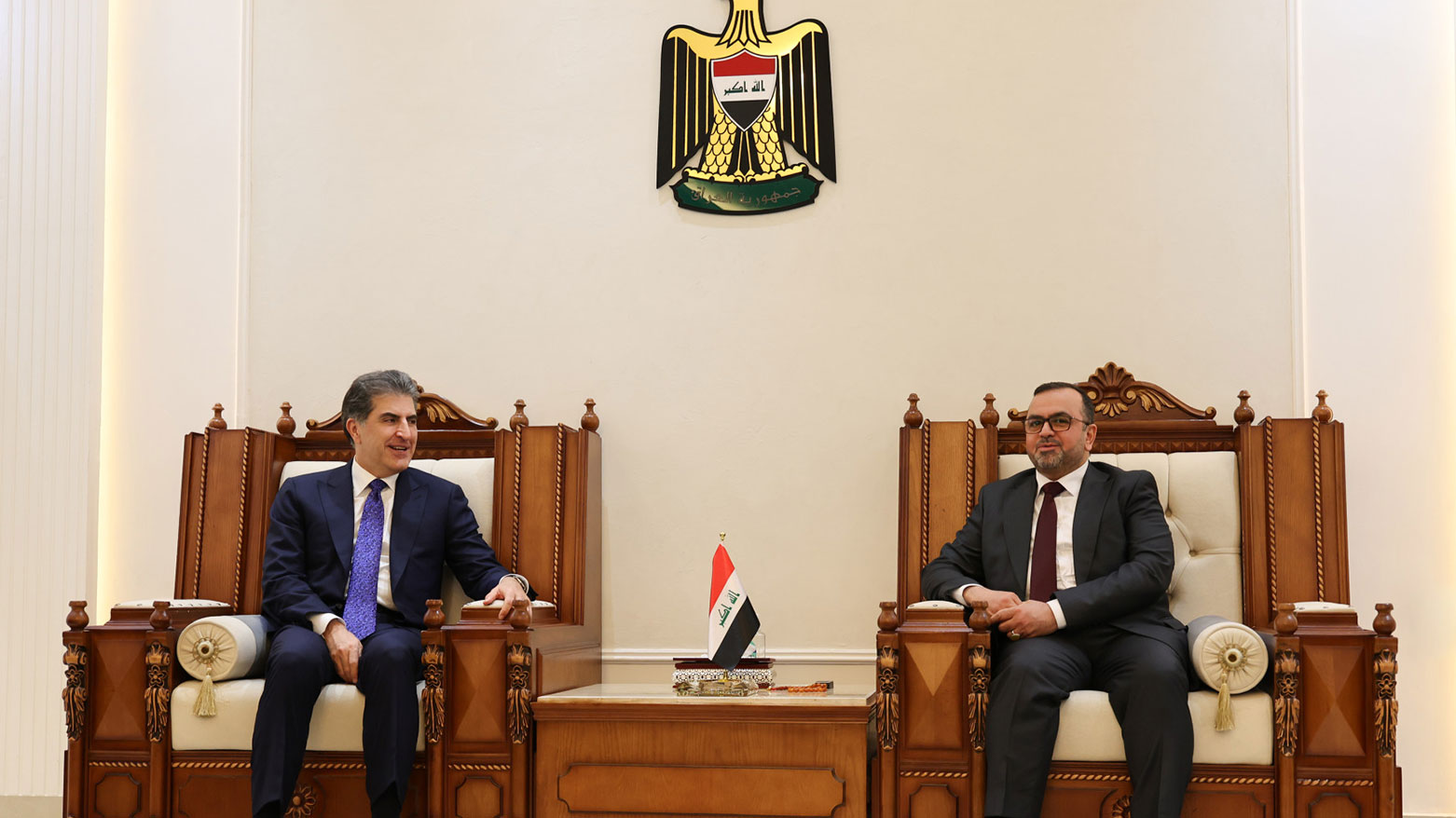
As outlined by the Presidency, representatives of the National Alnahj Alliance welcomed the visit and conveyed their appreciation for the engagement.
The discussions, the Presidency noted, focused on Iraq's political landscape, with both sides underscoring the need to reinforce unity and coordination among political forces and communities as a foundation for addressing challenges and preserving peace and stability.
In its readout, the Kurdistan Region Presidency further emphasized that both parties agreed the effectiveness of Iraq's political process depends on mutual understanding, cohesion, cooperation, genuine partnership, and the inclusive participation of all stakeholders in governance and national decision-making.
Government Formation Discussions Continue
The overarching political backdrop to these meetings is the ongoing effort to establish a new federal cabinet.
The discussions between Kurdistan Region President Barzani and al-Khazali underscored the urgency of these efforts, with both parties emphasizing that continuous political coordination is required to resolve outstanding national issues and ensure institutional functionality.
The timeline for the conclusion of this process is advancing.
According to a statement provided to Kurdistan24, Abdullah al-Zaidi, a leader in the Hikma (Wisdom) Movement, expects that a parliamentary vote of confidence for the Prime Minister-designate and the new cabinet could occur as early as next week.
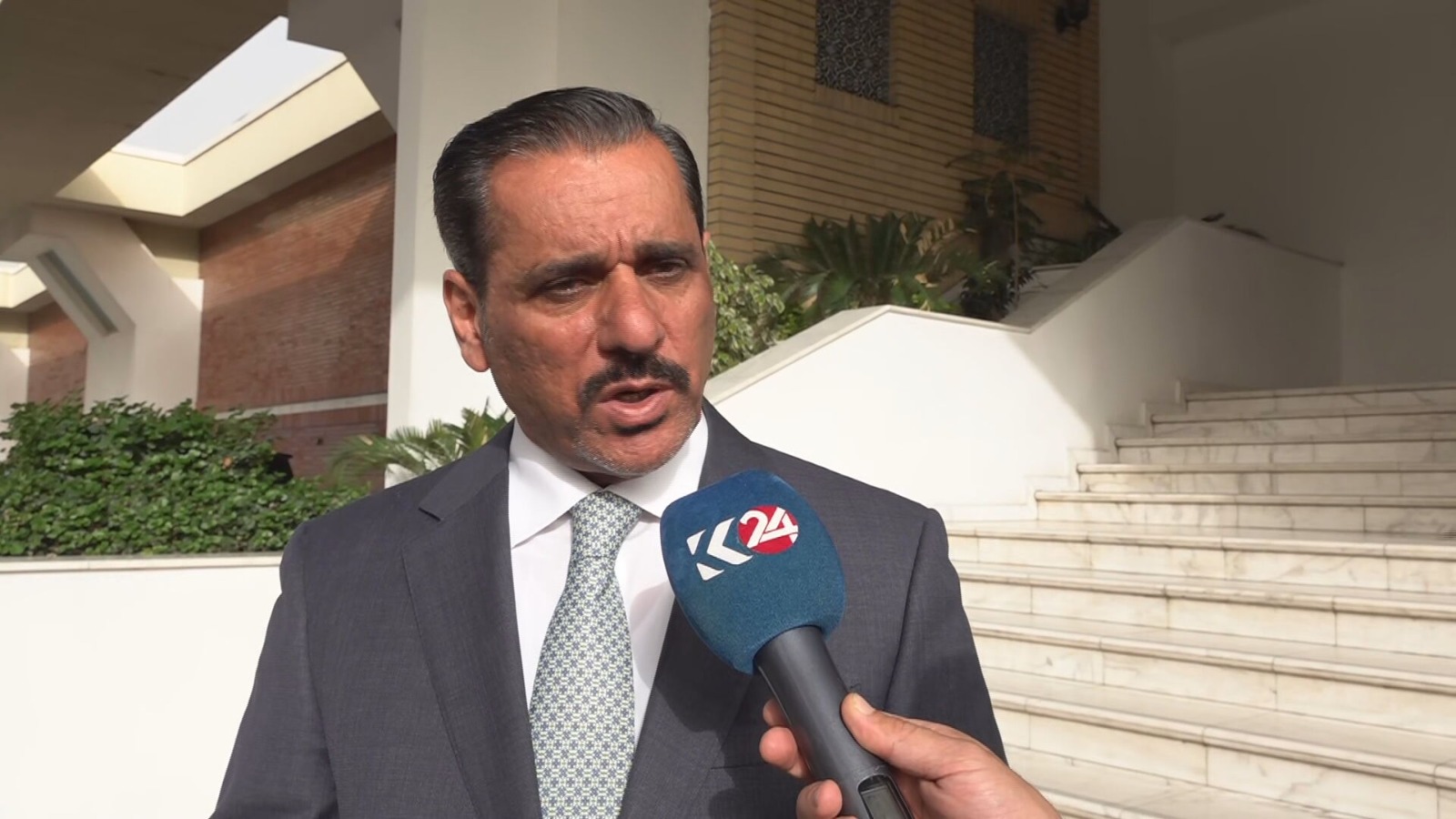
Al-Zaidi emphasized the extreme importance of the intensive political meetings currently taking place between Erbil and Baghdad, describing them as pivotal for overcoming obstacles and resolving pending disputes between the federal government and the Kurdistan Regional Government.
According to al-Zaidi, the formation of the new government must be predicated on a robust government program derived from political agreements concluded within the "State Management Coalition" and the "Coordination Framework."
Representation and Political Expectations
A critical element of the government formation process involves the distribution of ministerial portfolios among Iraq's various components.
Al-Zaidi noted that this distribution process will likely rely on mechanisms established during the previous administration, where political entities retain ministerial shares corresponding to their parliamentary size and political weight.
The specific issue of demographic representation was directly addressed by President Barzani during his Baghdad visit.
According to a report regarding his activities on Tuesday morning, Kurdistan Region President Barzani met with parliamentarians representing the Christian component in the Iraqi Council of Representatives.
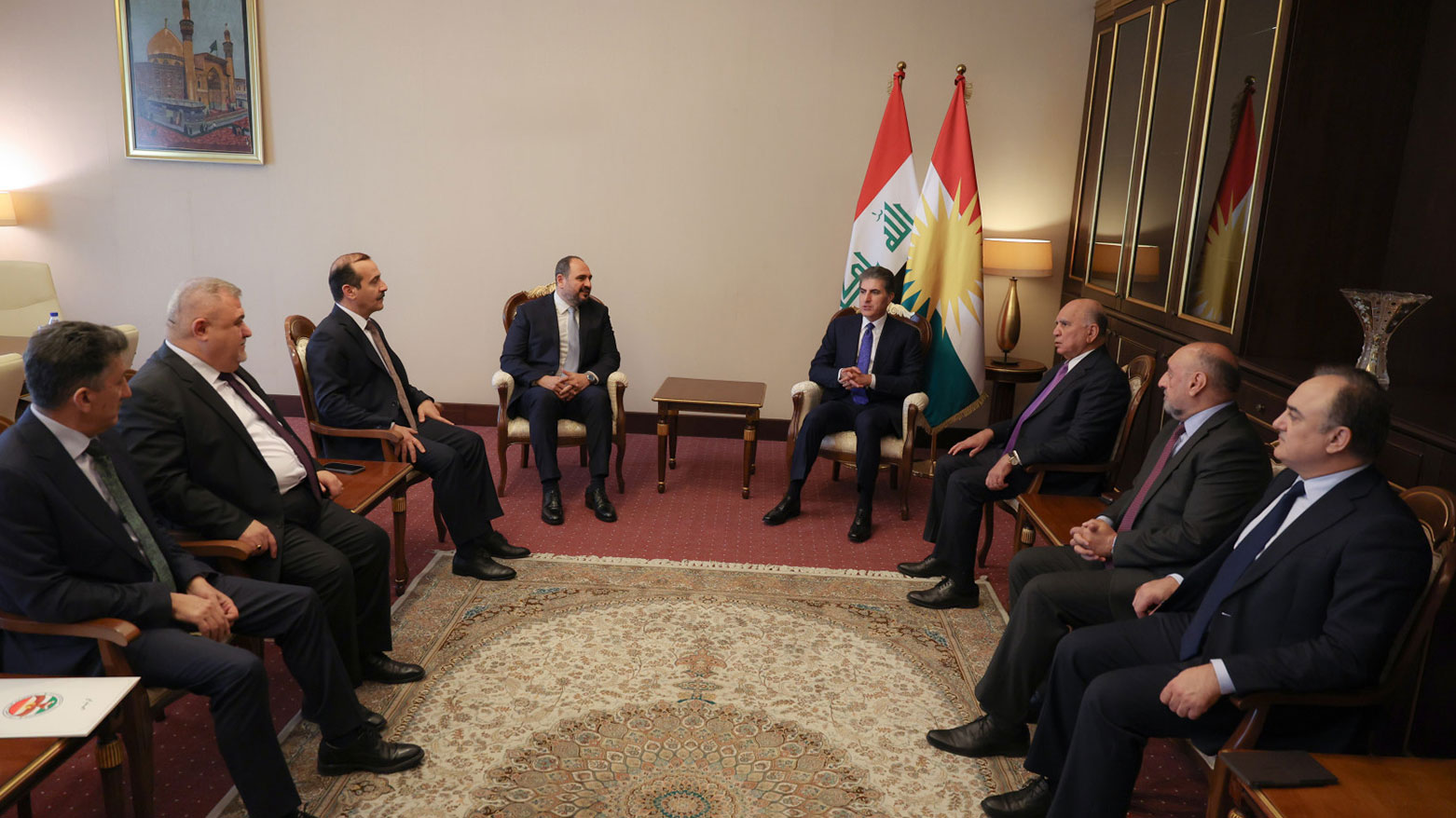
During this meeting, Kurdistan Region President Barzani affirmed that Christians represent an indigenous and historical component of Iraq and the Kurdistan Region.
According to the report, the President of the Kurdistan Region stressed the necessity of ensuring the participation of the Christian component in the upcoming federal cabinet through the allocation of a specific "ministerial portfolio."
Kurdistan Region President Barzani called for concerted efforts to establish principles of partnership and equality, renewing the Kurdistan Region's support for safeguarding the constitutional rights of all communities.
The Christian parliamentarians reportedly expressed their appreciation for Kurdistan Region President Barzani's efforts to promote pluralism and social harmony throughout the country.
As discussions in Baghdad proceed, the combination of judicial emphasis, political coordination, and specific representational demands highlights the complex mechanisms governing Iraq's ongoing political transition.
The meetings indicate a focused institutional effort to finalize the federal government framework ahead of the anticipated parliamentary vote.