Trump Pauses Strait of Hormuz Operation Amid Signs of Iran Deal Progress
U.S. maintains naval blockade while halting “Project Freedom” to test viability of final agreement
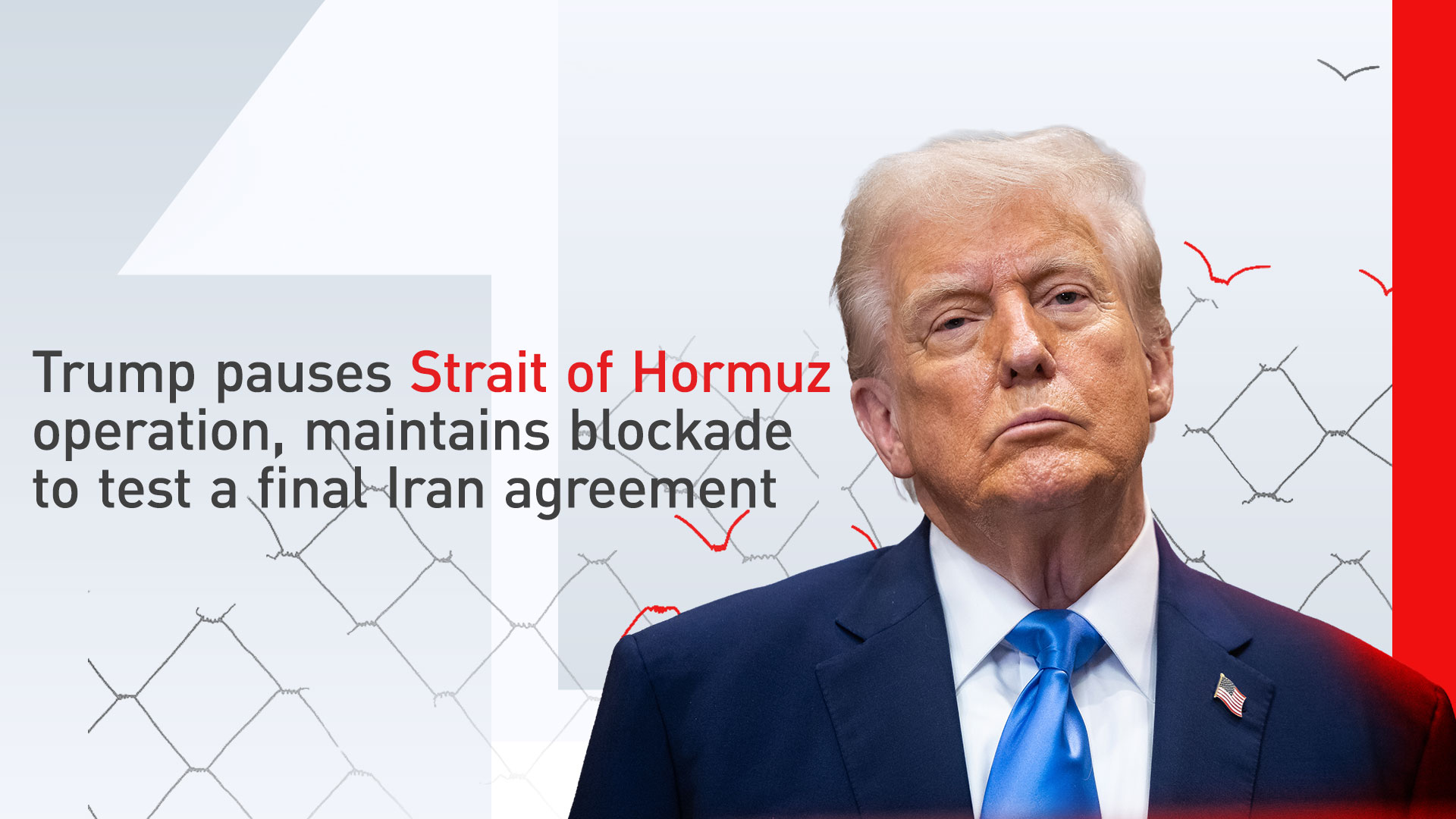
ERBIL (Kurdistan24) — U.S. President Donald Trump announced on Wednesday a temporary pause in a key military operation in the Strait of Hormuz, signaling a potential diplomatic breakthrough in ongoing efforts to end the conflict with Iran.
In a post on Truth Social, Trump said the decision followed requests from Pakistan and other countries, as well as what he described as “tremendous Military Success” and “Great Progress” toward a “Complete and Final Agreement” with Iranian representatives.
He added that while the broader U.S. naval blockade on Iran would remain fully in place, the operation known as “Project Freedom” — aimed at enabling the movement of ships through the strategic waterway — would be suspended briefly to assess whether a final deal could be reached.
The announcement marks a notable shift toward diplomacy after weeks of heightened military tensions in one of the world’s most critical oil transit corridors.
The pause is widely seen as an effort to create political space for negotiations, reportedly involving indirect mediation channels, including Pakistan.
“Project Freedom,” launched only days earlier, was designed to escort commercial vessels through the Strait of Hormuz amid escalating hostilities and Iranian restrictions on maritime traffic.
The initiative followed disruptions that left numerous vessels delayed or rerouted, contributing to volatility in global energy markets.
Despite the pause, U.S. officials have underscored that the broader pressure campaign remains intact. The naval blockade — imposed in April — continues to target vessels linked to Iran as part of Washington’s strategy to extract concessions in negotiations.
Strategic Waterway at the Center of Crisis
The Strait of Hormuz, a narrow passage connecting the Gulf to global markets, is one of the most vital oil chokepoints in the world, with a significant share of global oil shipments passing through it daily. Any disruption carries immediate consequences for international energy security and global trade flows.
The current escalation traces back to early 2026, when U.S.-aligned military actions against Iranian targets triggered a broader confrontation. In response, Iran moved to restrict maritime access, raising fears of a prolonged disruption to shipping in the region.
Subsequent U.S. measures included intensified military operations and the imposition of a naval blockade, alongside efforts to ensure freedom of navigation through the strait.
Fragile Diplomatic Opening
The pause in “Project Freedom” comes amid renewed diplomatic efforts aimed at securing a broader ceasefire and a long-term agreement. Previous attempts at de-escalation, some facilitated by regional actors, have faced setbacks but laid the groundwork for ongoing talks.
Trump’s latest announcement reflects a dual-track approach — maintaining military and economic pressure while testing the prospects for a negotiated settlement.
The coming days are expected to be critical in determining whether the pause leads to a finalized agreement or merely a temporary easing of tensions.