The UAE as Iran’s Central Pressure Point in the Gulf Conflict
Beyond geography and geopolitics, analysts say the Emirates’ alliances, economy, and regional positioning have turned it into a focal point of Iranian pressure
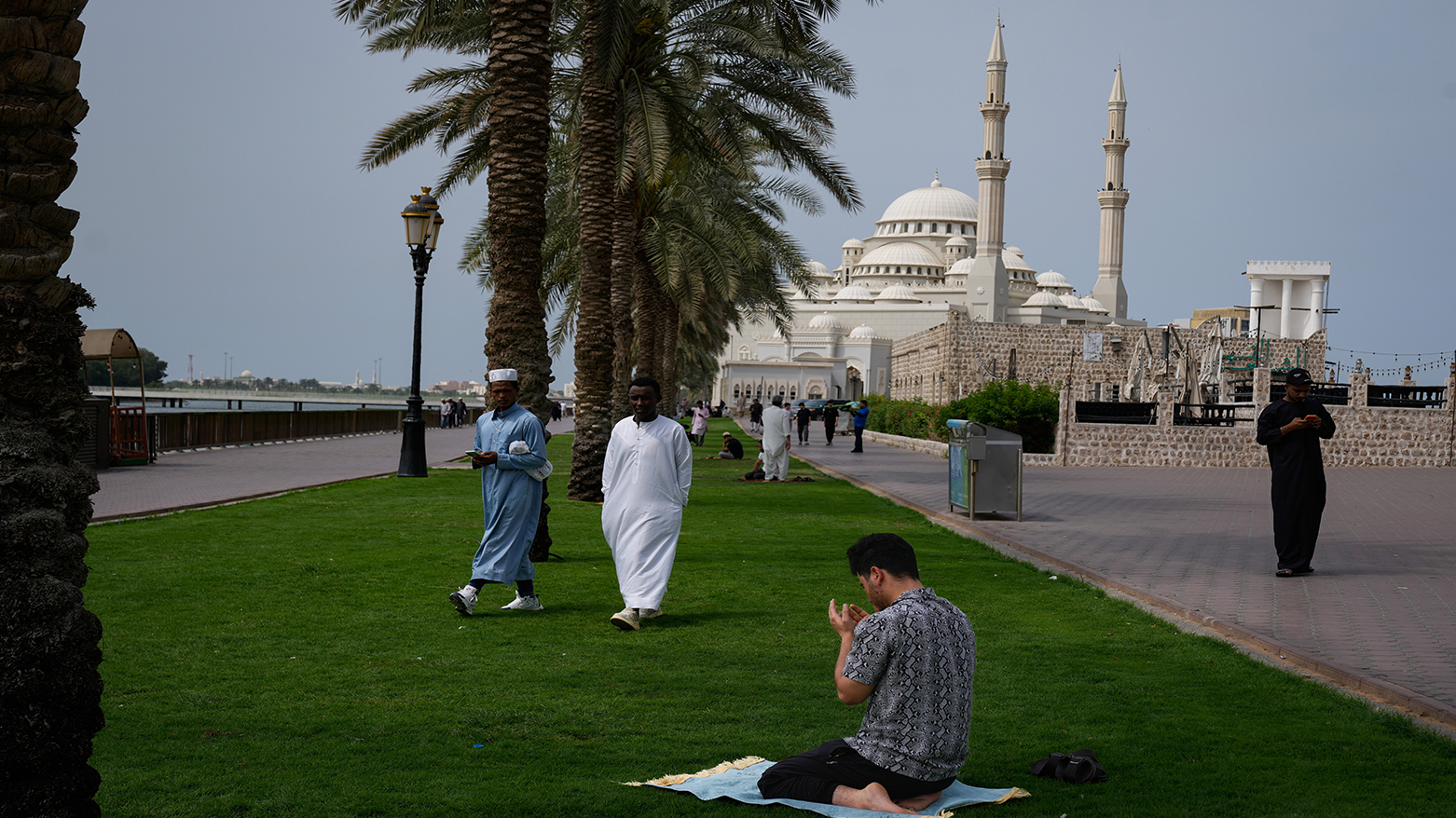
ERBIL (Kurdistan24) — Hours after the UAE’s top oil executive declared the country had “emerged stronger” from war and while thousands gathered in Abu Dhabi for a summit aimed at revitalizing the economy, warning alerts of incoming missiles once again shattered the sense of recovery across the Emirates.
The renewed attacks on Monday — the first since a truce took effect last month — have underscored how fragile the post-war calm remains. Iran has categorically denied involvement in the latest offensive. Yet across Gulf capitals, the political interpretation is already solidifying: the UAE remains at the center of Iran’s strategic calculus.
Analysts say the key question is no longer whether the Gulf is vulnerable, but why the UAE, in particular, has emerged as the most exposed target.
In the weeks leading up to the strikes, life in the Emirates had begun to regain its pre-war rhythm. Residents returned, tourism picked up, and Dubai’s restaurants and leisure hubs regained momentum. Schools had only recently resumed in-person learning.
That fragile recovery was abruptly disrupted when phones across the country began alerting residents to incoming threats.
“We literally just slammed our faces into our hands and sat in silence for a solid minute,” one business executive told AFP, describing a meeting that was suddenly interrupted by emergency alerts.
“There was exhaustion, disbelief that this might start again.”
The psychological impact, analysts say, is as significant as the physical threat. Despite high interception rates, previous strikes attributed to Iran had already eroded the Gulf’s long-standing image of insulation from regional conflict.
While Gulf states remain deeply tied to hydrocarbons, the UAE’s vulnerability extends far beyond its energy infrastructure.
Its diversified economy — aviation, logistics, tourism, finance, and real estate — means instability produces immediate systemic effects. That exposure is precisely what makes it strategically significant, according to regional economists.
S&P Global Market Intelligence warned that the UAE’s non-oil private sector had already shown “its weakest performance for more than five years,” reflecting how quickly confidence can shift in response to security risk.
Unlike more oil-dependent neighbors, the UAE’s growth model relies heavily on perception: stability, predictability, and openness. Any disruption, therefore, compounds economic impact well beyond the immediate damage of an attack.
Security analysts argue that the UAE occupies a uniquely sensitive position in Iran’s regional threat perception.
According to HA Hellyer of the Royal United Services Institute, the Emirates combine three factors that make them a recurring focal point: strategic alignment with the United States, open ties with Israel, and geographic proximity to Iran.
“It is a top US ally and an Arab country with ties to Israel, making it a prime target for Iran,” Hellyer told the AFP. That combination, he noted, places the UAE at the intersection of Iran’s adversarial network in the region.
Geography further compounds the risk. Compared with more distant targets such as Israel, the UAE is within easier reach of drones and missiles launched from Iranian territory or allied positions, reducing operational barriers for attack planning.
Some analysts also point to a less visible dimension: intra-Gulf politics. Iranian pressure on the UAE, they argue, can serve as a tool to strain Gulf cohesion.
Abu Dhabi’s assertive regional posture — particularly its alignment with Washington and its evolving security coordination with Israel — contrasts with Riyadh’s more cautious approach.
Political scientist Abdulkhaleq Abdulla, speaking to AFP, described the UAE as especially exposed in moments of escalation, arguing that whenever tensions rise with the United States or Israel, “we are their prime target.”
The divergence between the UAE and Saudi Arabia further complicates the regional picture. While Saudi Arabia has leaned toward de-escalation and mediation channels, the UAE has adopted a more security-forward posture, strengthening external alliances and signaling readiness for deterrence-based responses.
Hellyer notes this divergence reflects differing risk calculations: Riyadh increasingly views escalation as more dangerous than restraint, while Abu Dhabi assesses inaction as the greater risk.
The latest strikes have reinforced what many analysts now describe as a structural shift in Gulf security: the normalization of intermittent alerts, even during nominal peacetime.
“This might become a new reality where every now and then we have a few alerts,” one executive told AFP, warning that sustained economic confidence depends entirely on perceptions of stability.
For the UAE, that reality carries broader implications. Its role as a global commercial hub — and a bridge between East and West — depends on uninterrupted flows of capital, tourism, and logistics. Even limited disruption risks undermining that positioning.
The renewed attacks, regardless of attribution disputes, have reinforced the UAE’s position as a central node in the region’s geopolitical tensions.
Its exposure is not accidental, analysts argue, but structural: the result of geography, alliances, and economic model converging in a way that makes stability both essential and fragile.
In this sense, the question is not only why the UAE is targeted, but what its vulnerability reveals about the Gulf itself — a region still navigating the unstable boundary between deterrence, diplomacy, and the persistent shadow of escalation.