Iran FM Spokesperson Calls Gulf States “Reckless” Amid Rising Tensions
Iran escalates rhetoric against Gulf states amid renewed U.S.-Iran naval clashes in the Strait of Hormuz and growing regional missile and drone attacks.
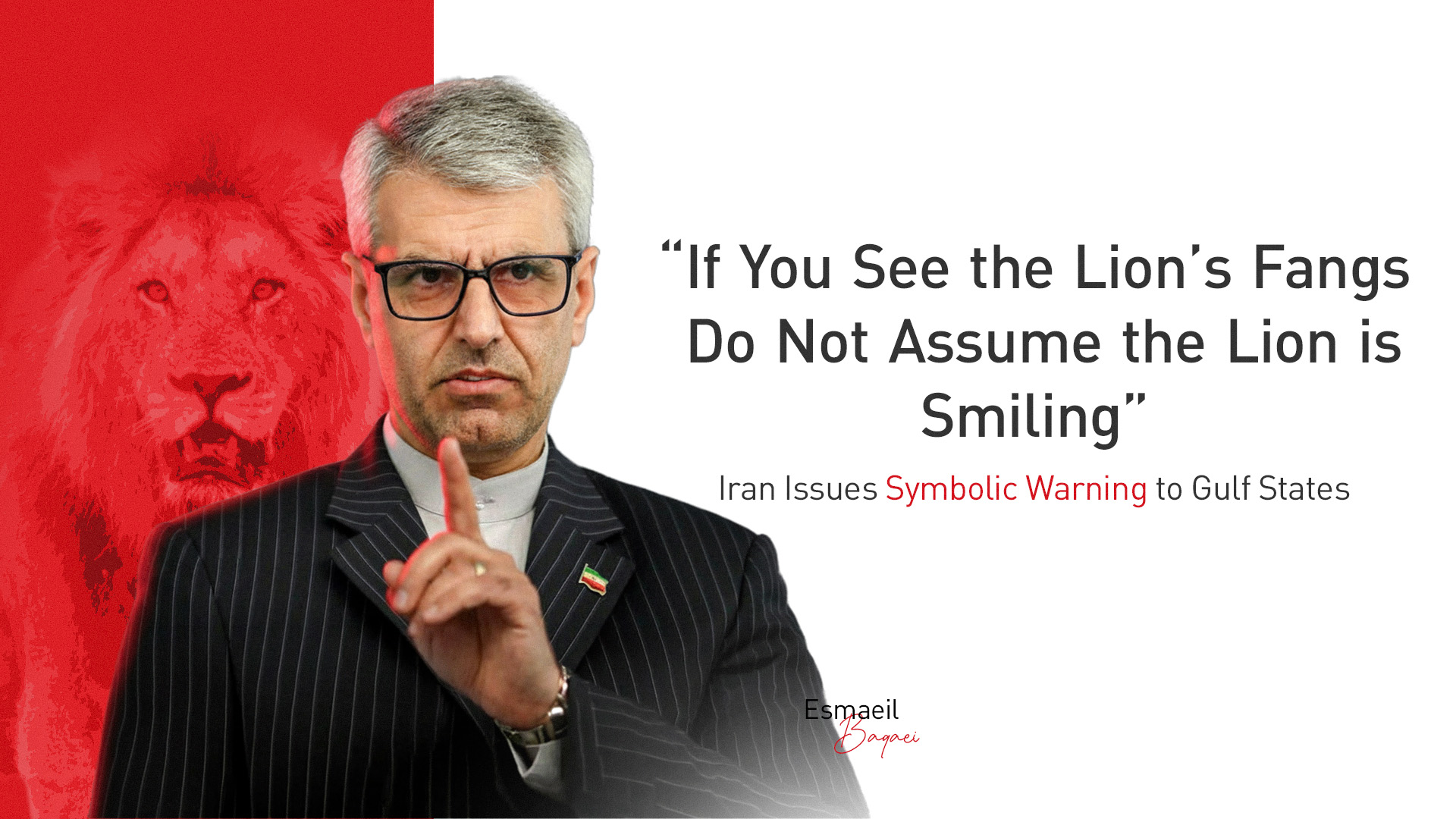
ERBIL (Kurdistan24) - The diplomatic and military confrontation in the Middle East has intensified, with the Iranian Ministry of Foreign Affairs issuing a stark rhetorical warning to neighboring Gulf states.
Following a severe naval clash with United States forces in the strategic Strait of Hormuz, Iranian Foreign Ministry spokesperson Esmaeil Baqaei utilized the social media platform 'X' to characterize the posture of Gulf countries as "reckless."
According to the report, Baqaei's message, which was posted in Arabic, relied on aggressive metaphorical language to underscore Tehran's deterrence strategy.
"If you see the lion's fangs, do not think the lion is smiling," Baqaei said. The statement reflects a significant hardening of Iranian diplomatic rhetoric as the fragile truce brokered in early April shows signs of severe strain, with both maritime and aerial security incidents multiplying across the region.
The hostile messaging directed at the Gulf states occurs as direct military friction between the United States and Iran resumes.
According to reports, Iranian and American naval forces engaged in a brief but intense battle near the Strait of Hormuz, with both sides subsequently trading accusations regarding who initiated the hostilities that violated the ceasefire framework.
Military Warnings and Deterrence Messaging
The diplomatic warnings have been matched by explicit military threats from Tehran's high command.
The spokesperson for Iran's Khatam al-Anbiya Headquarters issued a statement asserting that the country's armed forces will deliver a "firm response" to any acts of aggression.
According to the military statement, the headquarters accused the United States Navy of violating the ceasefire by launching attacks against two Iranian oil tankers.
The Iranian military claimed that one tanker was attacked within Iranian territorial waters while moving from the Jask area toward the Strait of Hormuz, and a second vessel was targeted near the Strait of Hormuz opposite the Port of Fujairah in the United Arab Emirates (UAE).
Furthermore, the Khatam al-Anbiya spokesperson alleged that the United States, acting with the cooperation of certain regional countries, conducted airstrikes on civilian areas along the Iranian coast, specifically naming Bandar Khamir, Sirik, and Qeshm Island.
In response to these alleged provocations, Iranian armed forces engaged U.S. warships.
The military headquarters declared: "America and its supporting countries must know well that the Islamic Republic of Iran remains as strong as before and will give a harsh response to any aggression without any hesitation."
Hormuz Tensions and U.S. Perspective
The U.S. military provided a starkly different account of the maritime confrontation.
According to the United States Central Command (CENTCOM), it was Iranian forces that initiated the assault in the Strait of Hormuz.
CENTCOM reported that Iranian units launched missiles, drones, and small fast-attack boats toward three American destroyers, identified as the USS Truxtun, USS Rafael Peralta, and USS Mason, while the vessels were transiting the international waterway toward the Gulf of Oman.
According to a statement posted on X, CENTCOM confirmed that American forces responded firmly by striking Iranian military targets linked to the attack, noting that no U.S. vessels were hit.
"CENTCOM does not seek escalation but remains positioned and ready to protect American forces," the command noted.
The exchange represents the most severe military flare-up since a U.S.-brokered ceasefire took effect on April 8, which had temporarily halted weeks of U.S.-Israeli strikes on Iran and retaliatory Iranian operations, including a disruptive blockade of the Strait of Hormuz.
Despite the intense naval engagement, U.S. President Donald Trump indicated that the ceasefire technically remains in effect.
Speaking in Washington, Trump downplayed the strategic significance of the clash, stating, "They trifled with us today. We blew them away. They trifled. I call that a trifle."
However, he utilized his Truth Social platform to issue renewed threats, warning that the U.S. would respond "a lot harder, and a lot more violently" if Tehran failed to finalize a pending nuclear-related agreement. Iranian officials said they would relay their formal position to Pakistani mediators following internal consultations.
UAE and Regional Security Developments
The repercussions of the renewed hostilities have extended beyond the maritime domain, directly impacting the security of neighboring Gulf states.
According to reports from the UAE Ministry of Defense, Emirati air defense systems have been actively intercepting hostile projectiles originating from Iran.
In a statement posted on X, the UAE Ministry of Defense confirmed that explosions heard across various regions were the result of ongoing defensive operations against "ballistic missiles, cruise missiles, and drones."
The ministry added that its systems were "actively engaging with missile and UAV threats."
The report indicated that this aerial assault follows a major attack earlier in the week.
According to Emirati authorities, Iran launched approximately 12 ballistic missiles, three cruise missiles, and four drones at the UAE. This barrage was described by officials as the first major assault on the country since the April 8 truce.
One of the primary targets during the earlier attack was the Fujairah Petroleum Industry Zone (FOIZ), a critical energy infrastructure hub that allows oil shipments to bypass the contested Strait of Hormuz.
The report stated that a drone strike caused a "major fire" at the facility and resulted in moderate injuries to three Indian nationals.
The strikes prompted the UAE to issue nationwide emergency alerts, advising residents to stay indoors during the air defense interceptions.
Broader Regional Context
The escalation of military activity in the Strait of Hormuz and the aerial attacks on the UAE underscore the extreme fragility of the current regional security environment.
The growing tensions between Iran, the United States, and Gulf states threaten to unravel the diplomatic progress previously brokered by international mediators.
As maritime routes face renewed risks and critical energy infrastructure is targeted, the diplomatic and military implications suggest a region preparing for potential further conflict.
The combination of intense naval skirmishes, cross-border missile strikes, and severe diplomatic rhetoric from Iranian officials indicates that the temporary stabilization achieved in April is currently under severe systemic pressure.