Iran Official Says Supreme Leader Mojtaba Khamenei Is in 'Perfect Health'
Iran says Supreme Leader Mojtaba Khamenei is in "perfect health" amid mounting speculation over injuries from February airstrikes.
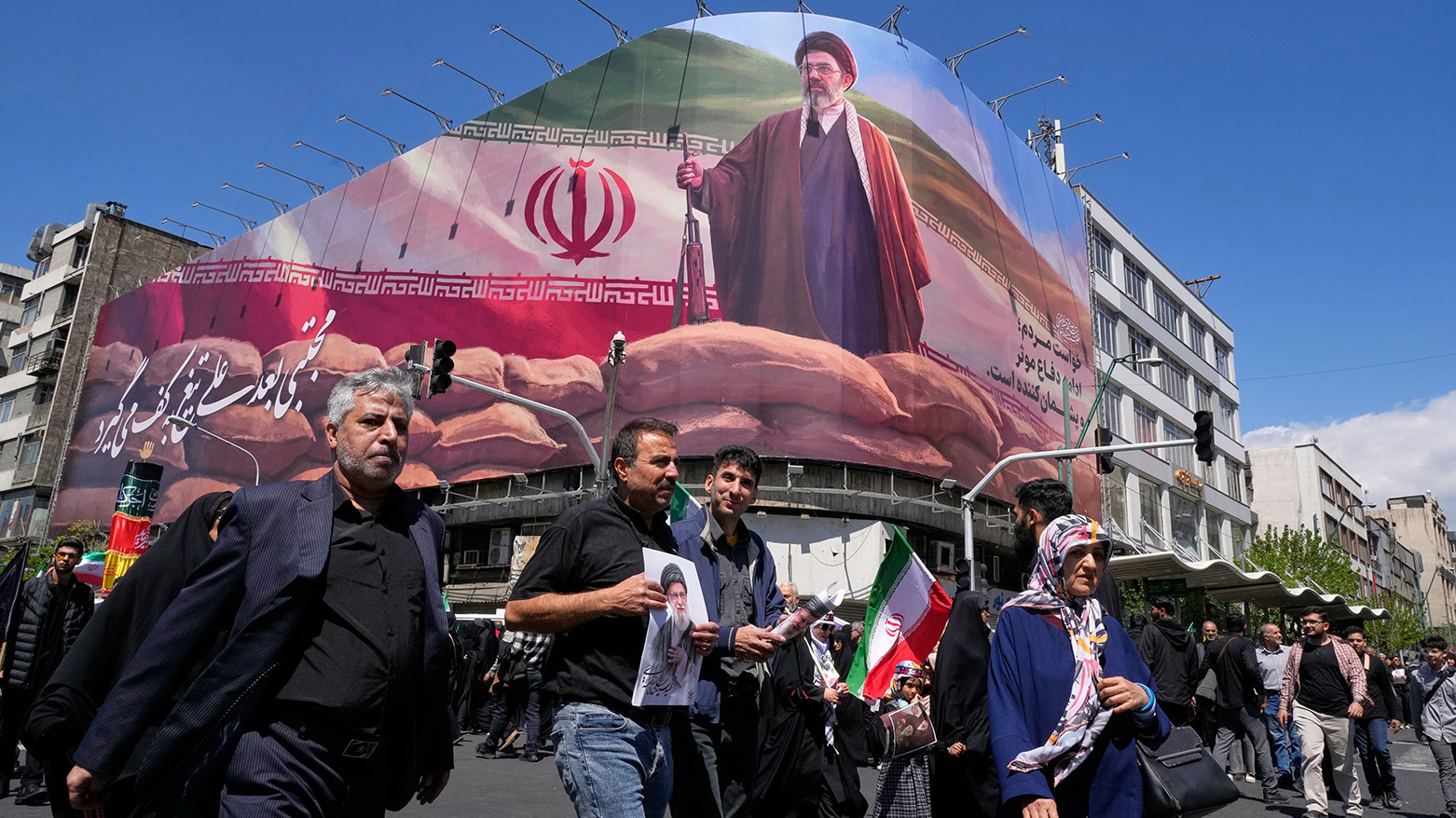
ERBIL (Kurdistan24) - Mazaher Hosseini, a senior official in the office of Iran's Supreme Leader, has publicly stated that Ayatollah Mojtaba Khamenei is in "perfect health."
The official remarks, captured in a video distributed by Fars News Agency, represent a direct effort by the Iranian leadership apparatus to counter widespread international speculation regarding the physical condition and operational capacity of the newly appointed Supreme Leader.
According to the report, Hosseini delivered a detailed account of the February 2026 airstrikes that resulted in the death of former Supreme Leader Ali Khamenei, explicitly aiming to dispel rumors that Mojtaba Khamenei was severely disfigured or incapacitated during the same attack.
The statement by a senior office official is politically significant as it marks a coordinated public messaging campaign to project institutional stability.
The broader context of public speculation surrounding Iran's leadership has intensified due to Mojtaba Khamenei's complete absence from public view since his appointment by the Assembly of Experts in early March.
Hosseini's remarks attempt to reconcile this absence with assertions of continued authority, framing the lack of visual evidence not as a sign of medical incapacitation, but as a deliberate security and strategic posture.
Why Mojtaba Khamenei's Health Has Become a Subject of Regional Attention
The physical condition of Mojtaba Khamenei has become a subject of intense regional and international scrutiny due to the high-stakes geopolitical environment.
Documented reports from April 2026 suggested that the 56-year-old cleric suffered catastrophic injuries during the U.S.-Israeli strikes on the leadership compound in late February.
These accounts, which circulated through various international channels, created a perceived leadership vacuum at a critical juncture in the ongoing regional conflict.
Official Iranian statements are now seeking to systematically counter reporting that suggested severe injury or limited public visibility.
The assertion of "perfect health" is vital for Tehran's domestic and international credibility, particularly as the significance of leadership continuity is magnified amid ongoing regional military tensions and delicate diplomatic negotiations regarding a proposed ceasefire framework with the United States.
Official Account of the Strikes and Injuries
In the video published by Fars News Agency on Saturday, Mazaher Hosseini offered a specific narrative of the events surrounding the February strikes.
Hosseini said that the Supreme Leader was hit by the blast wave of a missile while transiting to his workplace.
According to Hosseini, the incident occurred within meters of where other senior officials, including Sardar Shirazi, were killed.
Hosseini acknowledged that Mojtaba Khamenei sustained minor injuries during the missile attack, stating that the leader's "kneecap was slightly injured, and his back a little bit."
However, the official firmly rejected more severe assessments found in the international press. "Thank God, his back has recovered these days. God willing, his kneecap will also heal very soon," Hosseini told the crowd. He emphatically added, "He is in perfect health."
The official also addressed specific rumors regarding facial injuries and disfigurement.
"All this talk about his forehead that they are saying, it's all nonsense," Hosseini stated in the video.
He claimed that a "tiny piece of shrapnel" struck behind the Supreme Leader's ear, which is obscured by his turban and has since been treated. Hosseini characterized the demands for visual proof of the Supreme Leader's condition as a tactical maneuver by adversaries.
He urged the public to "be patient, do not rush," assuring them that Mojtaba Khamenei will speak publicly "when the time is right."
Contrast with International Media Assessments
These official reassurances contrast sharply with previous international assessments.
Earlier reports by news agencies like Reuters cited sources close to the leadership's inner circle who claimed that the new leader sustained "severe facial and leg injuries," with a U.S. intelligence contact suggesting he may have lost a limb.
The public and international speculation surrounding his visibility and condition was further fueled by statements from Washington.
In mid-March, U.S. Defense Secretary Pete Hegseth stated that Khamenei was "wounded and likely disfigured."
The complete lack of confirmed images, videos, or audio recordings since his appointment on March 8 has only amplified these reports, leading to persistent questions regarding his ability to fully govern.
A detailed report by The New York Times on April 23, citing senior Iranian officials, also suggested that while the leader remained "mentally sharp and engaged," he had undergone multiple surgeries on one leg and was awaiting a prosthetic limb.
Political Context and Operational Continuity
The issue of leadership capacity is particularly acute given the current diplomatic environment.
Ongoing reports indicate that the Iranian leadership is engaged in deliberations regarding a new U.S.-backed proposal aimed at ending the regional war and reopening the Strait of Hormuz.
The significance of continuity and leadership stability during these diplomatic review processes remains a primary concern for the state.
Iranian President Masoud Pezeshkian recently offered a rare public acknowledgment of a meeting with the Supreme Leader, providing further institutional weight to the claim that Mojtaba Khamenei is fit for duty.
According to remarks aired on state television, Pezeshkian described Khamenei as possessing a "vision" and a "humble and sincere approach."
This public statement by the President appeared designed to reinforce the narrative that the Supreme Leader is actively engaged in the high-level decision-making process required to navigate the ceasefire negotiations.
Leadership Visibility and Institutional Messaging
The importance of public appearances in Iranian political culture makes the current situation unprecedented.
Official efforts to maintain institutional stability rely heavily on surrogates and written statements.
Since taking office, Mojtaba Khamenei has issued only written messages, which are typically read by state television anchors, a practice noted as unusual by both The Wall Street Journal and The New York Times.
The strategy outlined by Hosseini, asking for patience and promising a future public address, indicates a calculated approach to managing domestic expectations while attempting to project strength externally.
The messaging aims to reassure the public that the core of the Islamic Republic remains intact despite the devastating impact of the initial airstrikes, which, as Hosseini acknowledged, resulted in the deaths of several individuals, including Mojtaba Khamenei's wife.
Regional and Diplomatic Implications
The wider tensions involving Iran and the United States form the critical backdrop to these leadership updates.
The conflict, which began in late February, triggered severe disruptions in Gulf shipping and global energy markets.
According to recent diplomatic reports, U.S. President Donald Trump indicated that Washington and Tehran had held "very good talks," while Iranian Foreign Ministry spokesperson Esmaeil Baqaei confirmed that the U.S. proposal remains "under review."
The political sensitivity surrounding leadership rumors is heightened during this ongoing regional instability.
Any perception of a leadership vacuum or operational incapacity could alter the negotiating leverage of both sides.
Consequently, the explicit declaration of Mojtaba Khamenei's "perfect health" by his office serves not only as a domestic reassurance but as a geopolitical signal that Tehran's command structure remains cohesive and fully capable of executing complex diplomatic and military strategies.