Syria Charges Assad’s Cousin with War Crimes In Landmark Trial
Damascus court formally charged former security chief Atef Najib with war crimes linked to the 2011 Daraa crackdown, in what marks Syria’s first major transitional justice trial
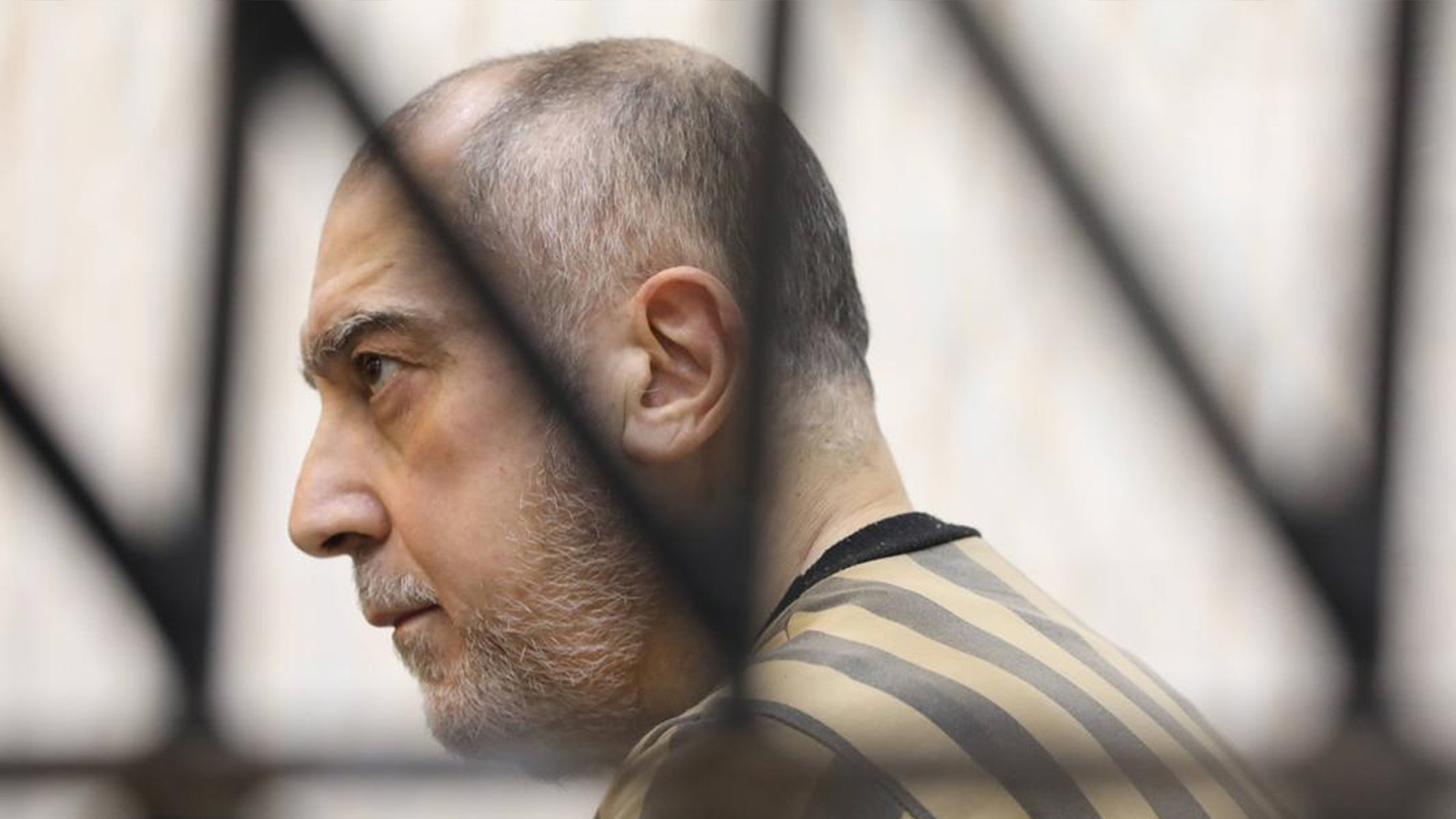
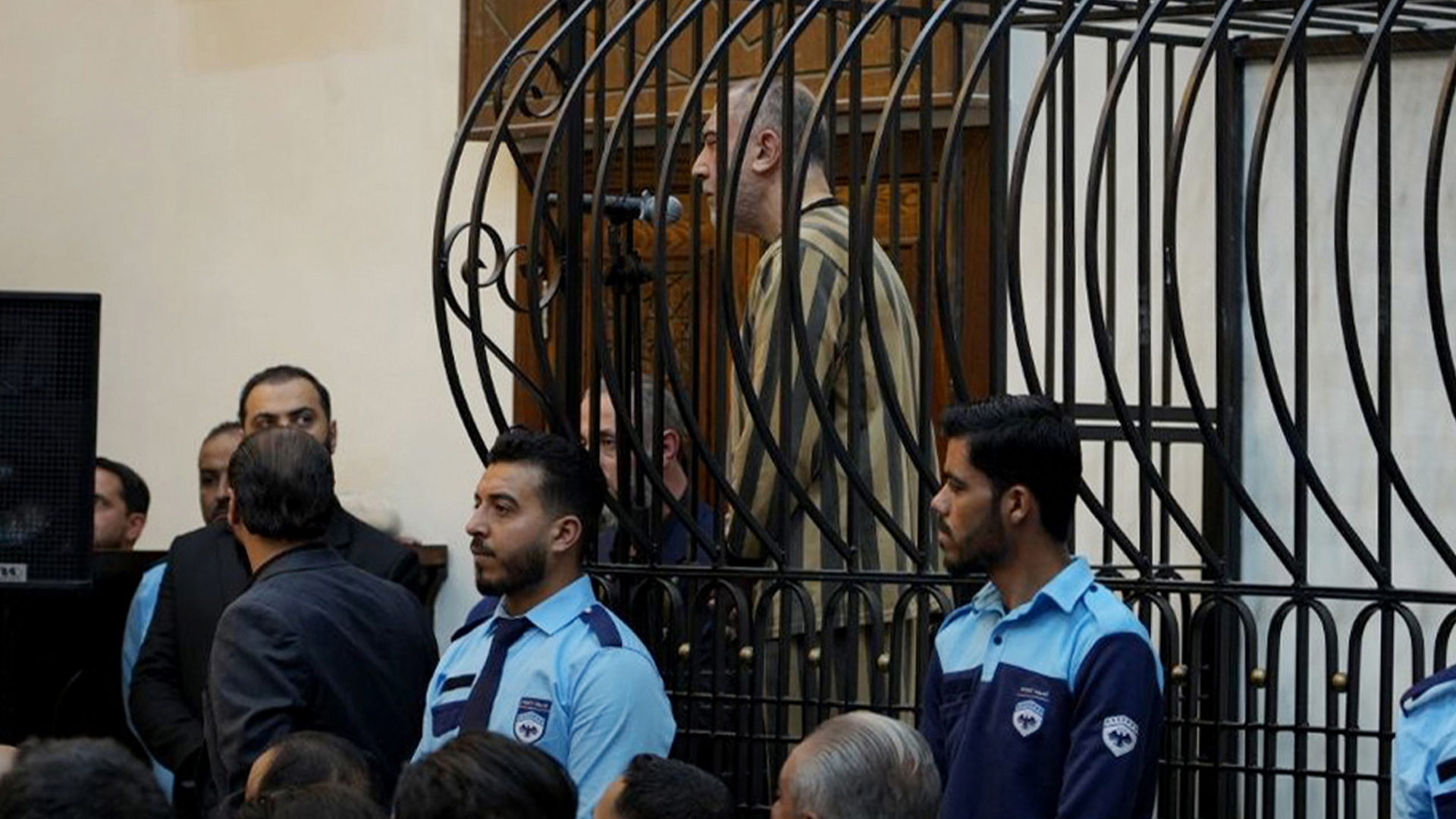
ERBIL (Kurdistan24) - Inside a Damascus courtroom heavy with the weight of Syria’s modern history, Atef Najib — cousin of former Syrian President Bashar Assad and one of the regime’s most feared security figures — stood in chains as a judge read out accusations tied to the violent crackdown that ignited the country’s devastating civil war.
On Sunday, Judge Fakhr al-Din al-Aryan formally detailed charges against Najib, the former head of political security in Daraa province, accusing him of acts “amounting to war crimes” and crimes against humanity committed during the early stages of the 2011 uprising.
The hearing marked a historic milestone in Syria’s transitional justice process, becoming the first public trial of senior Assad-era officials since the collapse of the former government in December 2024.
According to the court proceedings broadcast partially by Syrian state television, Aryan told Najib: “The accusations against you relate to events in Daraa province in early 2011, when the peaceful movement was met with an excessive use of force.”
The judge accused Najib of holding “direct and joint leadership responsibility for systematic acts that targeted civilians, including killing, torture and arbitrary detention.”
Among the alleged crimes cited by the court were the arrest and torture of children, opening fire on demonstrators gathered at a mosque in Daraa, and torture leading to death inside detention facilities run by forces under Najib’s command.
“You were the ultimate authority in Daraa province and hold direct responsibility for issuing orders to kill, arrest and torture,” the judge said, adding that Najib participated “with political, security and military leaders in an organized hierarchical structure in committing these grave violations.”
Former President Bashar Assad, his brother Maher Assad, and several senior former regime officials are also being tried in absentia. Syrian authorities believe they fled to Russia following the fall of the Assad government.
A symbolic defendant at the center of Syria’s reckoning
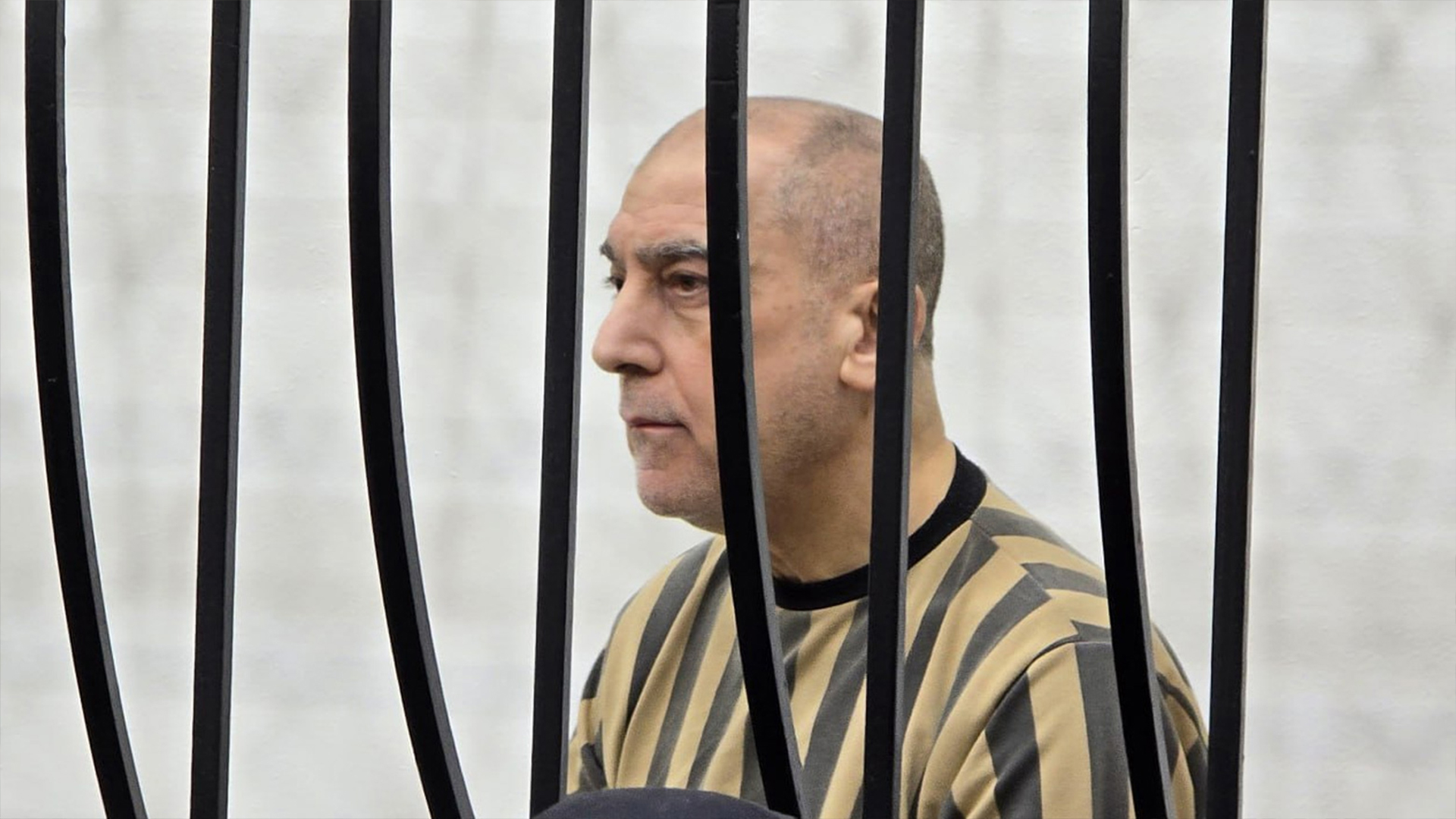
Najib carries enormous symbolic significance in Syria’s collective memory.
Born in 1960 in Jableh, Latakia province, the former brigadier general is the son of Fatima Makhlouf, sister of Assad’s mother Anisa Makhlouf, making him part of the regime’s inner ruling family circle.
As head of political security in Daraa between 2008 and 2011, Najib became closely associated with the events many Syrians view as the spark that ignited the uprising.
In March 2011, security forces under his authority arrested 15 children accused of writing anti-government slogans on school walls in Daraa. The children were reportedly detained for 45 days and subjected to beatings, electric shocks, and severe abuse.
The arrests triggered widespread protests during the broader wave of Arab Spring demonstrations sweeping across the region at the time.
When tribal elders reportedly appealed for the students’ release, Najib’s alleged response deepened public anger and transformed local outrage into a nationwide revolt.
What began as peaceful demonstrations later descended into more than 13 years of civil war that killed hundreds of thousands of people and displaced millions across Syria and beyond.
Syria opens first transitional justice proceedings
The proceedings against Najib are part of Syria’s broader transitional justice initiative launched after opposition forces led by the Syrian Liberation Council entered Damascus in December 2024 and ended more than five decades of Assad family rule.
Opening the initial session on April 26, presiding Judge Fakhr al-Din Aryan declared: “Today we begin the first trial of transitional justice in Syria, which includes detained and fugitive defendants.”
According to Syria’s National Transitional Justice Authority, the trials aim to address serious crimes and human rights violations while strengthening the rule of law.
Justice Minister Mazhar al-Wais stated that the Daraa-related prosecutions are “not merely judicial proceedings,” but part of a national effort to reveal the truth and preserve the memory of crimes committed against Syrians.
Judicial authorities explained that investigations into former regime crimes began approximately nine months ago. A specialized judicial team was later expanded as the scale of the cases widened.
The referral judge eventually issued a 60-page decision charging Najib and others with premeditated murder and torture leading to death. The acts were classified as crimes against humanity under the Rome Statute.
While Najib appeared physically before the court, Bashar Assad remains outside Syria.
The former Syrian president fled to Russia in December 2024 as opposition forces rapidly advanced toward Damascus following a major offensive led by Hayat Tahrir al-Sham (HTS), a group with roots linked to the former al-Nusra Front.
Syria’s military structure quickly collapsed during the offensive, ending Assad’s 24-year presidency and the broader Assad family rule that began under Hafez Assad.
Ahmed al-Sharaa now serves as interim president and has sought to normalize Syria’s relations with the international community while pursuing the removal of sanctions imposed during the Assad era.
The new administration has simultaneously faced mounting pressure from victims’ families and human rights advocates demanding faster accountability for former regime officials.
Public attention surrounding the transitional justice process intensified further after the arrest and televised confession of former intelligence officer Amjad Youssef two days before Najib’s trial session.
Youssef, identified by investigators as a central figure in the Tadamon massacre, admitted in a public confession that victims were executed by gunfire and buried in mass graves prepared with heavy machinery.
According to his account, bodies were later burned with rubber tires to conceal evidence before the graves were covered.
The confession triggered widespread outrage across Syria, particularly after Youssef claimed the killings had been a “personal decision” rather than direct military orders — a claim many Syrians and legal observers rejected.
Activists demanded full disclosure regarding all officials involved in the massacre and broader regime-era crimes.
A fragile road toward justice
Despite the historic symbolism of the proceedings, major challenges continue to surround Syria’s transitional justice process.
No comprehensive transitional justice law has yet been publicly introduced, despite the establishment of the National Transitional Justice Authority in May 2025.
Critics argue that arrests alone cannot deliver accountability without broader legal reforms and institutional restructuring.
Syria also faces serious practical obstacles, including limited forensic capabilities, weak judicial infrastructure, and the enormous challenge of investigating mass graves, disappearances, and decades of alleged abuses.
At the same time, families of victims continue demanding transparency and broader participation in the process.
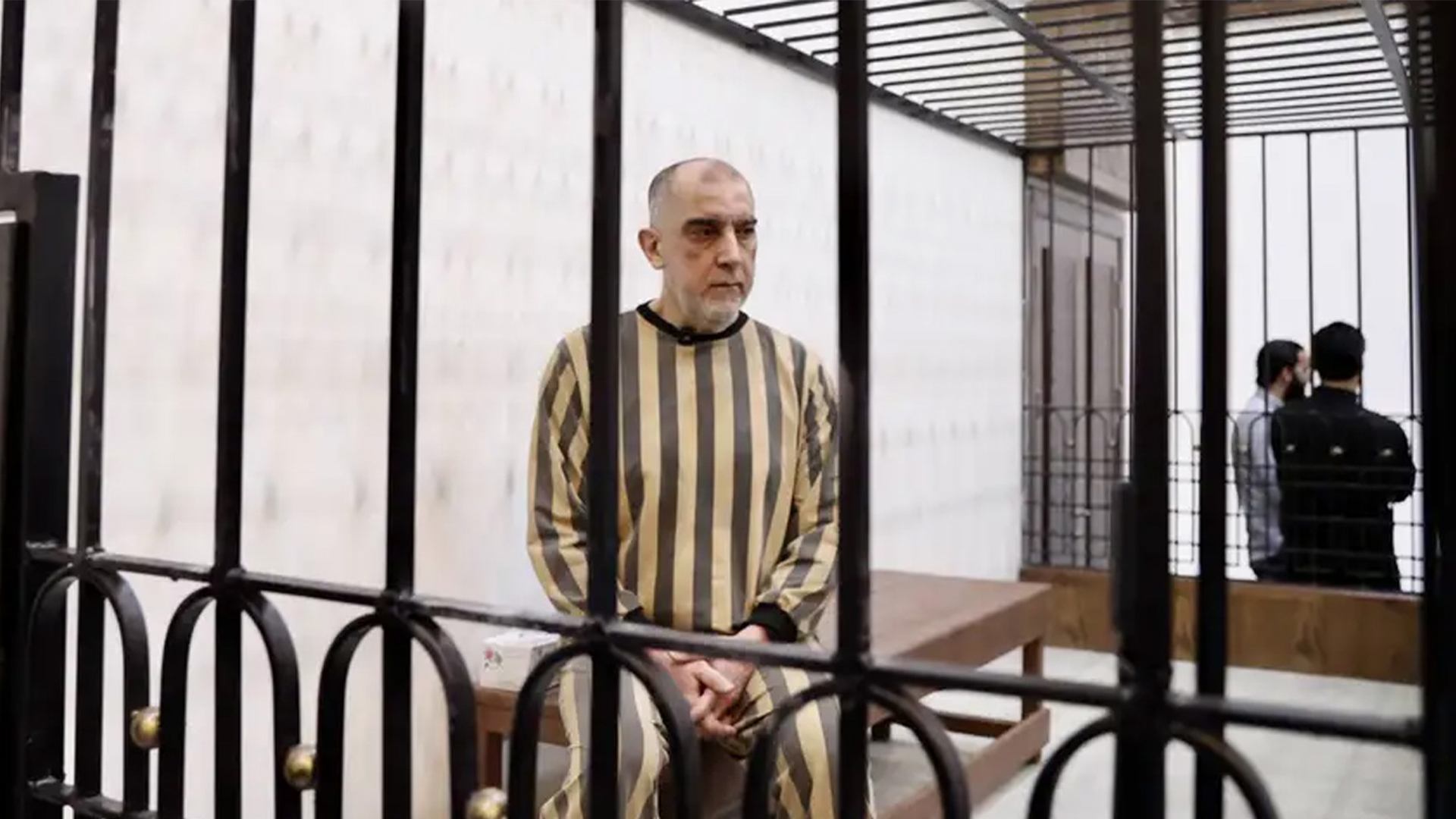
For many Syrians, the courtroom scenes in Damascus represented both a beginning and a painful reminder of unfinished justice: a former regime commander sitting in chains, while the president accused of ordering the crackdown remains beyond the reach of Syrian courts in exile.