Iraqi Ambassador Announces Completion of Migrant Repatriation Effort
Iraq's ambassador to Libya said Baghdad has repatriated 350 illegal migrants from Iraq and the Kurdistan Region over the past two and a half years, adding that no undocumented Iraqi migrants are currently confirmed to remain in Libya.
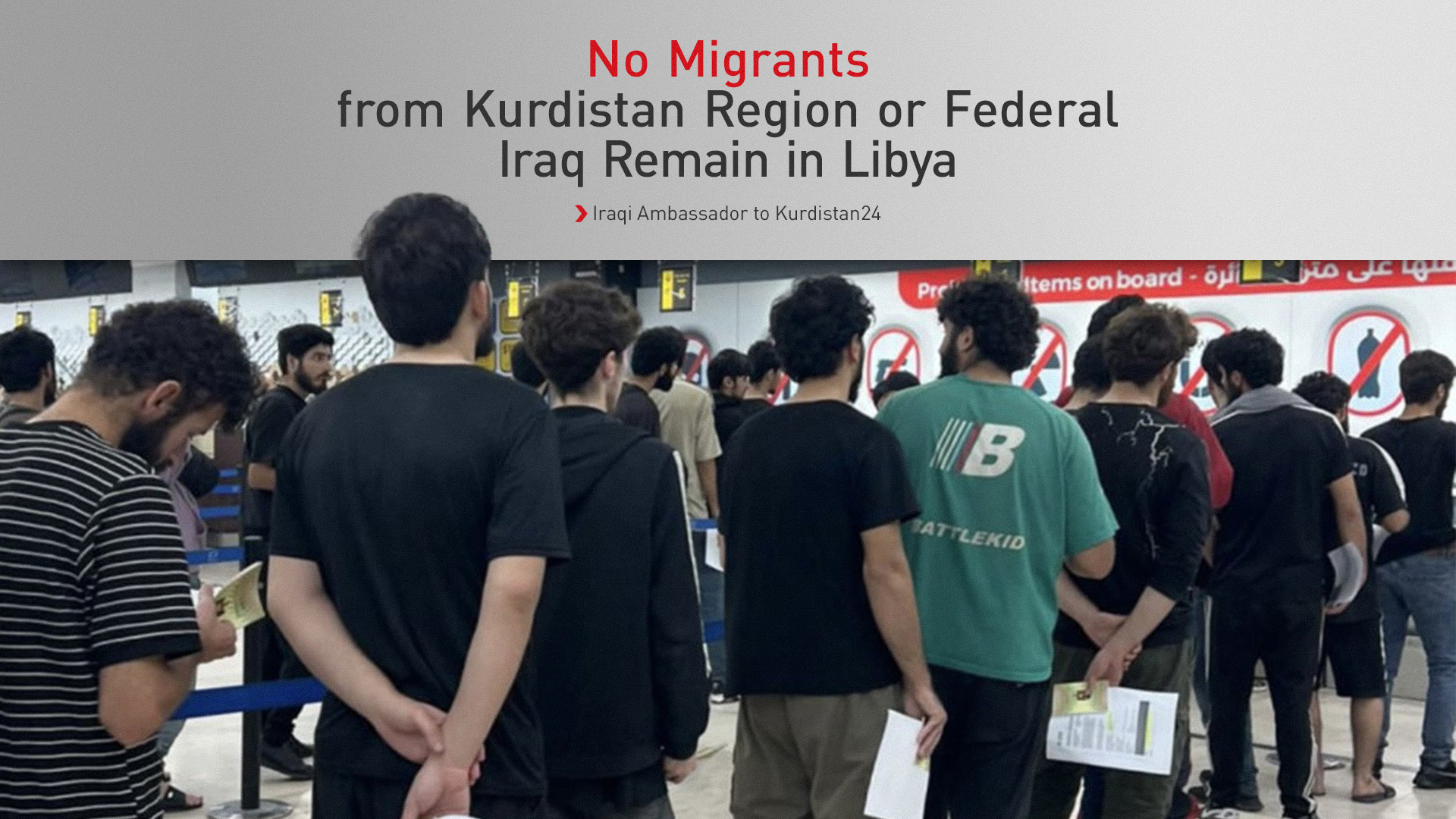
ERBIL (Kurdistan24) - The Iraqi Ambassador to Libya announced the successful conclusion of a years-long diplomatic and humanitarian mission, stating that no illegal migrants from the Kurdistan Region or federal Iraq remain in Libyan territory. Ahmed Sahaf, the Iraqi Ambassador in Tripoli, confirmed on Tuesday that a comprehensive repatriation program has effectively cleared the backlog of stranded citizens who had fallen victim to irregular migration routes and human trafficking networks.
The announcement marks a pivotal milestone in the joint efforts of Baghdad and the Kurdistan Regional Government (KRG) to address a recurring humanitarian crisis.
According to the Iraqi ambassador, follow-up operations conducted in coordination with official Libyan authorities have not confirmed the presence of any additional Iraqi or Kurdish citizens in the country's various detention centers or transit zones.
This development follows a systematic voluntary return process that saw approximately 350 individuals repatriated over the preceding 30 months, resolving a series of high-profile cases that had sparked significant domestic concern and diplomatic tension.
The resolution of the migrant crisis in Libya represents the culmination of an intensive intervention strategy designed to rescue citizens from what international observers have long characterized as one of the world's most perilous migration corridors.
Over the past two years, families of migrants repeatedly appealed for urgent state action as their relatives became trapped in a cycle of detention, extortion, and physical abuse.
While the successful repatriation of all stranded migrants from the Kurdistan Region and federal Iraq in Libya marks a significant achievement, it follows a period of acute vulnerability where hundreds of young people were caught in the lawless vacuum of post-2011 Libya.
Ambassador Announces Completion of Repatriation Efforts
Ambassador Ahmed Sahaf told Kurdistan24 that the embassy's persistent engagement with the Libyan government and authorities in the Kurdistan Region was the primary driver behind the successful returns.
He emphasized that the 350 repatriated individuals represented a diverse group of citizens who had initially entered Libya illegally in an attempt to reach European shores.
According to the ambassador, the most recent checks with Libyan state parties suggest that all known cases have been processed.
This stabilization of the diplomatic file follows years where the Iraqi mission in Tripoli acted as a critical bridge for those lacking valid travel documents or legal status.
Sahaf noted that the voluntary return process was facilitated through high-level coordination, ensuring that those who wished to return were provided with the necessary documentation and transport.
Despite the positive announcement, the ambassador issued a stern warning to Iraqi families, urging them to prevent their children from seeking irregular migration paths.
He stated that such journeys not only endanger human lives but also expose individuals to severe legal accountability and the predatory practices of international criminal organizations.
Sahaf underscored that human trafficking and smuggling operations are recognized as international crimes and carry heavy penalties, reflecting a broader strategy to deter future irregular movements.
Earlier Migrant Crises and Humanitarian Concerns
The current success of the repatriation program stands in stark contrast to the dire conditions reported by migrants and their families throughout 2025 and early 2026.
Earlier reports indicate that the issue reached a critical juncture in January 2026, when at least 147 Kurdish migrants from the Raparin Independent Administration were reported stranded in Libya for nearly half a year.
During that period, families of the stranded individuals appealed for assistance, alleging that their sons had been trapped by a smuggler who refused to facilitate their onward journey or their return home.
According to reports from the families, the smuggler, himself an individual from the Raparin area, had effectively detained the group and was demanding ransoms of $3,500 per person for their release.
Relatives described a sophisticated network of agents operating within the Kurdistan Region who funneled desperate youth into the Libyan labyrinth.
The humanitarian stakes were further illuminated by the first-hand accounts of those who returned in earlier tranches.
According to previous Kurdistan24 reporting on this matter, a group of 40 migrants who arrived in Erbil in October 2025 provided harrowing testimonies of the systematic breakdown of human dignity inside Libyan detention centers.
Returnees recounted stories of near-starvation, describing daily rations limited to a single loaf of bread. More disturbingly, survivors reported witnessing the death of a companion due to medical neglect and described seeing friends beaten so severely they were left incapacitated for days.
Embassy and Government Intervention
The process of securing these returns involved a complex multi-agency framework.
KRG officials previously stated that Prime Minister Masrour Barzani provided direct support and funding for these operations, reflecting a policy of prioritizing the safety of citizens abroad.
The KRG's Department of Foreign Relations and the Ministry of Interior worked in tandem with the Iraqi Embassy in Tripoli to identify and free those held by various regional militias and state entities.
The Iraqi embassy role was equally vital in the legal sphere.
According to earlier reports, Ahmed Sahaf, then serving as the Chargé d'Affaires, negotiated directly with Libyan security officials to issue emergency passports for those who had lost their documentation.
In October 2025, a specific intervention secured the release of five Iraqi migrants who had illegally crossed the border, preparing them for immediate repatriation.
The coordination extended to the legislative level.
The KRG Ministry of Martyrs and Anfal Affairs confirmed that a high-level committee, including the Ministers of Finance and Martyrs, was formed to negotiate the status and budgetary allocations for those returning.
Ahmed Mam Rasul, a director at the ministry, indicated that legal procedures and coordination with the Iraqi Political Prisoners Foundation had concluded, with joint minutes signed to ensure returnees were integrated into national support frameworks.
Repatriation Operations and Logistics
The physical return of these citizens was executed through organized transfers that typically transited through Istanbul before arriving at Erbil International Airport.
In November 2025, the KRG announced the successful return of 25 citizens who had been detained. This followed the repatriation of 40 individuals in late October and another group of 25 in September 2025.
Upon landing on regional soil, returnees were met by specialized medical and assistance teams.
KRG officials previously stated that these teams performed necessary health examinations and psychological assessments before the freed individuals were reunited with their relatives.
This structured reception was intended to manage the trauma associated with the Libyan route, which frequently involves kidnapping for ransom and forced labor in warehouse-like conditions in cities such as Benghazi, Tobruk, and Sirte.
The Iraqi Embassy in Tripoli noted that these operations were conducted under the directives of the Ministry of Foreign Affairs in Baghdad, which emphasized the principle of voluntary and safe return.
Diplomatic sources indicated that international bodies, including the International Organization for Migration (IOM), commended the responsiveness of the Iraqi and Kurdish authorities in managing these vulnerable populations.
Humanitarian and Migration Challenges
Libya has remained a critical and deadly transit hub for migrants since the political collapse of the country in 2011. The ensuing lawlessness created a fertile environment for human traffickers to exploit the desperation of those fleeing conflict and economic hardship in the Middle East and Africa.
According to data from the IOM and UNHCR, Libya hosted over 700,000 migrants as of early 2024, with a growing number of Iraqis and Syrians among them.
The broader migration context is further complicated by European policies. Some analyses have suggested that EU funding for Libyan maritime and security forces has inadvertently empowered militias and supercharged an extortion economy where migrants are used as financial pawns.
Against this backdrop, the intervention of the Iraqi and Kurdistan governments served as a necessary lifeline for citizens who found themselves caught between restrictive European border policies and the predatory practices of local armed groups.
As of May 2026, the completion of these repatriations reflects a significant consolidation of regional protection efforts. The Iraqi and Kurdistan authorities have transitioned from emergency rescue operations to long-term monitoring and awareness campaigns.
By ensuring that no citizens remain in the Libyan detention system, the diplomatic missions have addressed one of the most visible and tragic symptoms of the regional migration crisis.
Iraqi and Kurdistan authorities continue to monitor migration-related humanitarian issues involving citizens abroad, maintaining a posture of vigilance despite the current absence of remaining stranded groups in Libya.
The successful repatriation of 350 individuals underscores the efficacy of sustained diplomatic coordination between Baghdad and Erbil in protecting vulnerable populations.