Rubio Highlights U.S.-China Agreement on Hormuz Shipping Security
U.S. Secretary of State Marco Rubio said China opposes Iran's efforts to militarize the Strait of Hormuz or impose transit tolls, signaling rare U.S.-China alignment as Washington pushes a U.N.-backed resolution to keep the strategic energy corridor open.
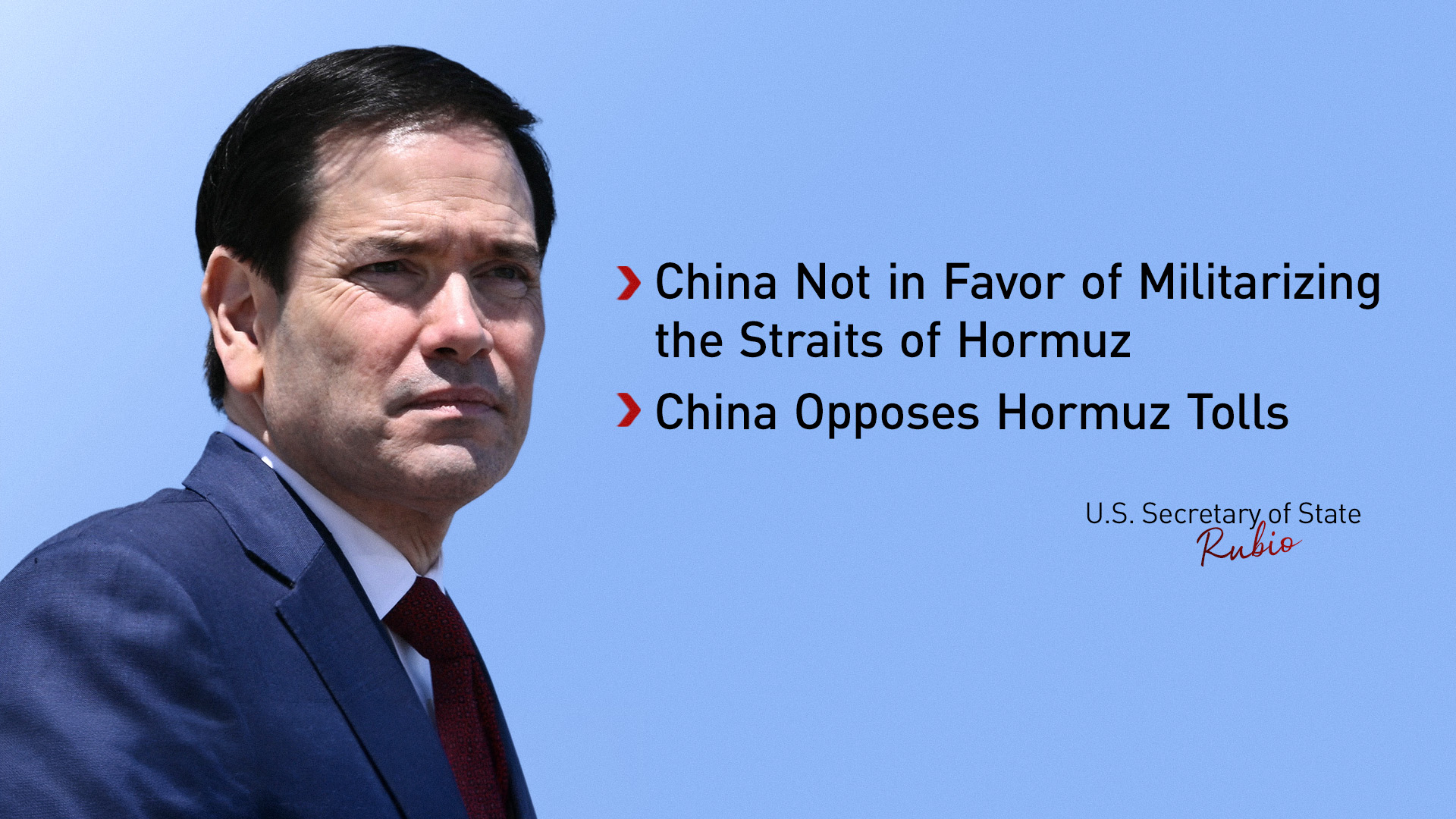
ERBIL (Kurdistan24) - United States Secretary of State Marco Rubio indicated that Washington and Beijing have found a rare point of strategic alignment regarding maritime security in the Middle East. According to an NBC News transcript of an interview conducted during President Donald Trump's high-stakes summit in Beijing, Rubio said the Chinese leadership explicitly voiced opposition to the militarization of the Strait of Hormuz and rejected Iranian plans to impose a tolling system in the international waterway.
Speaking with NBC Nightly News anchor Tom Llamas on Thursday, Rubio argued that while the U.S. and China remain fierce competitors across technological and economic sectors, maintaining open international shipping lanes represents a mutual interest.
The U.S. secretary of state stated that Washington is currently pushing a United Nations resolution, sponsored by Bahrain and reportedly backed by over 100 countries, that directly challenges Iranian attempts to restrict or tax maritime traffic.
Rubio noted that the U.S. hopes Beijing will formalize its rhetorical opposition by voting in favor of the resolution at the U.N.
The diplomatic developments emerge as the Strait of Hormuz, a critical chokepoint for global energy supplies, faces unprecedented pressure.
The waterway has been effectively blockaded, leading to a paralysis in international shipping and contributing to significant volatility in global oil markets.
The United States maintains a strict opposition to any Iranian claims of sovereignty over the strait, with Rubio warning against the use of naval mines and illegal tolls.
The potential convergence of U.S. and Chinese policy on this specific maritime issue highlights the broader international anxiety over the disruption of global energy logistics and the escalation of regional conflict.
Rubio Discusses Strait of Hormuz
During the interview, Llamas asked whether President Trump had raised the issue of Iran directly with Chinese President Xi Jinping.
According to the NBC transcript, Rubio confirmed the discussions, emphasizing that the dialogue produced a clear articulation of Chinese policy regarding the Gulf.
"The Chinese side said they are not in favor of militarizing the Straits of Hormuz, and they're not in favor of a tolling system," Rubio said during the NBC News interview.
The secretary of state noted that this stance mirrors the U.S. position.
"We will never support an Iranian tolling system in the Straits of Hormuz, nor do we think they have a right to put mines in international waters. And so it's good that we have alliance, or at least agreement on that point," Rubio stated.
According to the transcript, Rubio clarified that Washington was not requesting direct Chinese assistance in managing the crisis. Instead, the U.S. raised the issue to ensure Beijing clearly understood the American position.
Rubio argued that Iran's attempt to assert control over the international waterway and charge transit fees violates established international law.
He described Iran's actions as an attempt to "take the world hostage," stating that the U.S.-led blockade of Iranian ports is a direct reaction to Tehran's maritime provocations.
U.N. Resolution Gains International Support
The diplomatic focus has now shifted to the United Nations, where the U.S. is seeking to mobilize broad international pressure against Tehran. According to the NBC transcript, Rubio referenced a Bahrain-sponsored U.N. resolution that addresses the militarization and taxation of the strait.
"We have a resolution now before the United Nations, that in which 100 and something countries have co-signed," Rubio said. He noted that the United States is "strongly behind it and been pushing very hard on it."
The objective of the resolution is to diplomatically isolate Iran and potentially mandate international sanctions if Tehran refuses to cease its restrictive maritime operations.
While China expressed verbal opposition to Iran's actions during the bilateral summit, Rubio noted that Washington had not yet secured Beijing's formal commitment to vote for the resolution. "Maybe that'll change after today's meeting. I don't know," the secretary of state stated.
Global Shipping Concerns Intensify
The strategic importance of the Strait of Hormuz dictates the urgency of the diplomatic efforts. The waterway is essential for the transit of crude oil and liquefied natural gas, connecting Middle Eastern producers to global markets.
Any disruption in this corridor has immediate consequences for global energy prices and supply chain stability.
According to the NBC transcript, Rubio emphasized that the impact of the strait's closure extends far beyond U.S. borders. He argued that other nations, including China, have a vested interest in resolving the crisis, as they are highly dependent on the free flow of commerce through the region.
"They have as much or more to care about the straits than we do. They've got to get involved in this as well," Rubio said, referring to the broader international community.
The secretary of state indicated that the U.S. expects the world to impose costs on Iran for its actions, particularly regarding the removal of maritime mines and the cessation of attacks on commercial shipping.
China and the Maritime Security Debate
The diplomatic dynamics between the U.S. and China regarding Iran reveal a complex balancing act.
While the two powers are engaged in intense competition over artificial intelligence, semiconductors, and industrial supply chains, topics heavily featured in the NBC interview, the need for maritime stability provides a rare area of functional alignment.
According to the NBC transcript, Llamas asked whether China agrees with the U.S. that Iran should not possess a nuclear weapon.
Rubio confirmed that Beijing reiterated its stance that Iran, as a signatory to the Non-Proliferation Treaty, should not acquire nuclear arms. However, Rubio drew a sharp distinction between verbal agreement and actionable policy.
"I think the difference is we actually are trying to do something about it. Other countries are against it, but they're not willing to do anything about it," Rubio stated.
He argued that the U.S. military actions in the region were necessitated by the imminent threat of an Iranian conventional and nuclear shield, which would have rendered Tehran immune to international pressure.
Iran, Maritime Security, and Escalation
The U.S. perspective, as articulated by the secretary of state, frames the maritime standoff as a test of international resolve.
According to the NBC transcript, Rubio warned that allowing Iran to normalize its control over the Strait of Hormuz would set a dangerous precedent.
Rubio argued that if Iran were permitted to acquire a nuclear weapon, it would use that leverage to make its control over the strait permanent.
"Once they establish that point of immunity. Not only could they hold a world hostage with a nuclear program. They could hold a whole world hostage with the straits," Rubio said during the interview.
The immediate goal for the U.S. administration is the reopening of the waterway without conceding to Iranian demands for transit tolls.
According to Rubio, the administration prefers a diplomatic solution but faces challenges due to internal divisions within the Iranian regime, which he claimed frequently delay negotiations.
As the diplomatic process unfolds at the United Nations and through third-party mediators, the U.S. maintains its strict naval blockade, insisting that Iran cannot be the sole beneficiary of an international waterway.