President Barzani welcomes Vatican's new ambassador to Iraq, hails Kurdistan's culture of coexistence
The Vatican envoy conveyed the Holy See's gratitude for the Kurdistan Region's protection of displaced communities, including Christians, during the darkest years of the ISIS crisis.
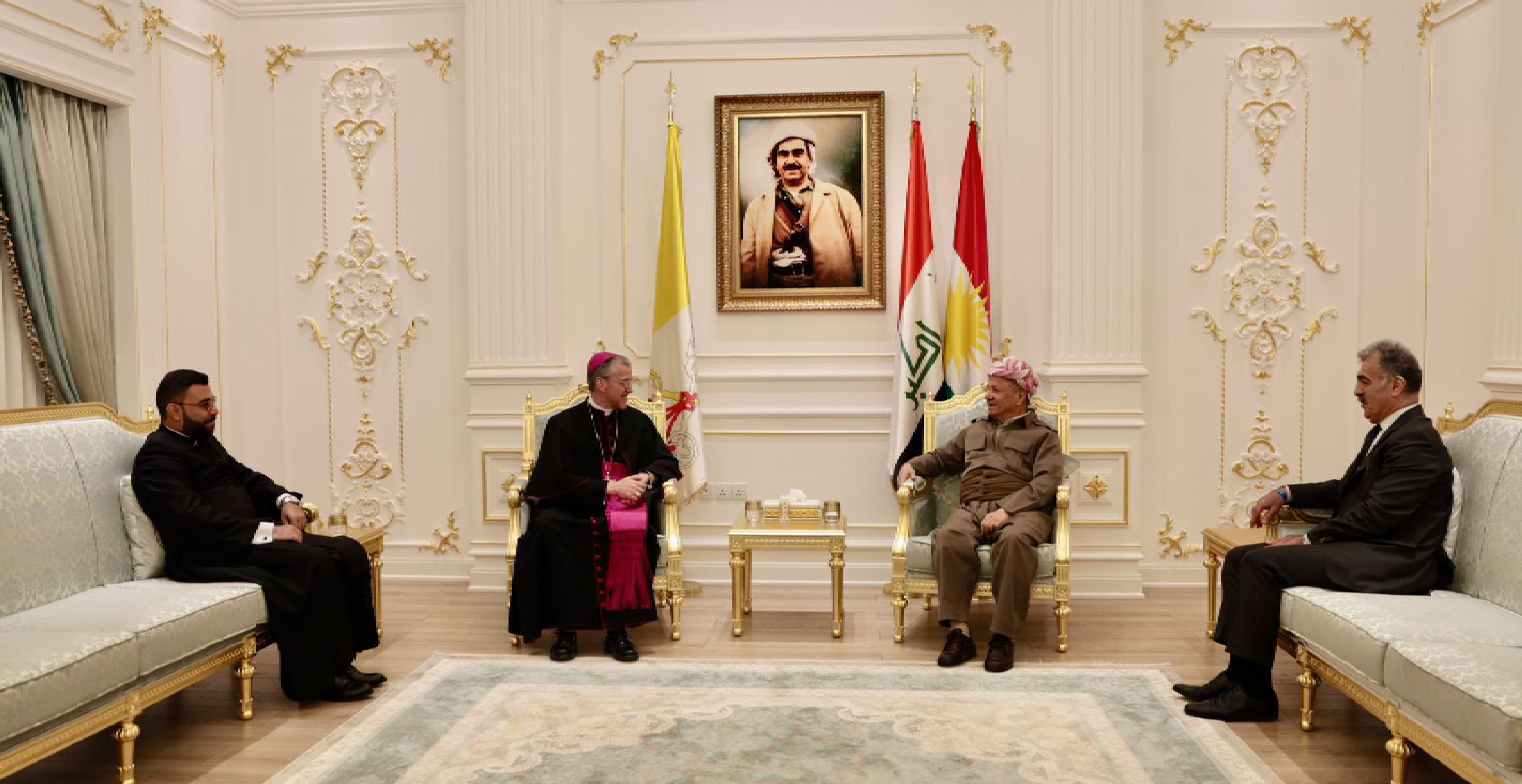
ERBIL (Kurdistan 24) - President Masoud Barzani received Archbishop Miroslaw Wachowski, the newly appointed Vatican Ambassador to Iraq, on Saturday, in a meeting that brought together shared memory, mutual gratitude, and a forward-looking vision for the region's Christian communities.
The Vatican envoy opened the meeting by expressing his deep appreciation for the opportunity to visit the Kurdistan Region, conveying the Holy See's formal thanks to President Barzani, the people of the Kurdistan Region, and the KRG for opening their doors to displaced populations from across Iraq during the years of crisis, with particular recognition of the shelter and support extended to Christian communities. Archbishop Wachowski also praised the culture of coexistence and mutual acceptance that defines life in the Kurdistan Region, noting that its diverse communities live, work, and build their futures in an atmosphere of security and stability.
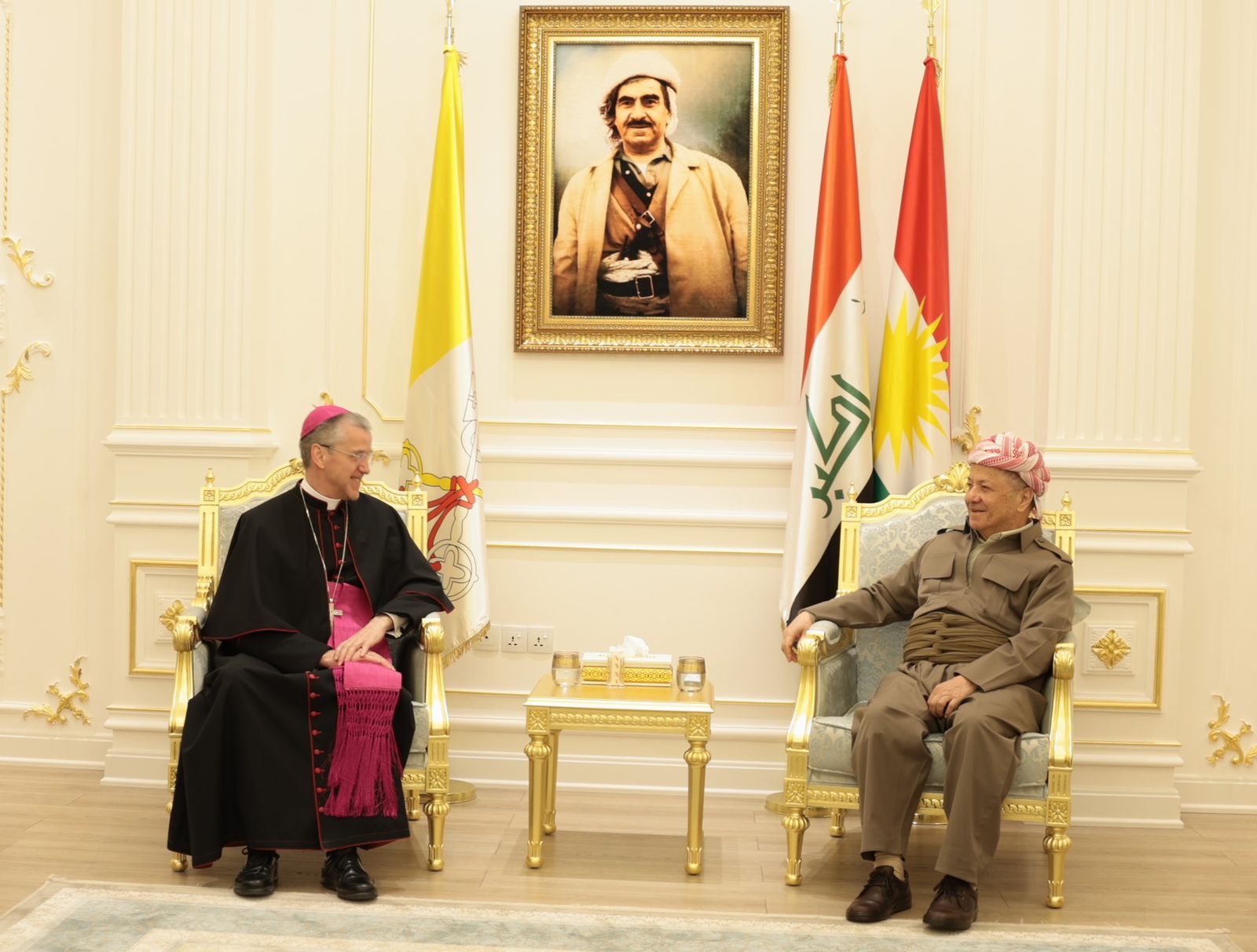
The Vatican ambassador reserved special acknowledgment for the KRG's support in establishing the Catholic University, the Ankawa Hospital, and several dedicated schools for Christian communities, institutions that have allowed Christian families to educate their children in their mother tongue and preserve their cultural and religious identity.
The meeting also touched on President Barzani's most recent visit to the Vatican and the late Pope Francis's historic visit to the Kurdistan Region, moments the ambassador described as deeply significant milestones in the relationship between the Holy See and the Kurdish people.
President Barzani, in turn, congratulated Archbishop Wachowski on his appointment and expressed full support for the success of his new mission. He underscored that coexistence and mutual acceptance are not simply policies pursued by the Kurdistan Region's leadership; they have become a defining cultural value, a source of pride for the Kurdish people, and a legacy the KRG is committed to sustaining and deepening.
Barzani also paid tribute to the sacrifices of the Peshmerga forces during the war against ISIS, who fought and fell to protect all religious and ethnic communities without distinction. Hundreds of Peshmerga were martyred or wounded defending the land and people of the region, Christian, Ezidi, Muslim, and all others, in what Barzani framed as an act of collective duty.
The president closed by expressing his gratitude to Pope Francis and the Vatican for their continued support of the Kurdistan Region, thanking them for the warm reception extended during his last visit to Rome, and expressing his hope that a future Pope would visit Iraq and the Kurdistan Region.
The Kurdistan Region has long been regarded as one of the most religiously and ethnically diverse corners of the Middle East. Christians, who have inhabited the Nineveh Plains and the towns of the Kurdistan Region for nearly two millennia, have lived alongside Kurdish Muslims, Ezidis, Shabaks, Turkmen, and other communities for generations. The region is home to ancient churches, monasteries, and Ezidi shrines that stand as a testament to centuries of shared civilizational life.
When ISIS swept across northern Iraq in 2014, unleashing a campaign of mass displacement, enslavement, and genocide against minority communities, the Kurdistan Region became the primary refuge for hundreds of thousands of Christians, Ezidis, and others who had nowhere else to turn. That response, opening borders, providing land, funding reconstruction, and rebuilding schools and places of worship, remains the foundation upon which the KRG's relationship with minority communities and international religious institutions, including the Vatican, continues to be built.