Netanyahu Push to End US Military Aid Signals Strategic Shift in Israel’s Multi-Front War
Move to reduce reliance on Washington could reshape Israel’s military autonomy amid ongoing clashes with Hezbollah, Hamas, and Yemen’s Houthis
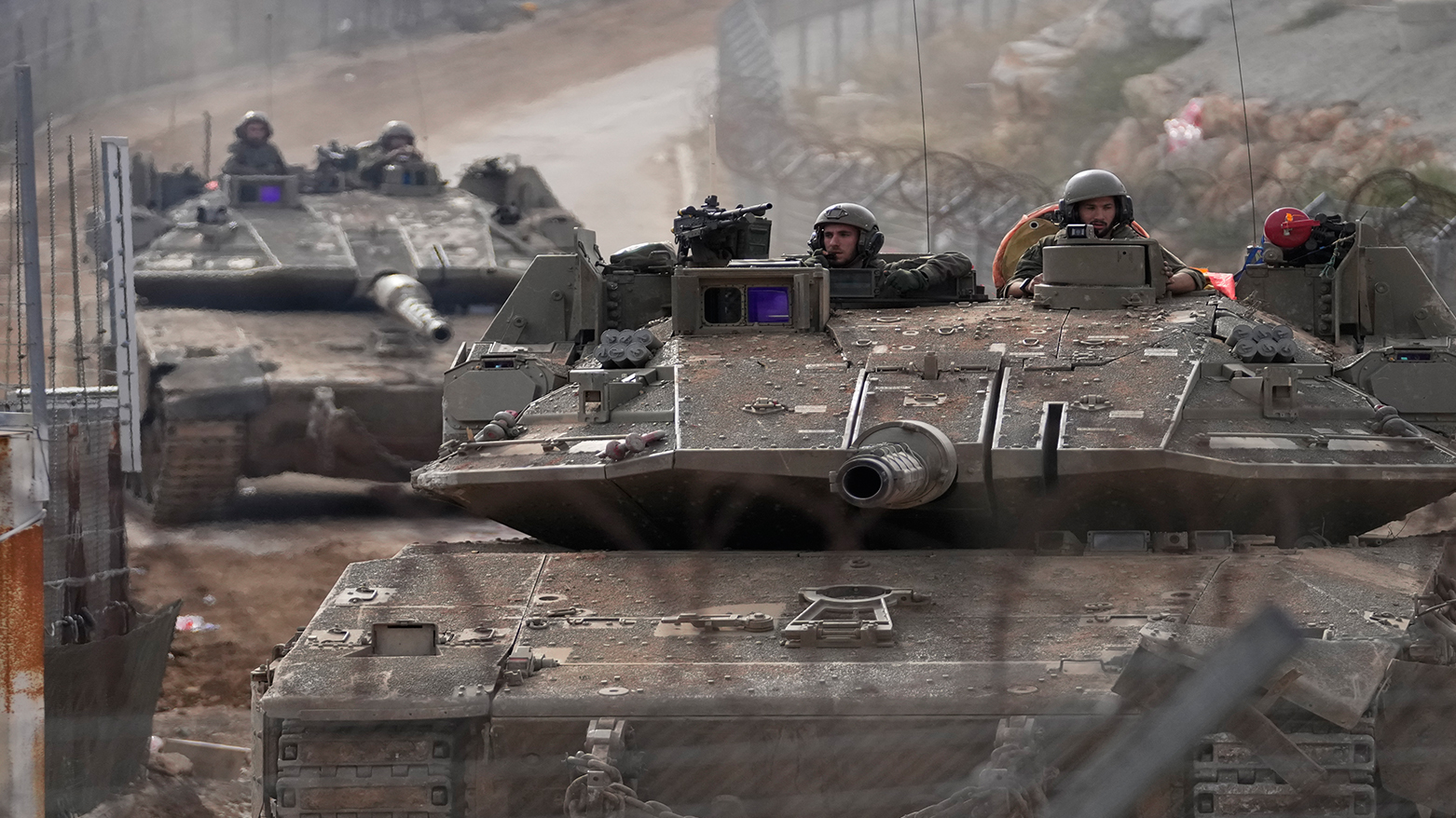
ERBIL (Kurdistan24) — Israel's Prime Minister Benjamin Netanyahu's recent call for a gradual end to Israel’s reliance on US military aid signals a potential long-term shift in defense strategy as the country continues fighting Iran-backed armed groups across multiple fronts, including Lebanon’s Hezbollah, Hamas in Gaza, and the Houthis in Yemen.
Netanyahu called for gradually ending Israel’s reliance on US military aid in a recent televised interview on CBS’s 60 Minutes. During the interview, Netanyahu said Israel should begin “drawing down to zero” the annual US military assistance and complete the process “over the next decade.”
The proposal comes at a time of sustained regional escalation, with cross-border fighting continuing despite repeated ceasefire efforts and mounting regional instability.
In southern Lebanon, the Iran-backed group Hezbollah said it carried out drone strikes on an Israeli military position in northern Israel, describing the operation as targeting the “Ya’ara barracks” with a swarm of attack drones.
The group also reported multiple operations against Israeli forces deployed near the border area, where Israeli troops continue to maintain positions inside Lebanese territory.
Israel’s military said one soldier was killed in combat in southern Lebanon, raising its reported losses to 21 personnel since the escalation with Hezbollah began earlier this year.
Israeli forces have also carried out renewed airstrikes across southern Lebanon, following reports of continued hostilities despite a fragile ceasefire framework agreed in principle during US-mediated talks.
Lebanon’s state media reported strikes on at least five villages in the south, triggering civilian displacement toward Sidon and Beirut as residents fled intensified bombardment.
The Israeli Prime Minister framed the move as a long-term strategy to increase Israel’s defense independence while maintaining cooperation with Washington. Netanyahu said the shift should begin immediately and not wait for future US political changes, signaling what analysts described as a gradual strategic reorientation rather than an abrupt break with Washington.
The wider regional conflict also continues in Gaza, where Israel has been engaged in prolonged operations against Hamas following the outbreak of war, as well as long-range exchanges involving Yemen’s Houthi movement, which has launched repeated strikes on Israeli-linked maritime and territorial targets in the Red Sea region.
The multi-front nature of the conflict has reinforced concerns within Israel’s security establishment over sustained ammunition usage, supply chain vulnerabilities, and long-term military readiness.
Under current arrangements, the United States provides Israel with $3.8 billion annually in military assistance through a decade-long memorandum of understanding signed in 2016. The funding is largely tied to purchases of American-made defense systems.
Since Israel’s founding in 1948, it has received more than $300 billion in adjusted US economic and military assistance, making it the largest cumulative recipient of American foreign aid.
However, Netanyahu recently said he had urged US President Donald Trump to begin gradually reducing this support to “zero,” arguing that Israel should “wean itself” from foreign military aid.
Analysts say the proposal reflects both strategic and political calculations: growing domestic pressure in the United States, shifting public opinion, and Israel’s desire for greater operational autonomy in a rapidly expanding regional conflict.
Military experts say a gradual reduction in US assistance could give Israel greater flexibility in defense procurement and strategic decision-making, but a full break from Washington remains highly unlikely.
Israel remains heavily dependent on US systems, including advanced fighter jets, missile defense platforms, and critical spare parts used in ongoing operations against Iran-aligned forces.
Recent wartime pressures have exposed vulnerabilities in Israel’s defense supply chains, including reported shortages in interceptor systems following sustained missile exchanges during earlier confrontations with Iran-linked forces.
A recent state audit in Israel also warned of long-term weaknesses in domestic weapons production and stockpile management under wartime conditions.
Despite these concerns, Israel’s defense industry has grown significantly over the past decade, with rising GDP and expanding global arms exports strengthening its ability to co-produce and co-develop systems with foreign partners.
The broader conflict is increasingly shaped by Iran’s network of allied groups across the region, including Hezbollah in Lebanon, Hamas in Gaza, and the Houthis in Yemen. These groups operate across different theaters but are widely viewed by Israeli and Western officials as part of a coordinated strategic axis aimed at pressuring Israel militarily and politically.
This multi-front pressure has intensified debate in Israel over whether long-term reliance on US support limits strategic independence, particularly as regional wars expand and diversify in both geography and intensity.
Despite Netanyahu’s push for gradual financial and military independence, analysts say a complete decoupling from US military aid would be difficult given Israel’s size, regional position, and lack of formal collective defense alliances.
For now, Israel remains deeply embedded in US military infrastructure while simultaneously attempting to expand its own defense production capacity — a balancing act that is likely to shape its military strategy in ongoing conflicts with Iran-backed groups across the Middle East.