Iran Condemns U.S. Sanctions on Its Envoy to Lebanon
Iran condemned new U.S. sanctions targeting its ambassador-designate to Lebanon, Mohammad Reza Raouf Sheibani, calling the measures "illegal" and a violation of international law, as Washington intensifies pressure on Hezbollah-linked political and security networks in Lebanon.
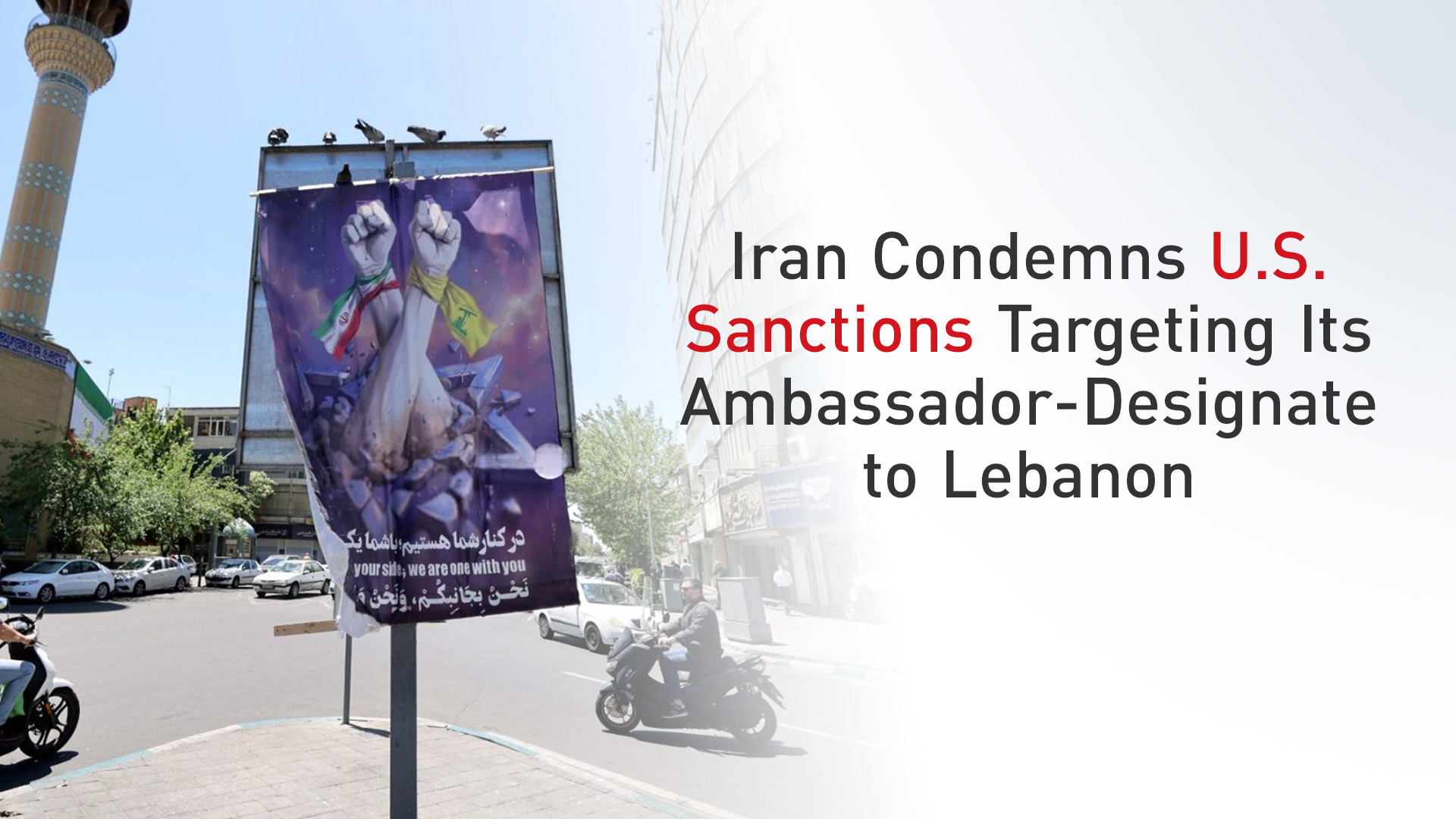
ERBIL (Kurdistan24) - Iran's foreign ministry has formally denounced recent actions by the United States to designate Mohammad Reza Raouf Sheibani, Tehran's ambassador-designate to Lebanon, characterizing the measures as an unlawful diplomatic overreach.
Agence France-Presse (AFP) reported Friday that Iranian officials issued a strong statement condemning the financial penalties, which are part of a broader U.S. effort to isolate figures allegedly linked to Hezbollah operations within the deeply fractured Lebanese political structure.
The sharp rejection by Tehran underscores the ongoing diplomatic volatility in the Middle East as international actors attempt to manage the fallout from sustained regional conflict.
The U.S. Department of the Treasury announced the sanctions on Thursday, specifically targeting Sheibani alongside several Lebanese parliamentarians, intelligence officers, and political figures.
According to the Treasury's Office of Foreign Assets Control (OFAC), the designated individuals are accused of leveraging their institutional positions to impede Hezbollah's disarmament and obstruct regional peace efforts.
The sanctions against the Iranian diplomat highlight Washington's aggressive use of financial statecraft to penalize officials it believes are actively facilitating the military and logistical operations of Iran-backed networks across the Levant.
Iran Denounces U.S. Measures
The Iranian foreign ministry utilized severe rhetoric to reject the legitimacy of the Treasury's actions. AFP reported that the ministry's statement described the sanctions against Sheibani as "unjustified" and "illegal."
According to the Iranian government, the designations are indicative of what it views as Washington's persistent disregard for international diplomatic protocols.
Iran's foreign ministry said in a statement that the move serves as "another example of the rogue behaviour and disregard of the US ruling establishment for the fundamental principles of international law and the United Nations Charter," as reported by AFP.
The statement also addressed the concurrent sanctions leveled against Hezbollah lawmakers serving in the Lebanese parliament.
Iranian officials alleged that the U.S. measures are intended to undermine Lebanon's national sovereignty and provoke domestic discord, framing the sanctions as evidence of American complicity with Israeli policies in the region.
Treasury Expands Pressure Campaign
The U.S. Treasury's actions reflect an escalating strategy to isolate individuals who bridge the gap between Hezbollah's militant operations and the formal institutions of the Lebanese state.
According to the U.S. Treasury Department, the latest designations were executed under Executive Order 13224, a counterterrorism authority designed to freeze assets and block financial transactions involving individuals linked to designated terrorist organizations.
Treasury Secretary Scott Bessent was explicit regarding the administration's objectives.
"Hezbollah is a terrorist organization and must be fully disarmed," Bessent stated, noting that the Treasury intends to systematically disrupt the financial and political networks enabling the group.
The sanctions impose severe restrictions, generally prohibiting U.S. persons from engaging with the designated individuals and exposing foreign financial institutions to secondary sanctions should they process significant transactions on their behalf.
The inclusion of the Iranian ambassador-designate within this framework touches upon highly sensitive bilateral and diplomatic issues.
The Treasury noted that Sheibani had recently been declared persona non grata by the Lebanese Foreign Ministry, an unusual diplomatic rebuke that resulted in the withdrawal of approval for his candidacy and an order for him to leave Beirut.
According to OFAC, this expulsion was driven by alleged violations of diplomatic norms and communication practices related to his coordination with Hezbollah elements.
AFP reported that it remains unclear whether Sheibani has actually departed from the Lebanese capital following the March expulsion order.
Lebanese Political Tensions Deepen
The sanctions announcement has also intensified scrutiny on Lebanon's internal governance structure, which has long struggled to assert control over independent armed factions.
The U.S. Treasury targeted specific Lebanese officials, including Brigadier General Khattar Nasser Eldin of the General Directorate for General Security (DGS) and Colonel Samir Hamadi of the Lebanese Armed Forces (LAF) Intelligence Directorate.
U.S. authorities allege that these officers shared critical intelligence with Hezbollah during the recent conflict, creating profound diplomatic complications given that both the DGS and LAF are primary recipients of international security assistance.
Furthermore, several veteran parliamentarians aligned with Hezbollah were designated, including Mohamed Abdel-Mottaleb Fanich and Hassan Nizammeddine Fadlallah.
According to U.S. sanctions authorities, these political representatives operate within state institutions specifically to advance the group's agenda and resist calls for disarmament.
The explicit targeting of active-duty security officers and sitting lawmakers highlights Washington's frustration with the deep structural integration of Hezbollah-aligned individuals within the Lebanese state apparatus.
Regional Negotiations Remain Stalled
These sweeping financial and diplomatic measures are unfolding against the backdrop of a prolonged and complex regional crisis.
The broader war erupted in late February when the United States and Israel conducted strikes on Iran, prompting widespread retaliatory missile and drone attacks by Tehran.
AFP reported that Hezbollah subsequently entered the conflict on March 2 by initiating strikes against northern Israel, further destabilizing the border region.
While a fragile ceasefire has been in place since April 8, subsequent diplomatic negotiations aimed at achieving a permanent resolution have largely stalled.
The imposition of new sanctions on Iranian and Lebanese officials introduces additional friction into an already deadlocked diplomatic process.
The ongoing war of statements and sanctions reflects the profound difficulty of separating local Lebanese institutional challenges from the wider geopolitical contest between Washington and Tehran.
As the U.S. intensifies its economic pressure and Iran firmly rejects the legitimacy of these measures, the prospect for comprehensive regional de-escalation remains uncertain amid deeply entrenched political divisions.