Rubio Criticizes NATO Over Iran War Support, Questions Alliance’s Role in U.S. Strategy
Rubio also referenced potential diplomatic efforts involving Pakistan, expressing hope that a visit by Pakistan’s army chief to Tehran could help advance negotiations to end the war, noting what he described as “some progress” in discussions.
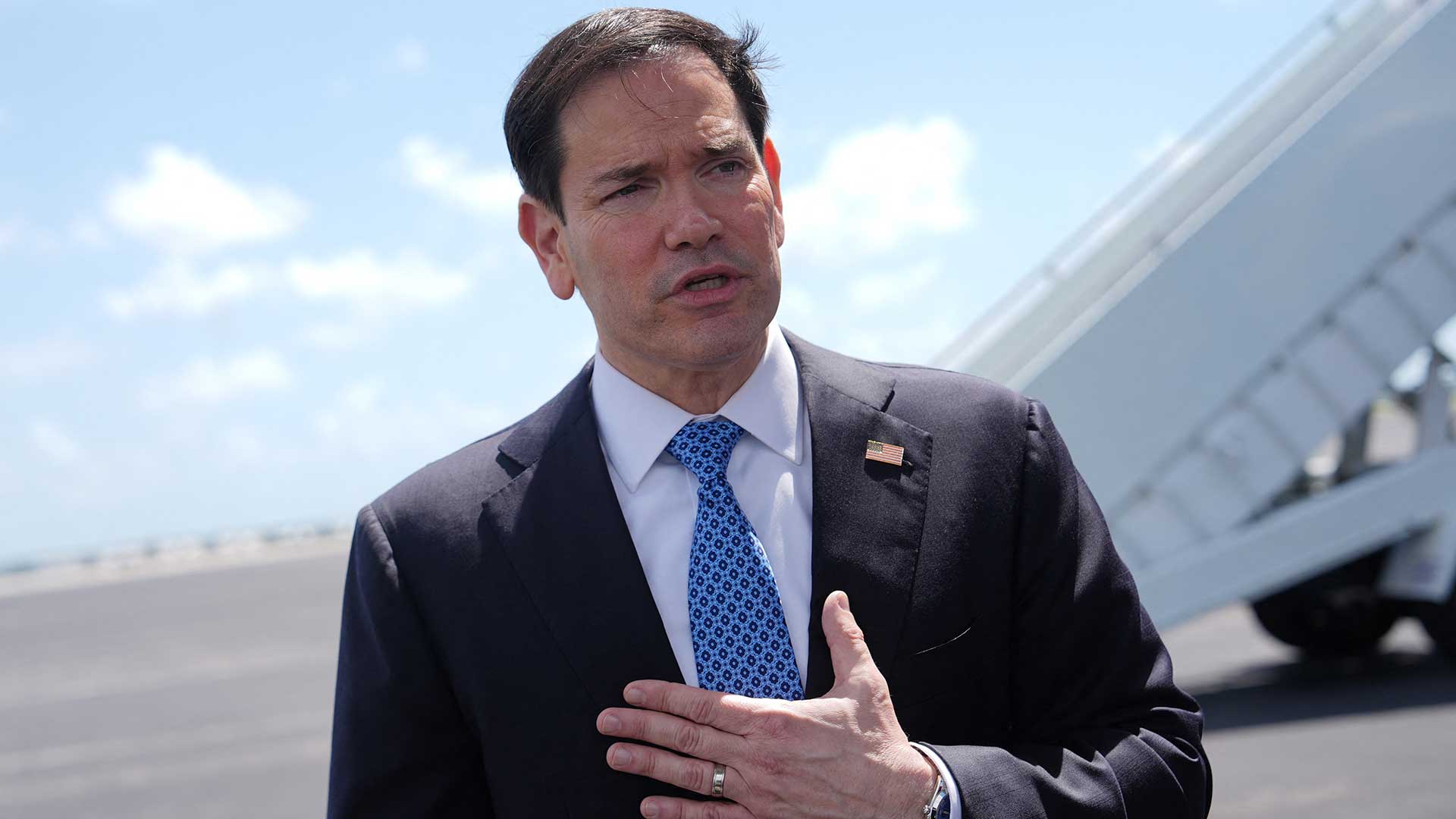
ERBIL (Kurdistan24) – U.S. Secretary of State Marco Rubio on Thursday renewed criticism of NATO, accusing some allies of failing to support Washington’s military actions against Iran as he traveled to alliance talks in Sweden.
Speaking to reporters in Miami before departing for a meeting of NATO foreign ministers in Helsingborg, Sweden, Rubio said there were “many countries in NATO” that agree Iran should not obtain a nuclear weapon and view Tehran as a global threat, but argued that allies were not backing U.S. policy responses.
U.S. President Donald Trump, he said, had taken the initiative to act, adding that Washington was “not asking them to commit troops” or deploy fighter jets, but that “they refuse to do anything.”
“We were very upset about that,” Rubio told reporters.
He also defended NATO’s strategic value while questioning its relevance to U.S. interests, saying the alliance provides America with regional bases that enable power projection in the Middle East and beyond, but suggesting this role is undermined when allies restrict access.
The remarks come amid tensions within the alliance following the U.S. and Israeli strikes on Iran on February 28. The operation was conducted without prior NATO consultation and has been criticized by several European leaders, who questioned the justification for military action and warned of regional escalation.
Some European governments have distanced themselves from the conflict. Spanish Prime Minister Pedro Sánchez described the war as illegal and refused U.S. use of Spanish bases, while German Chancellor Friedrich Merz made remarks that drew sharp reactions from Washington.
Rubio also referenced potential diplomatic efforts involving Pakistan, expressing hope that a visit by Pakistan’s army chief to Tehran could help advance negotiations to end the war, noting what he described as “some progress” in discussions.
“I believe the Pakistanis will be traveling to Tehran today,” he said. “So hopefully that’ll advance this further.”