DR Congo Reports 204 Ebola Deaths Across Three Provinces
DR Congo's Ebola outbreak has killed 204 people from 867 suspected cases, as WHO warns the Bundibugyo strain poses a growing regional threat. With no approved vaccines or treatments available, authorities fear wider cross-border spread into Uganda.
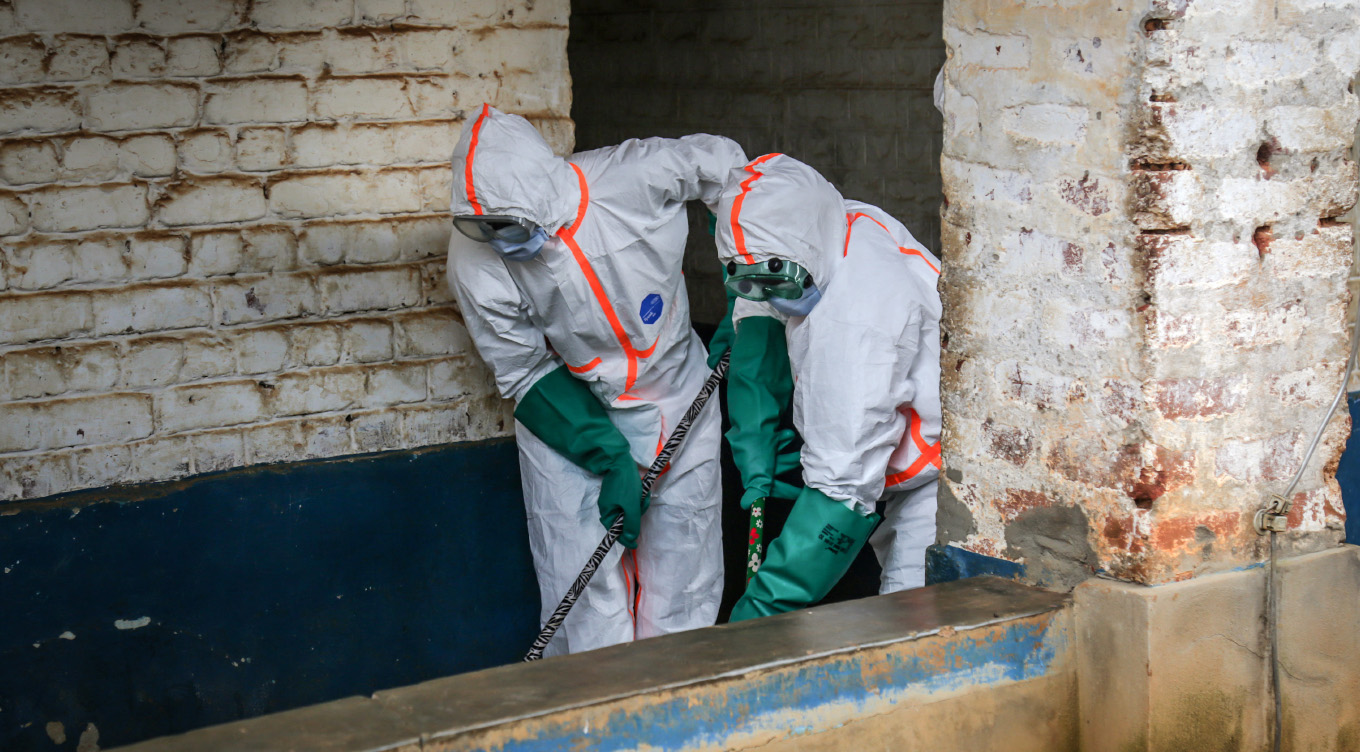
ERBIL (Kurdistan24) - The Ebola epidemic in the Democratic Republic of the Congo has rapidly escalated into a major international health crisis, with the Congolese health ministry reporting 204 deaths stemming from 867 suspected cases across three affected provinces.
These updated figures, detailed on Saturday by Agence France-Presse (AFP), highlight a sharp and alarming increase from the World Health Organization's previous count released just a day earlier, which had documented 177 fatalities among 750 suspected infections.
The rapid rise in both casualties and suspected transmission underscores an intensifying regional emergency that has prompted global health authorities to dramatically elevate their response protocols.
The worsening situation follows the World Health Organization's recent declaration of a Public Health Emergency of International Concern (PHEIC) regarding the outbreak, which is linked to the Bundibugyo ebolavirus.
According to the WHO, this specific viral strain has triggered heightened international alarm because, unlike the more common Zaire ebolavirus, there are currently no approved vaccines or targeted therapeutics available to combat it.
The absence of medical countermeasures, combined with the documented spread of the virus across international borders into neighboring Uganda, has amplified the urgency of a coordinated global health response.
Originating in the Ituri province of eastern Congo, the outbreak has quickly spread across multiple health zones and penetrated major urban centers.
Health officials told AFP and the WHO that laboratory-confirmed infections, including at least one fatality, have been recorded in the Ugandan capital of Kampala, involving individuals who recently traveled from the DRC.
Furthermore, the WHO has noted unusual clusters of community deaths and high infection rates among frontline healthcare workers, signaling severe vulnerabilities in local infection prevention systems.
While the WHO has clarified that the outbreak does not yet meet the technical criteria for a full-scale pandemic, the agency considers the situation an "extraordinary" event that poses a profound risk to global health.
The challenge of tracing contacts is severely compounded by high population mobility, weak regional healthcare infrastructure, and ongoing armed conflict.
Tracking infections in these remote and volatile areas makes cross-border surveillance and rapid epidemiological containment top priorities for international health agencies to prevent undetected transmission.
To address the widening crisis, the WHO has recommended a comprehensive framework of immediate containment measures.
The global health agency is urging affected states to activate national disaster management mechanisms and establish emergency operations centers.
According to the WHO, the immediate focus must remain on enhanced surveillance, decentralized diagnostic testing, and rigorous contact tracing.
Suspected cases require rapid transfer to specialized isolation and treatment units, while healthcare workers must be equipped with adequate training, hazard pay, and personal protective equipment.
Additionally, the WHO is mandating strict exit screening at international airports, seaports, and major land crossings to monitor symptomatic individuals. However, the international health body explicitly opposes the implementation of broad travel and trade bans by neighboring states.
The WHO argues that blanket border closures are typically driven by panic rather than scientific evidence and can inadvertently accelerate the spread of disease by forcing regional transit toward informal, unmonitored border crossings.
The current emergency unfolds against a backdrop of deep historical and regional vulnerabilities.
The WHO notes that the protracted humanitarian crisis and reliance on informal healthcare networks in eastern Congo closely parallel the conditions that fueled the devastating 2018–2019 Ebola epidemic in the North Kivu and Ituri provinces.
To navigate these local complexities, the WHO emphasizes that community engagement is critical to a successful medical response.
Health officials believe that collaborating with local, traditional, and religious leaders is essential to overcoming cultural barriers, dispelling misinformation, and ensuring safe burial practices and early medical intervention.
Given the highly mobile populations and the fragile healthcare infrastructure across Central Africa, epidemiological trends suggest that case numbers are highly likely to rise in the near term.
The distinct absence of targeted treatments for the Bundibugyo strain makes international coordination vital, not only for securing supply pipelines for protective medical equipment but also for launching clinical trials to develop new candidate therapeutics.
Ultimately, preventing wider regional transmission will require sustained cross-border cooperation, transparent public health communication, and robust surveillance mechanisms to stabilize a rapidly escalating international emergency.