California Declares Emergency as Chemical Tank Threatens Explosion
A chemical emergency in Southern California has forced the evacuation of nearly 40,000 residents after an overheating tank containing thousands of gallons of methyl methacrylate threatened to rupture. Officials warn the unstable vessel could trigger a major explosion or toxic release.
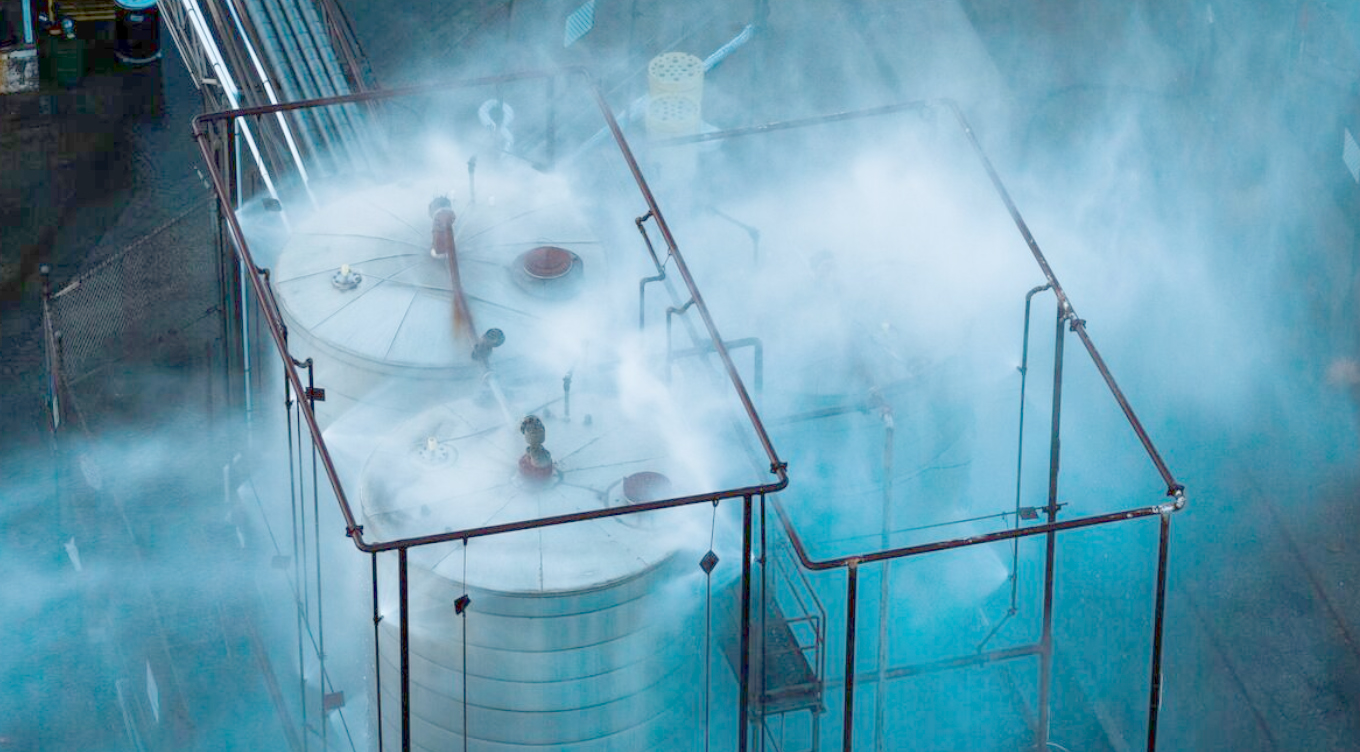
ERBIL (Kurdistan24) - An escalating industrial emergency in Southern California has forced the evacuation of approximately 40,000 residents as emergency response crews struggle to stabilize an overheating chemical storage tank. Authorities are increasingly concerned that the damaged vessel, which is steadily rising in temperature, poses a severe risk of rupture or catastrophic explosion in a densely populated urban corridor.
According to reporting by The Associated Press (AP) and correspondent John Raby on Saturday, the crisis centers on a pressurized tank at a GKN Aerospace manufacturing facility in Garden Grove.
The site, which produces components for commercial and military aircraft, houses between 6,000 and 7,000 gallons of methyl methacrylate, an industrial chemical utilized in plastic production.
Following the tank's initial overheating and subsequent venting of toxic vapors on Thursday, officials ordered mass evacuations across Garden Grove and five surrounding Orange County municipalities.
The operational challenge has intensified due to technical complications and flawed initial assessments.
Orange County Fire Authority Division Chief Craig Covey informed reporters that early indications of the tank cooling were inaccurate, the AP reported.
Thermal readings conducted by drones had mistakenly measured the exterior surface of the vessel rather than its internal temperature.
Once crews visually confirmed the tank's internal gauge late Friday, they discovered the temperature had reached 90 degrees Fahrenheit and was increasing at a rate of approximately one degree per hour.
Mitigation efforts remain severely constrained because the tank's valves are reportedly jammed or broken, preventing responders from safely siphoning the volatile chemical or manually relieving the internal pressure. Covey emphasized to the AP that allowing the tank to simply detonate is an unacceptable outcome for emergency managers.
In preparation for a potential structural failure, crews have established containment barriers designed to prevent the liquid from contaminating local storm drains, creeks, or the nearby Pacific Ocean.
The public health implications of a potential breach are significant.
The National Institute for Occupational Safety and Health (NIOSH) lists the flashpoint for methyl methacrylate at a highly volatile 50 degrees Fahrenheit. Orange County Health Officer Dr. Regina Chinsio-Kwong warned that if the chemical vaporizes, it can inflict severe respiratory distress, eye irritation, nausea, and headaches on exposed populations.
Furthermore, Andrew Whelton, an engineering professor at Purdue University who specializes in disaster response, suggested to the AP that the optimal scenario at this stage would be a localized ground leak accompanied by swift public safety warnings, rather than a pressurized explosion.
In response to the widening threat, California Governor Gavin Newsom formally declared a state of emergency for Orange County. The executive action facilitates the mobilization of state resources and permits the use of fairgrounds and state-owned properties to shelter the displaced population.
GKN Aerospace issued a corporate statement reaffirming its cooperation with responding agencies to prioritize community safety.
The timing of the crisis has amplified logistical strains, unfolding concurrently with the Memorial Day holiday weekend. While neighboring Anaheim, home to the Disneyland resort complex, has seen portions of its population evacuated, the theme parks remain outside the immediate exclusion zone and continue to operate while monitoring the situation.
For the tens of thousands displaced, the human toll is mounting in emergency shelters, including three local high schools.
Authorities have been unable to provide a definitive timeline for when neighborhoods might be declared safe. The AP highlighted the experience of 32-year-old resident Marco Solano, who expressed deep frustration over the proximity of hazardous industrial materials to residential zones.
Solano noted that the prolonged uncertainty surrounding the chemical threat has exacerbated his underlying health conditions, reflecting the broader psychological and physical strain placed on the evacuated communities.
As temperatures inside the damaged vessel continue to climb, emergency coordinators face a critical race against time to safely relieve the pressure before structural failure turns a localized industrial hazard into a widespread environmental and public health catastrophe.