President Barzani Holds Talks With KIU Secretary-General on Kurdistan Political Process
President Masoud Barzani received KIU Secretary-General Salahaddin Bahaddin on Sunday to discuss the political situation in Iraq and the Kurdistan Region, with emphasis on internal regional dynamics and obstacles affecting the political process.
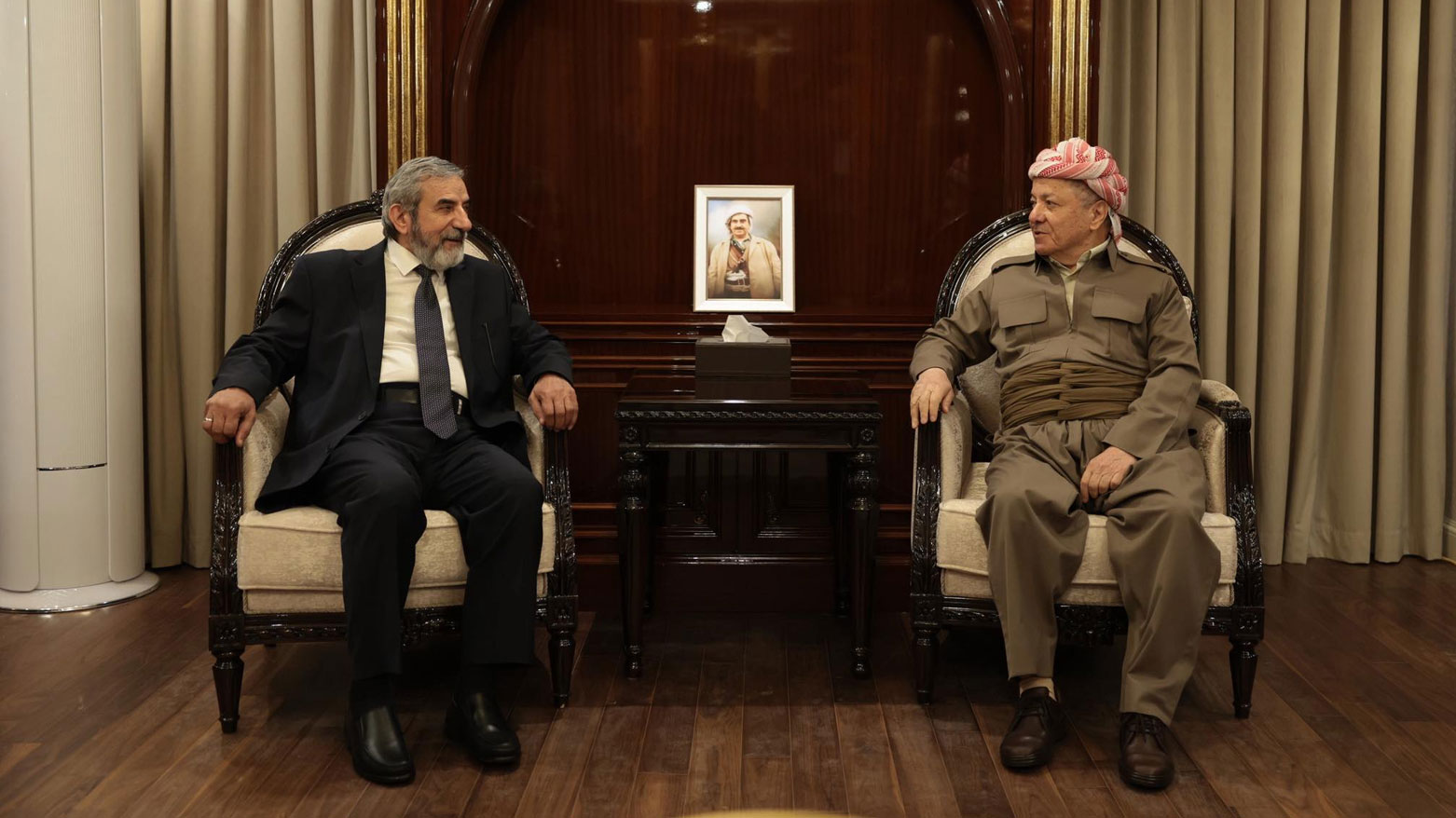
ERBIL (Kurdistan24) - President Masoud Barzani received Salahaddin Bahaddin, the Secretary-General of the Kurdistan Islamic Union (KIU), on Sunday to address the protracted political stalemate in the Kurdistan Region and discuss broader developments across Iraq.
The discussions, held in Erbil on Sunday, centered on the multifaceted internal obstacles currently obstructing the Region's political process.
According to official reports from the meeting, both leaders engaged in a comprehensive exchange of views regarding the political landscape of Iraq and the potential repercussions of wider regional instability on the Kurdistan Region's governance and security.
According to a subsequent statement released by the Kurdistan Islamic Union, the meeting was a key component of a diplomatic initiative launched by Bahaddin to break the existing political deadlock.
The Secretary-General's efforts are framed as a strategic attempt to find a negotiated exit from the administrative and legislative crises that have hindered the Region's institutional functionality in recent months.
A major portion of the dialogue focused on the immediate necessity of reactivating the Kurdistan Parliament and finalizing the formation of a new Kurdistan Regional Government (KRG).
The KIU initiative specifically prioritizes the de-escalation of tensions and the resolution of long-standing disagreements between the Kurdistan Democratic Party (KDP) and the Patriotic Union of Kurdistan (PUK).
The friction between these two major parties is viewed as a primary factor contributing to the current political impasse.
President Masoud Barzani expressed his high regard for the role of the KIU Secretary-General as a mediator. He lauded the initiatives aimed at restoring political normalcy and overcoming the administrative hurdles currently facing the Region.
During the encounter, President Barzani emphasized that all political actors bear a significant burden to make sincere and serious efforts to exit the current crisis. He stressed that the ultimate goal of these dialogues must be the establishment of peace and stability, alongside the restoration of prestige and authority to the Region's constitutional institutions.
The President further noted that overcoming these political hurdles is a prerequisite for more effective governance and a better quality of service for the citizens of the Kurdistan Region.
He expressed hope that a renewed commitment to the rule of law and institutional integrity would supersede partisan interests, ensuring that constitutional functionality is restored across the Region.
In return, the KIU Secretary-General conveyed his gratitude to President Barzani for his support of the mediation efforts.
Bahaddin reiterated his call for all political parties and stakeholders to approach the current situation with a heightened sense of national responsibility. He emphasized that collective engagement and the abandonment of unilateral political maneuvering remain the only viable mechanisms for resolving the deadlock and navigating the challenges posed by the broader regional environment.
The meeting underscores an intensified effort within the Kurdistan Region to facilitate a homegrown solution to its internal political struggles.
By emphasizing mutual responsibility and the revitalization of constitutional institutions, both President Barzani and the KIU leadership signaled that a return to structured political dialogue is the essential route for stabilizing the Region's internal affairs and protecting its federal status within Iraq.
The discussions reflect a broader consensus that regional stability is dependent upon the successful resolution of these domestic administrative and political disputes.