CENTCOM Launches 'Self-Defense' Strikes Against Iranian Targets
U.S. forces struck Iranian military targets in southern Iran on Monday, threatening a fragile ceasefire as Tehran and Washington resumed talks in Doha. The escalation heightened tensions over the Strait of Hormuz, nuclear demands, and regional security amid uncertain peace prospects.
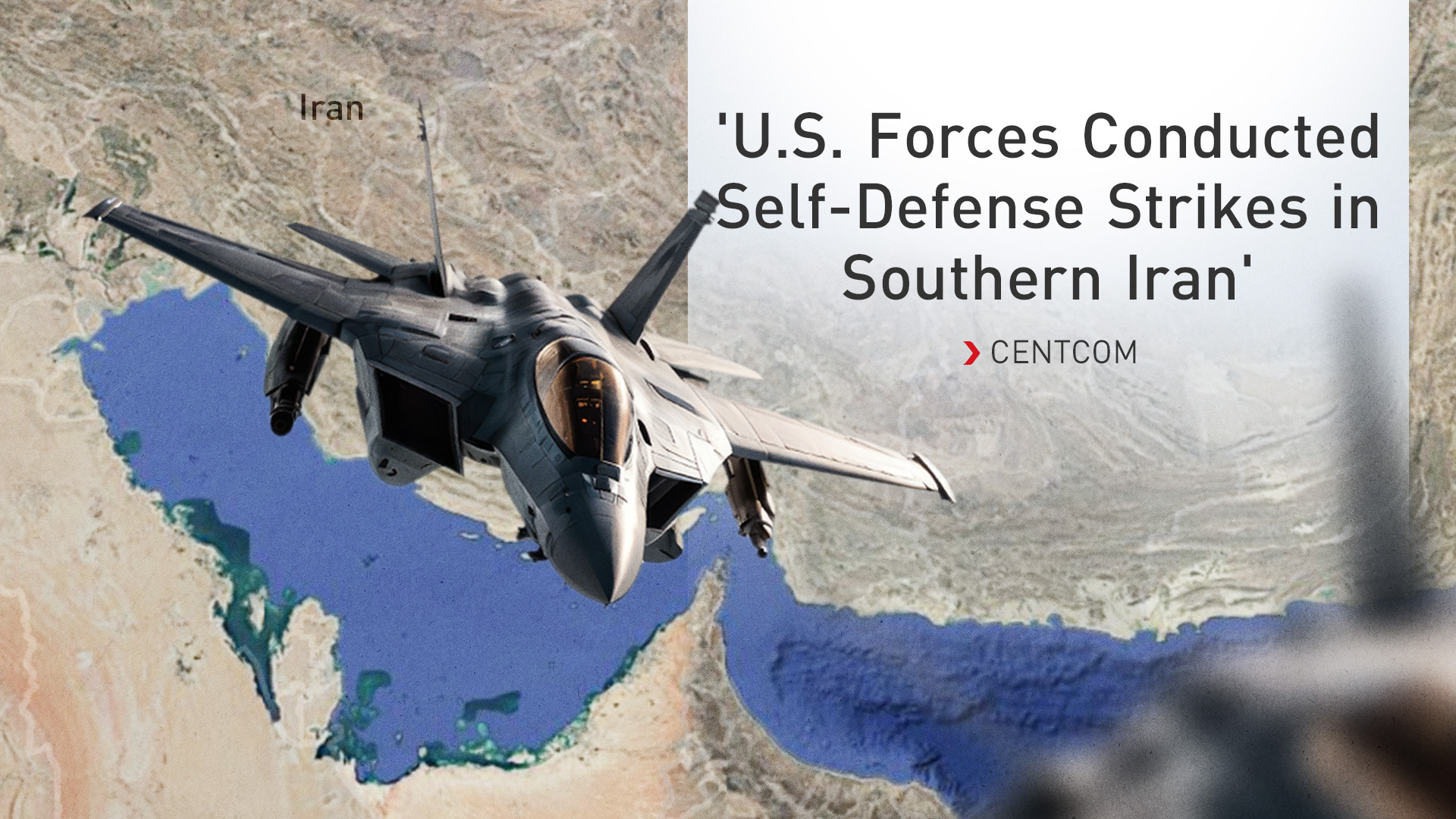
ERBIL (Kurdistan24) - United States forces launched a series of targeted strikes against Iranian military positions in southern Iran on Monday, according to U.S. Central Command, imperiling a fragile ceasefire and casting significant doubt on the prospects of an imminent diplomatic resolution to the regional conflict.
The military escalation occurred as high-level Iranian negotiators arrived in Doha, Qatar, for a fresh round of talks aimed at concluding the months-long war.
The intersection of kinetic action and high-stakes diplomacy has introduced a new layer of volatility to global energy markets and regional security, as Washington and Tehran struggle to finalize the language of a potential peace accord.
Ceasefire Under Pressure
U.S. Central Command (CENTCOM) characterized the operation as a "self-defense" measure intended to neutralize immediate threats to U.S. personnel.
Tim Hawkins, a spokesperson for CENTCOM, stated that the targets included missile launch sites and vessels attempting to emplace naval mines.
While the statement did not specify the exact locations, Iran's state-run broadcaster IRIB reported that multiple explosions were heard near the strategic port city of Bandar Abbas around midnight local time on Monday.
The strikes have placed immense pressure on the ceasefire framework that has been tenuously observed since Apr. 8.
Despite the hostilities, U.S. Secretary of State Marco Rubio, speaking during an official visit to India, maintained that a deal remains within reach.
Rubio noted that while there is an intense "back and forth" regarding specific language in the initial documents, he expects a conclusion within the coming days.
However, Rubio struck a defiant tone regarding the Iranian blockade of the Strait of Hormuz, labeling Tehran's control of the waterway as "unlawful" and "unsustainable."
He asserted that the strait would be reopened "one way or the other," underlining the economic urgency of restoring global fuel flows.
Hormuz and Energy Fears
The strategic importance of the Strait of Hormuz continues to drive the trajectory of the conflict.
The Iranian blockade has throttled global fuel supplies, and Monday's military action triggered further fluctuations in oil prices.
By Tuesday morning, West Texas Intermediate (WTI) saw a decline of more than five percent, while the international benchmark Brent crude experienced an upward trend, reflecting the market's unease regarding the durability of any peace agreement.
The diplomatic hurdles remain substantial.
While Iran's Foreign Ministry spokesperson Esmaeil Baqaei acknowledged that both sides have reached conclusions on a "large portion of the issues," he cautioned that an agreement is not yet "imminent."
A primary sticking point remains the scope of the peace accord; Tehran has insisted that any deal must encompass a cessation of hostilities in southern Lebanon, where the Israeli military has recently intensified its campaign against Hezbollah.
The Nuclear File and Lebanon Front
The conflict's complexity is further heightened by the demands of the Trump administration regarding Iran's nuclear capabilities.
In a social media post, President Donald Trump stated that any final agreement must involve the immediate handover of Iran's enriched uranium stockpile to the United States for destruction, or its verified destruction in place under international supervision.
Trump referenced a "witnessing" role for the Atomic Energy Commission، a body Agence France-Presse (AFP) noted was abolished in 1974، signaling a maximalist stance on nuclear disarmament that Tehran has previously resisted.
Simultaneously, the situation on the Lebanese front has worsened. Israeli Prime Minister Benjamin Netanyahu vowed on Monday to "crush" Hezbollah, ordering an acceleration of the offensive following drone attacks on Israeli forces.
Netanyahu's position that any deal "must eliminate the nuclear threat entirely" mirrors Washington's rhetoric but complicates the Doha track, as Iran remains firm that nuclear discussions be deferred until after an initial security agreement is signed.
Regional Diplomacy at Risk
In addition to military and nuclear demands, President Trump has introduced a significant political condition for a peace deal: the expansion of the Abraham Accords.
Trump suggested that it should be "mandatory" for regional powers, including Saudi Arabia, Qatar, Türkiye, and Pakistan, to normalize relations with Israel as part of the broader settlement with Iran.
This demand has met with skepticism from regional analysts.
Anna Jacobs of the Arab Gulf States Institute in Washington told AFP that Gulf nations are unlikely to accept such maximalist conditions.
Jacobs noted that the national security of these states has been severely tested by recent escalations and that normalization remains contingent on the unresolved issue of Palestinian statehood، a condition maintained by Riyadh and Doha.
As mediators in Qatar continue to push for a breakthrough, the duality of U.S. policy، combining direct military strikes with diplomatic engagement، leaves the region in a state of high alert.
The coming days in Doha will determine whether the "self-defense" actions in southern Iran were a prelude to a final agreement or the catalyst for a return to full-scale hostilities.