KRG Cut Kurdistan Region Youth Migration to Europe by 93%
Peshraw Abdullah, a representative for returned European asylum seekers, on Thursday told Kurdistan24 that around 140 Kurdish migrants are stranded in Libya and 17 others in Tunisia. He said the majority of them are from the Raparin Independent Administration.
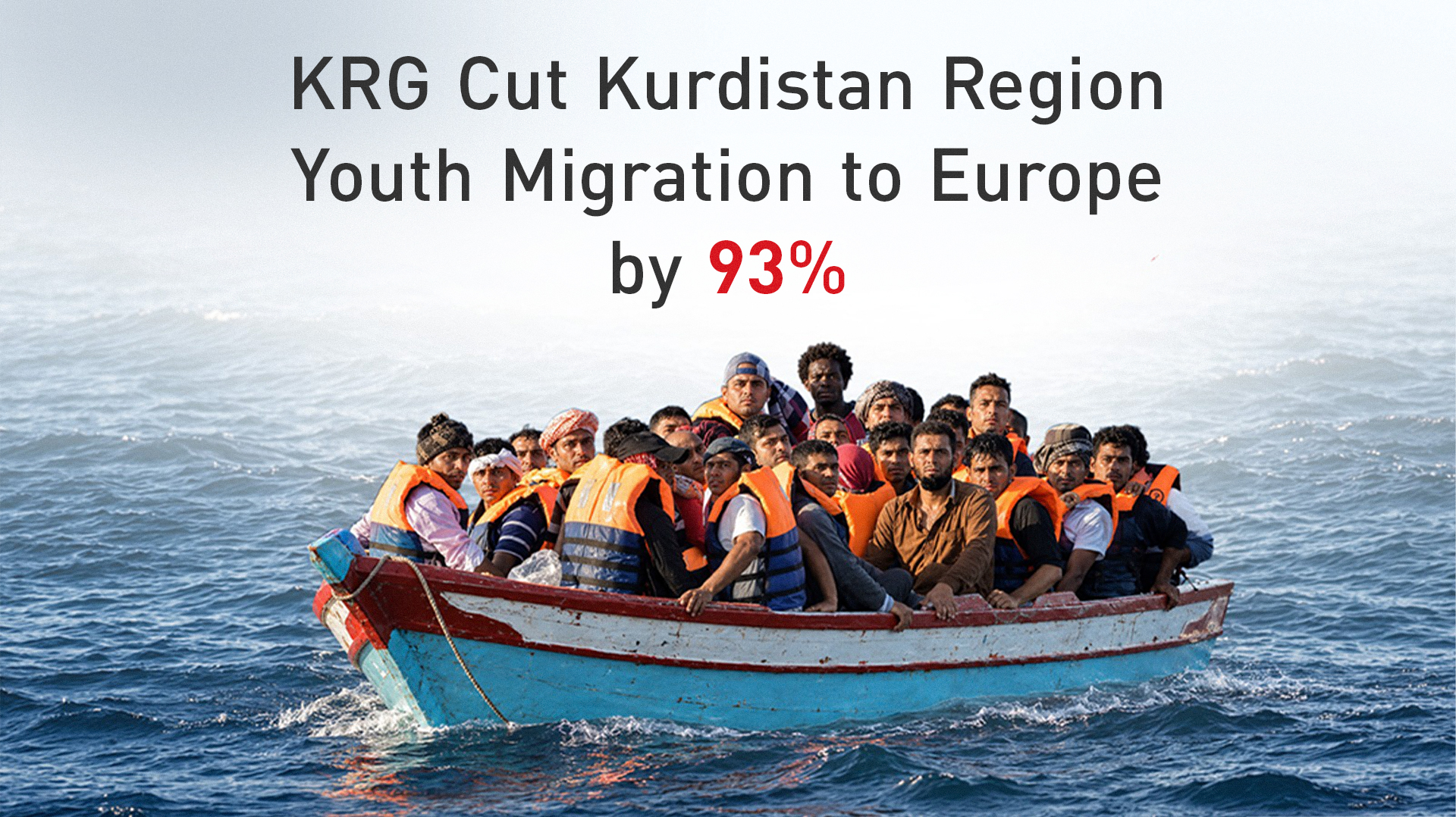
ERBIL (Kurdistan24) – Efforts by the Kurdistan Regional Government (KRG) and relevant authorities have reduced illegal migration by young people from the Kurdistan Region to Europe by 93 percent, according to a representative for returned European asylum seekers. Despite the sharp decline, hundreds of Kurdish migrants remain stranded in Libya and Tunisia, facing uncertain futures and dangerous conditions.
Kurdistan24 has learned that several Kurdish migrants are currently trapped in difficult and hazardous situations in the two North African countries, which have become key transit points for migrants attempting to cross the Mediterranean Sea to Europe.
Peshraw Abdullah, a representative for returned European asylum seekers, on Thursday told Kurdistan24 that around 140 Kurdish migrants are stranded in Libya and 17 others in Tunisia. He said the majority of them are from the Raparin Independent Administration.
Abdullah warned that human smuggling networks continue to endanger migrants' lives by facilitating perilous journeys across the Mediterranean.
He explained that because Libya has no agreement with the European Union on the return of migrants, those who enter the country are generally not deported, encouraging many to continue using the route in hopes of reaching European destinations.
Abdullah also said six Kurdish migrants are believed to have gone missing while attempting to cross the Mediterranean Sea toward Italy.
Despite those concerns, he noted that no Kurdish migrant from the Kurdistan Region has died this year while attempting to reach Europe, attributing the improvement to awareness campaigns and coordinated efforts by the KRG, media organizations, and other relevant institutions that have significantly reduced illegal migration.
The central Mediterranean route, stretching from Libya and Tunisia to Italy, remains one of the world's deadliest migration corridors. Migrants fleeing conflict, economic hardship, or seeking better opportunities often rely on human smuggling networks to undertake dangerous sea crossings in overcrowded and unseaworthy boats.
According to the International Organization for Migration (IOM), more than 2,200 people of various nationalities lost their lives or went missing along Mediterranean migration routes in 2024, while approximately 2,185 fatalities were recorded in 2025, underscoring the continuing humanitarian risks despite efforts to curb irregular migration.