UN: Temperatures Likely to Remain at Record Levels in 2026-2030
The UN warned that global temperatures are expected to remain at or near historic highs over the next five years
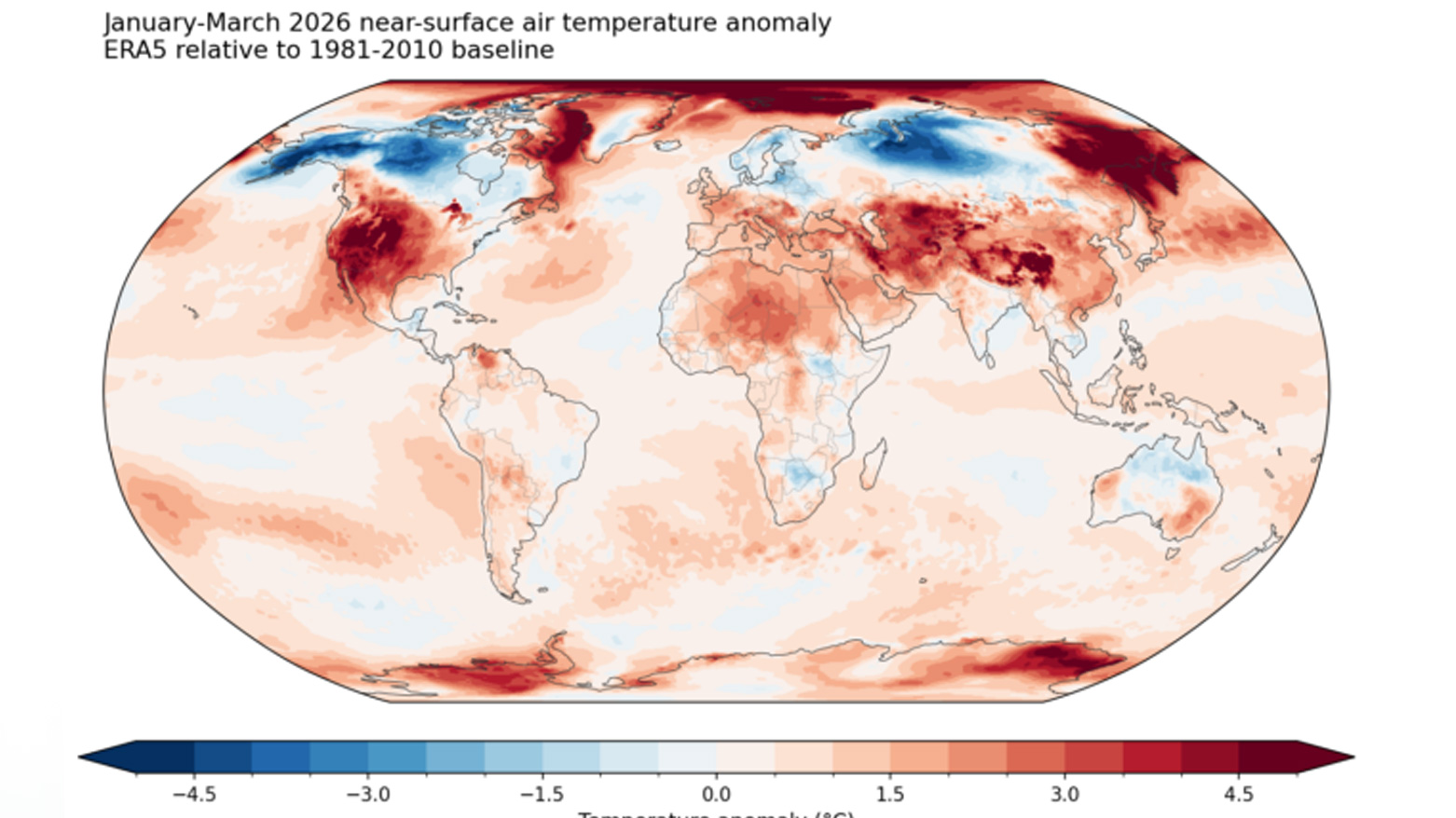
ERBIL (Kurdistan24) - A relentless rise in global temperatures is set to continue through the end of the decade, the United Nations warned on Thursday, as climate scientists projected an increasing likelihood of new heat records and accelerating warming across the planet.
According to the World Meteorological Organization (WMO), global average temperatures between 2026 and 2030 are expected to remain at or near record levels, extending a streak that has already seen the 11 hottest years ever recorded occur since 2015.
The agency said there is an 86 percent chance that at least one year between 2026 and 2030 will surpass 2024 as the warmest year ever documented.
“There is an El Nino predicted for the end of 2026, which increases the chances of the following year, 2027, being the next record-breaking year,” said Leon Hermanson, lead author of the WMO’s Global Annual-to-Decadal Update.
The latest warning came as western Europe experienced unusually intense heat conditions, with Britain and France recording temperature highs for the month of May under what meteorologists described as a “heat dome.”
The WMO said there is a 75 percent chance that the average global temperature across the entire 2026-2030 period will exceed 1.5 degrees Celsius above pre-industrial levels, a threshold closely tied to the goals of the 2015 Paris climate accords.
The Paris agreement aimed to keep long-term global warming well below 2C above the 1850-1900 average, while pursuing efforts to limit warming to 1.5C.
According to the report, annual global temperatures during 2026-2030 are projected to range between 1.3C and 1.9C above pre-industrial averages.
The WMO further stated that there is a 91 percent chance that at least one individual year between 2026 and 2030 will temporarily exceed the 1.5C threshold.
However, the agency noted that temporary yearly breaches do not necessarily mean the long-term Paris climate goals are unattainable, as those targets are measured over decades rather than single years.
Scientists also said it remains exceptionally unlikely — with less than a one percent probability — that any single year within the next five years will exceed 2C above pre-industrial levels.
The report highlighted the role of El Nino, a natural climate phenomenon that warms ocean surface temperatures in the Pacific and disrupts global weather patterns.
The previous El Nino event contributed to 2023 becoming the second-hottest year on record, followed by 2024 reaching an estimated 1.55C above pre-industrial averages.
Alongside rising global temperatures, scientists warned that Arctic warming is accelerating at an even faster pace.
The WMO projected that Arctic temperatures during the next five northern hemisphere winters, from November to March, could average 2.8C above the 1991-2020 baseline, more than three times higher than the projected global anomaly for the same period.
The report also forecast shifting precipitation patterns worldwide between May and September from 2026 through 2030, including wetter conditions across the Sahel, northern Europe, Alaska, and Siberia, while drier conditions are expected over the Amazon region.
Compiled by Britain’s Met Office alongside forecasts from 13 international institutes, the report underscored growing scientific concern that the planet is moving deeper into an era of persistent and intensifying climate extremes.