How ‘Hell Flowers’ Came to Define Erbil’s Ronaki Neighborhood
Bougainvillea, locally known as the "Hell Flower," has become the defining feature of Erbil's Ronaki neighborhood, where its resilience and vivid color reflect both the city's climate and community spirit.
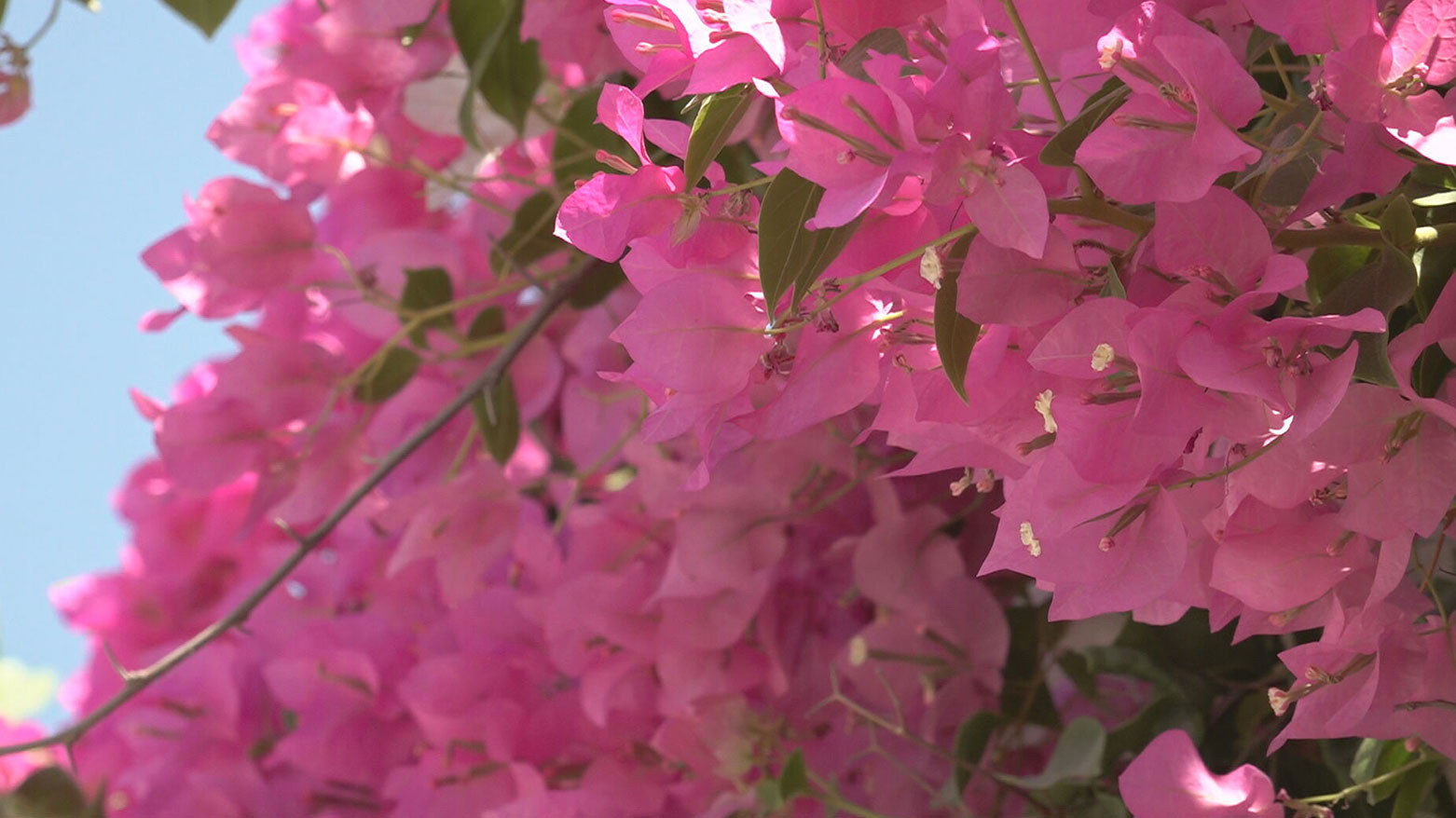
ERBIL (Kurdistan24) - On the hottest summer afternoons, when much of Erbil shimmers beneath intense sunlight, the streets of the city's Ronaki neighborhood seem to soften beneath cascades of vivid pink, purple and white. Bougainvillea climbs over gates, spills across courtyard walls and frames narrow residential lanes, creating a landscape that has become instantly recognizable to residents across the Kurdistan Region.
Locally known as Gulî Cehenemî, or the "Hell Flower," the hardy plant has grown far beyond its role as an ornamental vine.
In Ronaki, it has become part of the neighborhood's identity, a feature so distinctive that many Erbil residents can recognize the district from little more than a glimpse of its flower-lined streets.
For those who call Ronaki home, Bougainvillea represents more than seasonal beauty.

Residents describe it as a defining element of everyday life, lending the neighborhood a sense of tranquility while giving homes a warm, welcoming character that endures through the harshest months of the year.
"Ronaki has become famous because of these flowers," one longtime resident told Kurdistan24 correspondent Shayma Bayiz. "Their bright colors give life to the neighborhood. We've planted them throughout the streets because they make every alley more beautiful."

Another resident said Bougainvillea has become so deeply associated with the area that it serves as a visual landmark for the city itself.
"There are very few houses here without it," he said. "You'll find it climbing over entrances, inside courtyards and along the walls. When people see these flowers, they immediately know they're looking at Ronaki."

Over time, the plant has evolved into a shared point of pride, reinforcing a sense of place that distinguishes the neighborhood from other parts of Erbil.
That transformation has been driven as much by practicality as by appearance.
While many ornamental plants struggle through Erbil's long, dry summers, Bougainvillea reaches its most spectacular display precisely when temperatures soar.
Flourishing under prolonged sunshine and requiring relatively little water once established, it is exceptionally well suited to a city where summer temperatures regularly exceed 40 degrees Celsius and rainfall virtually disappears for months.

Residents say that resilience is one of the plant's greatest attractions.
"It doesn't need much care," the younger resident explained. "It loves the heat more than anything else, and that's why it grows so well here. It has many beautiful colors, and it looks wonderful in front of homes and inside yards."
The local nickname "Hell Flower" reflects that unusual relationship with the climate.
It is also linked to the plant's sharp, curved thorns, which make pruning difficult, and to the fiery intensity of its colorful bracts during the hottest weeks of summer.

Despite the intimidating name, however, the flower has become closely associated with hospitality, comfort and neighborhood life rather than harshness.
Botanically, Bougainvillea originated in tropical and subtropical South America, where it was first documented during the eighteenth century by French naturalist Philibert Commerson on the expedition of explorer Louis Antoine de Bougainville, whose name the genus now bears.
Over the centuries, it spread across warm regions of the world, eventually finding an ideal environment throughout the Middle East.
Its brilliant display often leads people to mistake the colorful petals for the flowers themselves.
In fact, the vivid pink, purple, white, orange and red structures are thin, papery bracts that surround much smaller white flowers hidden at their center, a distinctive feature that has helped make Bougainvillea one of the world's most recognizable ornamental plants.

In the Kurdistan Region, its popularity is closely tied to environmental realities.
The plant thrives in well-drained soils, tolerates drought exceptionally well and requires relatively little maintenance after becoming established, making it an increasingly practical choice for homeowners seeking greenery that can withstand Erbil's demanding summers without excessive water consumption.
Beyond beautifying residential streets, Bougainvillea also contributes to the urban environment.
Its dense foliage provides shade for walls and courtyards, introduces greenery into densely built neighborhoods and illustrates how landscaping can adapt to increasingly hot and dry conditions.
As climate pressures continue to reshape cities across the region, plants capable of flourishing with limited water have assumed growing importance in residential design.

That appeal is equally evident in Erbil's flower markets.
Demand for Bougainvillea rises sharply every summer, when the plant reaches peak bloom and homeowners look to add color to gardens, entrances and terraces. Although prices have increased, interest has shown little sign of slowing.
"Summer is when Bougainvillea is at its best, so this is when people want it most," one flower seller told Kurdistan24. "We sell varieties imported from Iran, Türkiye and Italy. Prices have gone up significantly. Smaller plants begin at around 10,000 Iraqi dinars, while large mature plants can cost between 1,500 and 2,000 US dollars."

The growing demand reflects more than changing landscaping preferences.
For many buyers, Bougainvillea has become an investment in the character of their homes and neighborhoods, combining durability with visual appeal in a climate where those qualities are not always easy to achieve.
Its popularity has also encouraged greater diversity.

While pink remains the color most closely associated with Ronaki, purple and white varieties have become increasingly common, introducing subtle variations without altering the neighborhood's unmistakable identity.
In many cities, memorable landmarks are defined by monuments or historic architecture.
In Ronaki, the defining image is quieter yet equally enduring: flowering vines spilling across residential walls, softening concrete facades and transforming ordinary streets into spaces residents instantly recognize as their own.
As another Erbil summer unfolds, Bougainvillea continues to flourish where many other plants fade.

The "Hell Flower" has become an enduring emblem of Ronaki, not because it defies the city's climate, but because it thrives within it.
In doing so, it has given one neighborhood a distinctive identity and offered a vivid reminder that resilience, when embraced by an entire community, can blossom into a lasting symbol of place.
|
Summary Bougainvillea, locally called the Hell Flower, has become synonymous with Erbil's Ronaki neighborhood, where its vivid colors, resilience, and low-maintenance nature have transformed residential streets into one of the city's most recognizable summer landscapes while strengthening community identity. |
Kurdistan24 correspondent Shayma Bayiz contributed to this report.