Iraq Condemns Missile and Drone Strikes on Kuwait Amid Unraveling Ceasefire
Baghdad denounces the breach of sovereignty as Iranian forces target a U.S. base in Kuwait, highlighting the volatile intersection of regional military escalation and stalled diplomatic efforts in the Gulf.
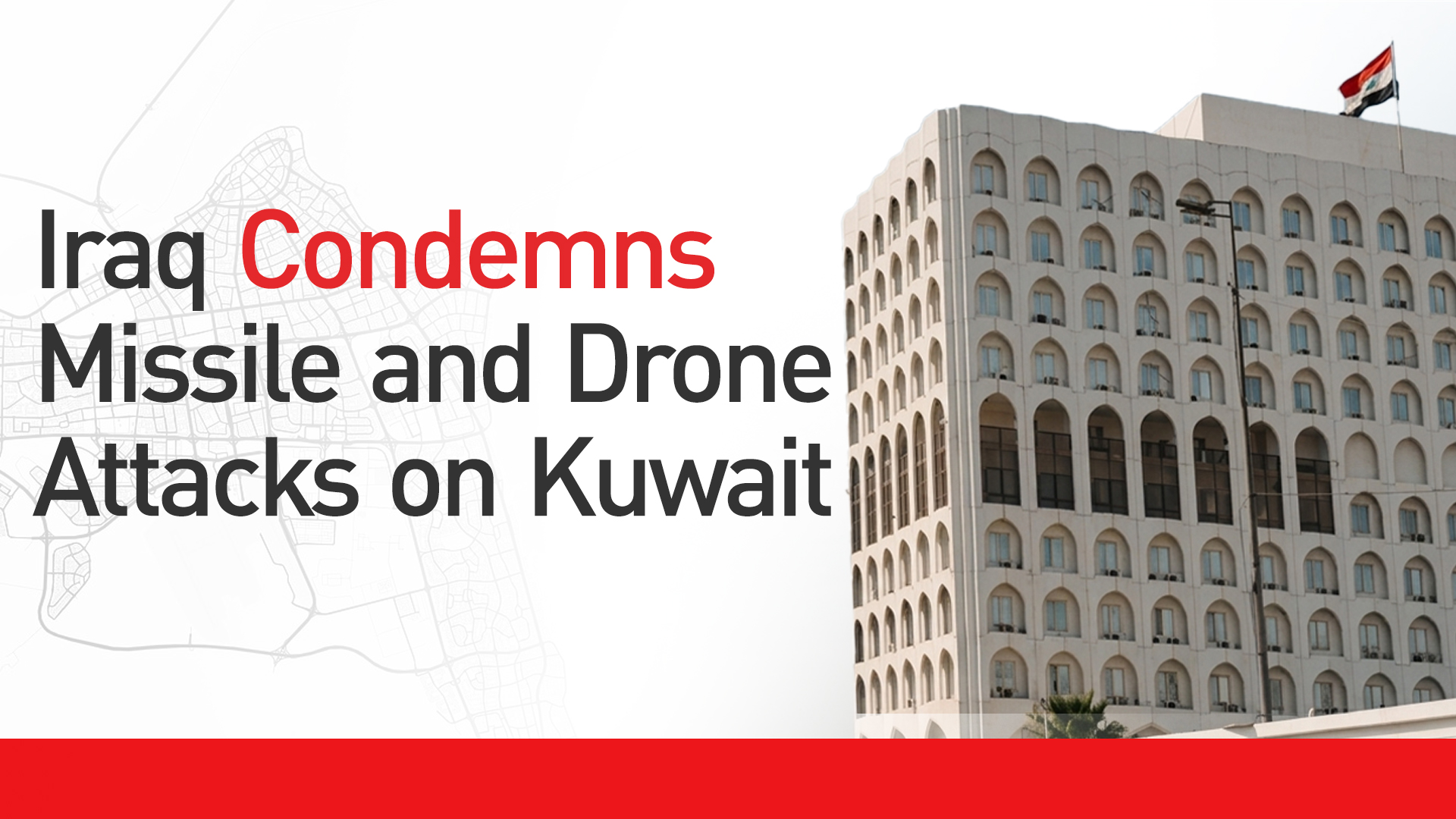
ERBIL (Kurdistan24) - The Iraqi government issued a strong condemnation of recent missile and drone attacks launched against neighboring Kuwait, distancing Baghdad from a rapidly escalating tit-for-tat military exchange between the United States and Iran that threatens to derail ongoing ceasefire negotiations.
The diplomatic rebuke from Baghdad follows Kuwait's announcement that its air defense systems had successfully intercepted a barrage of incoming fire, an incident the Kuwaiti Foreign Ministry characterized as "Iranian aggression" and a dangerous violation of its national sovereignty.
"Baghdad condemns the attacks on Kuwait and reaffirms its rejection of all actions that pose a threat to the security and stability of nations in the region," the Iraqi Ministry of Foreign Affairs declared on Friday.
The statement emphasized the critical need for self-restraint and advocated for the use of diplomatic channels to resolve the crisis, highlighting Iraq's delicate balancing act between its relations with the Gulf states and its ties to Tehran.
A Truce Tested by Fire
While Iraq's Foreign Ministry stopped short of explicitly naming Iran in its condemnation, the geopolitical context surrounding the strike is unmistakable.
The attack on Kuwaiti territory occurred as a direct retaliatory measure following U.S. military operations in southern Iran.
According to Iran's state broadcaster, IRIB, the Islamic Revolutionary Guard Corps (IRGC) launched a strike targeting "the American airbase that served as the source of the attack," specifically linking the action to earlier U.S. strikes near the Iranian port city of Bandar Abbas.
Kuwait hosts a significant presence of U.S. troops, and U.S. Central Command (CENTCOM) quickly labeled the Iranian retaliatory strike an "egregious ceasefire violation."
The military exchange underscores the profound volatility of the current diplomatic environment.
The strikes occurred even as U.S. and Iranian negotiators edged closer to a memorandum of understanding designed to extend an existing, albeit fragile, ceasefire for an additional 60 days.
U.S. sources told Agence France-Presse (AFP) that the potential breakthrough remains contingent on President Donald Trump's approval, a point reiterated by U.S. Vice President JD Vance, who noted that while negotiations have made "a lot of progress," they are currently stalled on specific "language points."
The Strategic Stakes in Hormuz
A central focus of the diplomatic maneuvering remains the Strait of Hormuz, a critical global energy chokepoint that has been subjected to an Iranian blockade since the outbreak of hostilities.
According to AFP reporting, a proposed deal would ensure that shipping through the strait operates without restrictions, tolls, or harassment, coupled with an Iranian commitment to clear all naval mines within 30 days.
However, the military reality on the ground continues to contradict diplomatic progress.
Prior to the retaliatory strike on Kuwait, CENTCOM reported intercepting five Iranian attack drones in the vicinity of the strait and preventing a sixth launch near Bandar Abbas.
The IRGC has warned of a "decisive" response to any further U.S. aggression, placing regional energy markets in a state of high alert.
Oil prices fluctuated significantly this week, bouncing higher as traders weighed the optimism of a ceasefire extension against the tangible risk of a wider regional war.
Contradictory Signals and Escalation Risks
The ongoing crisis is characterized by contradictory signals from both Washington and Tehran.
During a recent White House cabinet meeting, Secretary of State Marco Rubio expressed optimism that results could be seen within "hours or days."
Conversely, President Trump maintained a hardline stance, ruling out sanctions relief in exchange for Iran surrendering its highly enriched uranium and issuing stark threats against regional actors, including Oman, regarding the future management of the Strait of Hormuz.
On the Iranian side, officials have similarly hardened their red lines.
Ali Bagheri Kani, Deputy Secretary of Iran's Supreme National Security Council, asserted that Iran's enriched uranium stockpile is "in no way part of our current negotiations agenda," and insisted that post-war shipping procedures in Hormuz would be fundamentally altered.
As the diplomatic and military tracks proceed in a paradoxical parallel, Iraq finds itself increasingly vulnerable to the spillover of the conflict.
By publicly condemning the attacks on Kuwait, Baghdad is attempting to insulate itself from the fallout while signaling its commitment to Arab Gulf security.
However, as the airspace over the region becomes increasingly congested with drones, missiles, and diplomatic ultimatums, the distance between a finalized truce and a disastrous regional escalation remains perilously thin.