Two Million Visitors a Year! This Kurdish Highlands District Is Betting on Hiking, Museums, and 11-kilometer cable car
The tourism director of Rawanduz has unveiled an ambitious Norwegian-designed masterplan that includes a record-length cable car, hiking trails, and a cultural museum
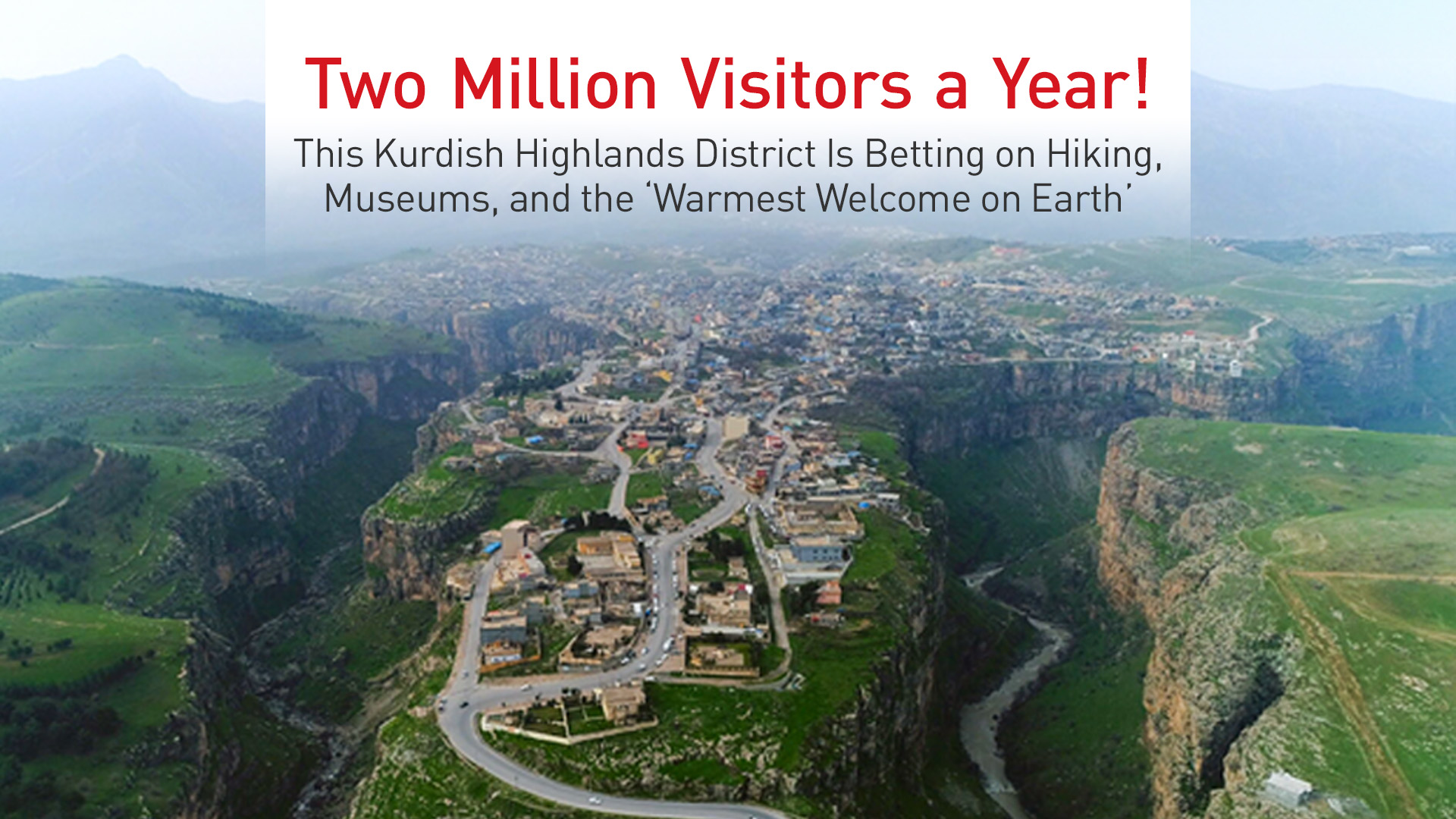
ERBIL (Kurdistan24) - Suspended above ancient gorges and glacier-carved ridgelines, a proposed cable car stretching 11 kilometers could soon connect some of the most spectacular terrain in the Kurdistan Region, from the storied Ali Beg valley all the way to the summit of Korek Mountain.
The vision was outlined on Friday, by Pariz Yusuf, director of tourism for Rawanduz, in a wide-ranging disclosure of the district's development roadmap.
The plan, he said, is part of a comprehensive masterplan for the Rawanduz and Soran area, one that the Kurdistan Regional Government (KRG) has commissioned from a Norwegian firm, chosen specifically for the close parallels between Norway's alpine landscape and that of the Kurdistan Region.
At the centerpiece of the masterplan sits the proposed aerial tramway. "We plan for a cable car of 11 kilometers to begin at Ali Beg Gorge, pass over the Gorez mountains and other ranges, reach Gornnok and Shinglebanah, and then connect to Korek Mountain," Yusuf said. "This will be a very comprehensive and rare project."
Ali Beg Gorge, a sheer-walled canyon carved by a rushing river through the Bradost highlands, is already one of the Kurdistan Region's most visited natural landmarks.
Korek Mountain, rising above Erbil to the north, hosts an existing resort and cable car, but the proposed link would be an order of magnitude longer, threading through remote terrain that currently has no infrastructure at all.
The ambition of the plan is underpinned by hard numbers. Of the seven to eight million tourists who visit the Kurdistan Region annually, more than 1.16 million entered Rawanduz district in 2024 alone.
Yusuf said the same figure was recorded in 2025, and that 2026 is expected to surpass both — particularly as new projects come online.
"Stability and the natural character of the area are driving visitor numbers steadily upward," he said, adding that the KRG has prepared a comprehensive masterplan to guide that growth responsibly.
Beyond the cable car, the masterplan envisions a dedicated hiking trail through the Rawanduz Canyon, known locally as Kharendê Rawanduz, to accommodate the growing number of trekking groups drawn to the area. "Tour groups are very eager for that area," Yusuf noted.
On the cultural front, plans are in place to establish a historical and cultural museum in Rawanduz, as well as an independent administration for Soran, to showcase the district's ancient artifacts to visiting tourists.
Yusuf said the team is also working to preserve the old bazaar and cultural streets of Rawanduz, which carry centuries of history.
"Rawanduz has an ancient history," he said. "We are working to preserve the old bazaar and the cultural streets. We also plan to build a historical and cultural museum for Rawanduz."
The director added that the Soran tourism authority has set an explicit community engagement goal: to make every resident of Rawanduz a knowledgeable guide, familiar with the history and natural beauty of their city, so that visitors receive the warmest and most informed welcome possible.
Environmental stewardship is also woven into the plan. On the initiative of the prime minister, Yusuf said, a major environmental campaign is already underway at tourist sites, with waste bins and collection cages installed at key locations and orientation brochures distributed to visitors to help keep the natural landscape clean.
Taken together, the masterplan presents Rawanduz not merely as a destination to be visited, but as a living landscape to be understood, and as a growing model for how the Kurdistan Region intends to develop its extraordinary natural inheritance.