Kurdistan Sees Record Tourism Surge With Hotels Near Full Capacity
Years of heavy infrastructure investment and economic diversification efforts are paying off in the Kurdistan Region, where hotel occupancy rates surpassed 90% during the Eid al-Adha holiday, driven by a growing influx of international tourists and billions of dollars in new development.
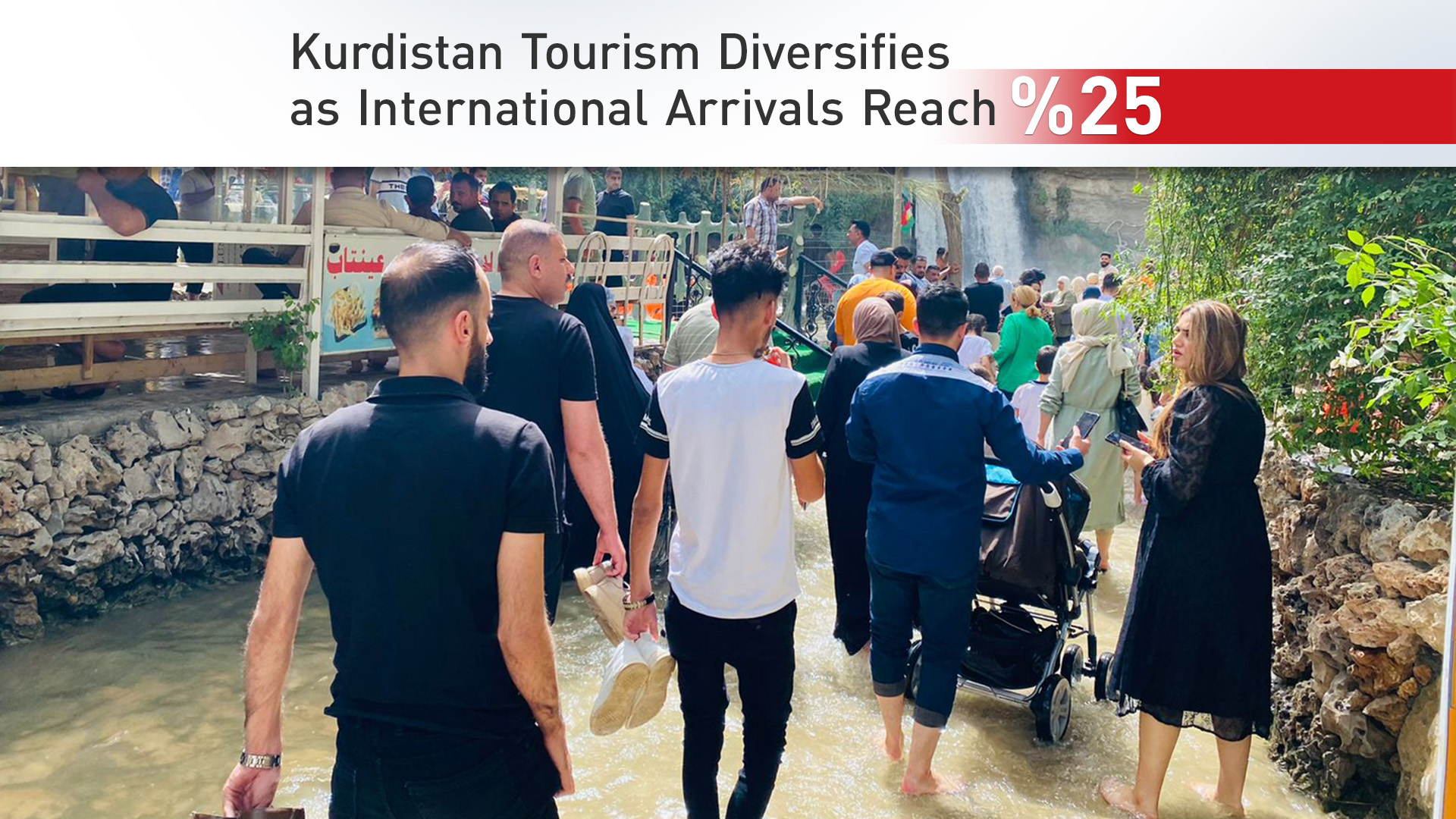
ERBIL (Kurdistan24) - The Kurdistan Region's ambition to become a premier Middle Eastern travel destination achieved a major milestone during the Eid al-Adha holiday, with hotel and motel occupancy rates across the region exceeding 90 percent.
The record-breaking occupancy, accompanied by a notable demographic shift in visitor origins, highlights the profound impact of the Kurdistan Regional Government's (KRG) sustained, multi-billion-dollar investment in the tourism sector.
The Internationalization of Kurdistan Tourism
For years, the region's tourism industry relied almost entirely on domestic travelers seeking refuge from the intense heat of central and southern Iraq. Today, that profile is rapidly evolving.
Sirwan Tawfiq, Director of Marketing at the Kurdistan Region Tourism Board, noted that international travelers are increasingly drawn to the region.
"Sustained stability, standardized road networks, and specialized investment laws" have fostered an environment that appeals to a global audience, Tawfiq explained.
While foreign tourists previously constituted a mere 10 percent of total arrivals, Tawfiq told Kurdistan24 that this figure has climbed to nearly 25 percent.
A significant portion of these new arrivals are traveling from the Gulf states, Europe, and East Asia, indicating that the KRG's marketing and development strategies are gaining traction far beyond Iraq's borders.
The surge in arrivals translated to massive numbers on the ground. Erbil alone recorded 112,657 visitors during the Eid break.
This holiday spike builds on an already strong year; Nariman Fazil, spokesperson for the Erbil General Directorate of Tourism, confirmed that the capital welcomed 861,501 tourists during the first four months of 2026.
From Seasonal Success to Structural Growth
The 90 percent occupancy rate is not merely a seasonal anomaly, but the result of a deliberate, long-term policy of economic diversification.
Over the past seven years, the KRG's Ninth Cabinet has aggressively positioned tourism as a primary alternative to oil revenue.
Data from the Kurdistan Region Board of Investment reveals the staggering scale of this commitment.
Out of more than $22 billion in total regional investment over the last seven years, the tourism sector attracted approximately $7.68 billion.
Capturing nearly 35 percent of all investment capital, tourism has firmly established itself as the region's most dynamic growth sector.
Ibrahim Abdulmajid, spokesperson for the General Board of Tourism, emphasized that this capital influx has funded more than 80 strategic projects.
The region's hospitality landscape has been radically upgraded, and it now boasts around 40 facilities operating at world-class, five-star standards.
This development is not limited to luxury hotels. The KRG's long-term vision includes massive, transformative initiatives like the planned Senk National Park.
Set across 1,500 hectares near Erbil, the project aims to integrate environmental preservation, cultural heritage, and modern recreation, featuring everything from wildlife safaris to a replicated traditional Kurdish village.
The Infrastructure Behind the Boom
Underpinning this glossy new hospitality sector is a massive investment in foundational infrastructure. The surge in international and domestic visitors would be impossible without the KRG's relentless focus on roads and water management.
Over the past seven years, the government has allocated over one trillion dinars to construct 2,681 kilometers of modern roads, with another 2,445 kilometers currently under construction.
This expanded transit network has drastically reduced travel times and opened previously inaccessible scenic areas to developers and tourists alike.
Simultaneously, the KRG has focused heavily on water infrastructure, completing 23 ponds with 58 more under construction, bringing the regional total to 97 ponds and four large-scale dams.
Tawfiq noted that the government is actively developing tourist pavilions around these reservoirs. Coupled with this year's abundant rainfall, these water management projects have revitalized the region's natural landscape, creating highly attractive recreational zones.
Managing the Success
As the region's popularity explodes, local authorities are being forced to adapt rapidly to manage the sheer volume of human mobility.
The recent Eid holiday served as a critical stress test for Erbil's public services and security apparatus.
To handle the influx of over 112,000 tourists, the Erbil Governor's Office executed a highly coordinated management plan.
The Erbil Police Directorate deployed over 1,500 personnel to ensure public safety, while the Traffic Directorate managed heavily congested roadways, recording only four minor accidents.
The strain on public services was immense but manageable.
The Erbil General Directorate of Health reported that medical teams handled over 3,000 patient consultations and performed 195 surgeries during the brief holiday period.
Similarly, the Civil Defense Directorate successfully contained dozens of urban and environmental fires.
By successfully processing and protecting this massive wave of visitors without systemic disruption, Erbil demonstrated that its administrative capabilities are scaling alongside its tourism numbers.
Looking Toward 2030
The 90 percent occupancy rate achieved this Eid is a powerful vindication of the KRG's economic diversification strategy.
By leveraging its natural beauty, historical heritage, and relative stability, the Kurdistan Region has successfully transformed itself into a major destination for private capital and international travelers.
As the Tourism Board continues to implement its strategic plan extending through 2030, the focus will increasingly shift toward improving service quality, developing human resources, and ensuring sustainable practices.
If the current trajectory holds, the Kurdistan Region is poised to solidify its status not just as a refuge from the Iraqi summer, but as a premier, year-round destination on the global tourism map.
Kawa Jam, Kurdistan24 journalist, contributed to this report.