Bahrain Condemns Iranian Missile Barrage as 'Blatant Aggression' Amid Widening Gulf Crisis
Bahrain strongly condemned Iran after Manama said seven missiles were fired at its territory and Kuwait, describing the attack as "blatant aggression."
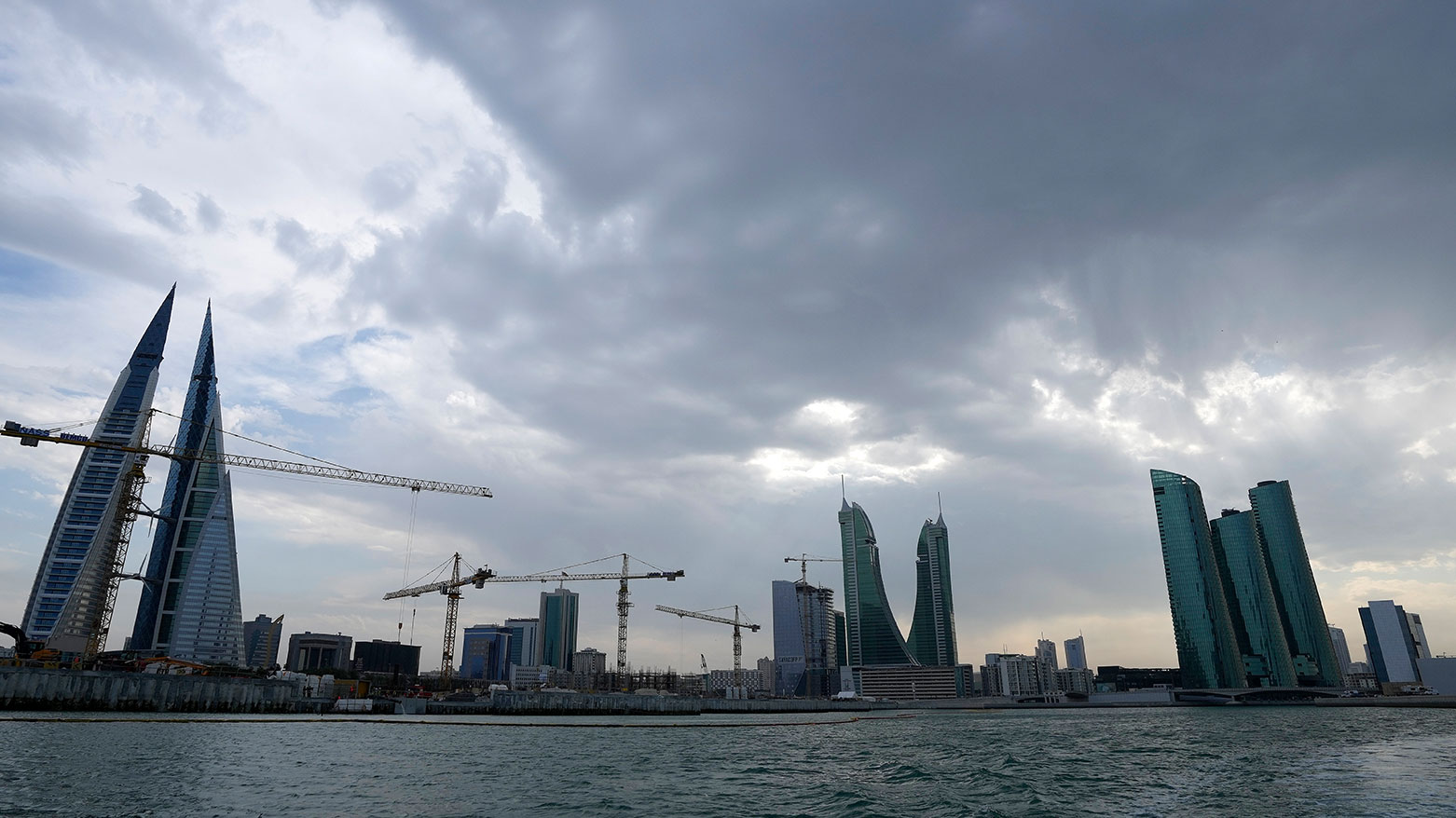
ERBIL (Kurdistan24) - The Kingdom of Bahrain delivered a fierce diplomatic condemnation of Iran on Saturday, accusing Tehran of launching a barrage of missiles toward its territory and neighboring Kuwait. Framing the incident as a direct and unprecedented assault on its sovereignty, the Bahraini government described the missile fire as "blatant aggression," marking a severe escalation in a rapidly widening crisis across the Persian Gulf.
According to a report by Agence France-Presse (AFP), Bahrain's foreign ministry issued a strongly worded statement decrying the attacks.
"The ministry of foreign affairs strongly condemns the renewed attacks by the Islamic Republic of Iran against the Kingdom of Bahrain and the sisterly State of Kuwait," the ministry stated, adding that the two Gulf nations successfully intercepted seven missiles fired by Iran.
"This blatant aggression constitutes a flagrant violation of the sovereignty of both countries," the statement added.
The targeting of Bahrain carries immense strategic weight.
The island nation is a cornerstone of the regional security architecture, serving as the headquarters for the U.S. Navy's Fifth Fleet.
Consequently, any direct military confrontation involving Bahrain instantly intertwines local Gulf security with broader American military interests in the Middle East.
Intercepts and Escalation in the Gulf
The missile barrage against Bahrain and Kuwait unfolded as part of a much broader military exchange involving American forces.
According to a recent Kurdistan24 report detailing escalating Gulf tensions, the U.S. Central Command (CENTCOM) announced earlier on Saturday that its forces had intercepted four Iranian one-way attack drones launched toward the Strait of Hormuz.
CENTCOM asserted that the drones posed an immediate threat to vital maritime traffic.
Read More: U.S. Intercepts Iranian Missiles and Drones Amid Escalating Gulf Tensions
Hours after neutralizing the drones, CENTCOM reported the launch of the seven ballistic missiles toward Kuwait and Bahrain.
While CENTCOM's initial assessments indicated that six of the missiles were intercepted and the seventh failed to reach its target, the incident prompted immediate U.S. retaliation.
American forces subsequently struck Iranian coastal surveillance radar sites in Goruk and on Qeshm Island, an action CENTCOM characterized as a necessary defense against further maritime attacks.
Addressing the aftermath of the barrage, CENTCOM confirmed that there were no reports of harm to U.S. personnel and explicitly rejected as "false" any Iranian claims of damaging the U.S. Fifth Fleet headquarters in Bahrain.
The Shadow of Deadlocked Diplomacy
The sudden explosion of violence across the Gulf is inextricably linked to the ongoing, yet currently deadlocked, diplomatic negotiations between Washington and Tehran.
According to the Kurdistan24 report on the escalation, senior Iranian official Mohsen Rezaee, a military adviser to Iran's Supreme Leader Ayatollah Mojtaba Khamenei, recently warned that diplomatic efforts have reached an impasse.
Rezaee indicated that Iran's core demand remains the unfreezing of $24 billion in assets, warning that a collapse in negotiations could ignite a regional conflict extending well beyond the Persian Gulf.
This diplomatic friction is occurring against the backdrop of intense U.S. concerns regarding Iran's nuclear capabilities. President Donald Trump has repeatedly framed the current military posture as an essential countermeasure to Tehran's nuclear ambitions.
Read More: Senior Iranian Official Warns of Wider Regional War if U.S.-Iran Talks Collapse
In a recent interview with NBC News' Kristen Welker on "Meet the Press," highlighted in a separate Kurdistan24 report, Trump made the provocative claim that past U.S. policies had allowed Iran to approach the nuclear threshold.
"They were very close to having a nuclear weapon twice," Trump asserted, arguing that his decision to withdraw the United States from the 2015 Joint Comprehensive Plan of Action (JCPOA) was necessary because the agreement "was a road to a nuclear weapon."
While Trump acknowledged that Iran retains a diminished but potent arsenal, estimating that Tehran possesses roughly "21 percent, 22 percent of their missiles", he maintained that U.S. forces have crippled the majority of Iran's conventional defense infrastructure.
Read More: 'They Were Very Close to Having A Nuclear Weapon Twice,' Says Trump
Yet, as the missile barrage toward Bahrain and Kuwait demonstrates, the fraction of the arsenal that Iran retains remains highly capable of threatening major U.S. allies.
A Region on the Brink
The Bahraini government's furious response to the missile strikes underscores a terrifying reality for Gulf states: they are increasingly finding themselves caught on the front lines of a conflict they cannot control.
For Manama and Kuwait City, the interception of ballistic missiles represents a profound breach of regional security norms. The attacks threaten not only the physical safety of their populations but also the economic viability of the entire Arabian Peninsula, which relies heavily on secure maritime passage through the Strait of Hormuz.
As U.S. and Iranian negotiators continue to struggle over sanctions relief, frozen assets, and nuclear constraints, the military developments on the ground are accelerating.
The accusation of "blatant aggression" from Bahrain, coupled with U.S. radar strikes and drone interceptions, suggests that the window for a peaceful diplomatic resolution is narrowing.
The incident serves as a stark warning that unless the diplomatic deadlock is broken, the Gulf risks descending into a broader, uncontainable regional confrontation that could devastatingly disrupt international maritime trade and global energy markets.
|
Summary The reported interception of seven Iranian missiles targeting Bahrain and Kuwait raises the stakes in a volatile standoff intertwined with deadlocked U.S.-Iran nuclear diplomacy. Bahrain strongly condemned Iran after Manama said seven missiles were fired at its territory and Kuwait, describing the attack as "blatant aggression." The strikes, accompanied by U.S. drone interceptions, highlight the escalating regional risks as U.S.-Iran diplomatic efforts remain stalled. |