Trump Calls on Iran to Return to the Table as Tehran Fires Four Waves of Missiles at Israel
The US president publicly distanced himself from Israeli strikes on Beirut and warned Tehran that Washington's naval blockade is costing Iran hundreds of millions of dollars
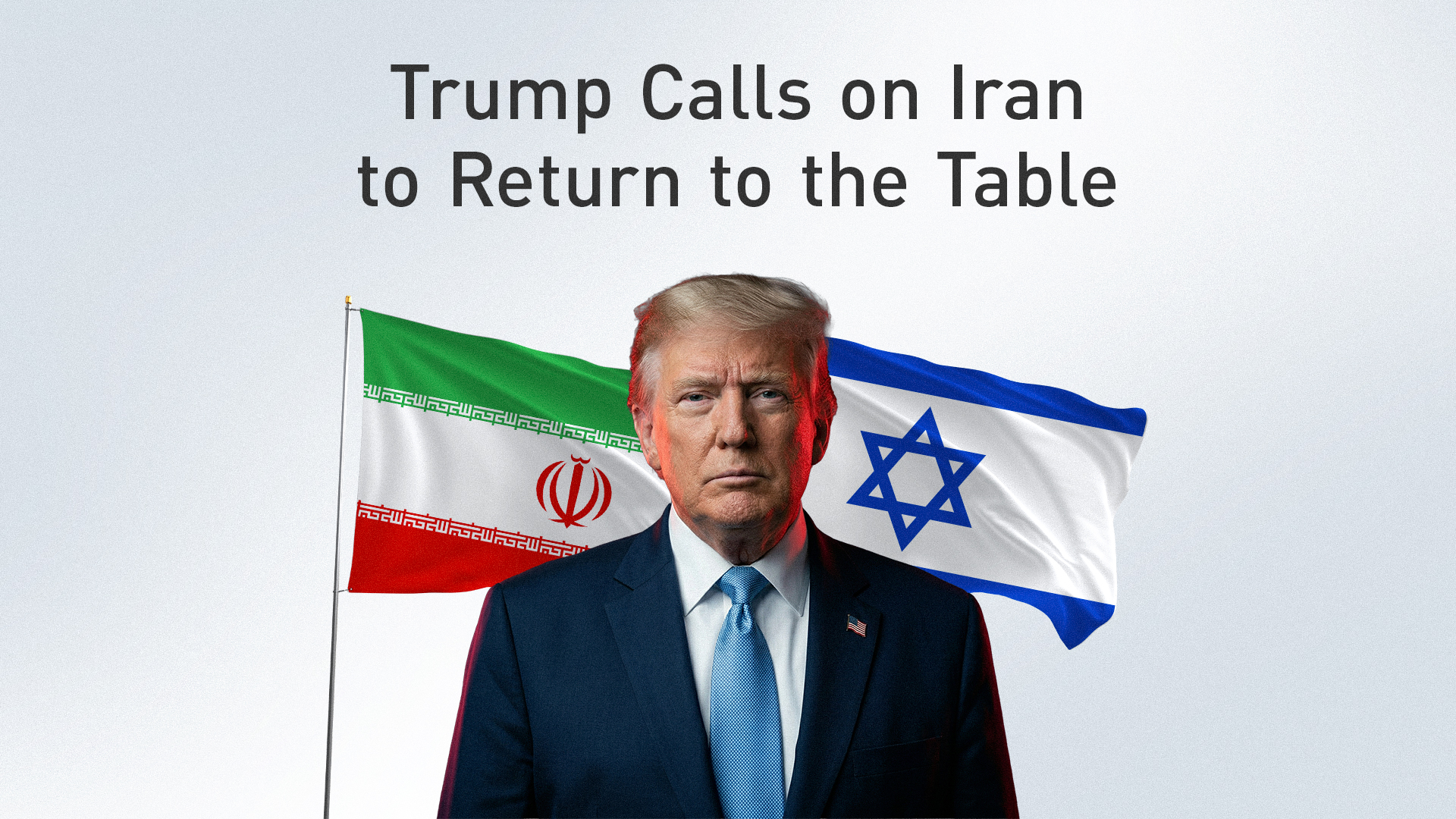
ERBIL (Kurdistan24) - On Sunday, as Iran launched wave after wave of ballistic missiles toward Israel, US President Donald Trump went on the phone with a Fox News correspondent and delivered a message aimed squarely at Tehran: stop firing, and come back to the negotiating table.
It was a moment that compressed the full volatility of the Middle East into a single phone call — diplomacy attempted in real time, against the backdrop of an active missile barrage.
"What I am proposing to Iran is this: you’ve Shot Your Missiles, That’s Enough. Get Back to the Table negotiations table and sign an agreement." Trump said.
The statement was remarkable not only for its content, but for its timing and its target. Trump was not speaking through diplomatic back-channels or formal communiqués.
Days Away From a Deal — Then This
The missile exchanges did not occur in a vacuum. Trump indicated that before the latest escalation, a nuclear agreement with Iran had been within reach — a matter of only a few days from signature.
The Iranian strikes, he said, had complicated that process significantly.
The suggestion that a deal was imminent before the latest round of fighting carries considerable weight.
Iranian officials, for their part, have signaled they intend to maintain military pressure until US sanctions are lifted. Fox News reported that Iran's oil exports have been reduced by 90 percent as a result of Washington's naval blockade, with the country losing hundreds of millions of dollars daily. Trump acknowledged the economic toll directly.
"We have the most powerful military in the world," he said, "but I want Iran to reach an agreement so that we are not forced to use military force again."
Iran's Warning: This Is Only the Beginning
Iran's Islamic Revolutionary Guard Corps framed its missile assault explicitly as a response to Israeli bombardment of the Dahiyeh district in Beirut. The strikes targeted Israel's third-largest city, Haifa, as well as a wide range of other areas across the country. Fox News correspondent Trey Yingst, reporting from Tel Aviv, confirmed that at least four waves of missiles were launched toward Israel.
The IRGC's statement was calibrated as both a justification and a threat.
"This is only a warning," the Corps declared. "If any form of aggression is repeated, all American and Israeli bases in the region will be considered legitimate targets, and our response will be far stronger."
Trump's Break With Netanyahu
Among the most significant elements of Trump's public statements was his explicit dissatisfaction with Israel's conduct. The US president said he was "not happy" with Israel's strikes on Beirut and made clear that those operations had been carried out without coordination with Washington.
"Israel's military operations in Lebanon's capital were conducted without coordination with the United States," Trump stated.
He also told the network that he was about to contact Israeli Prime Minister Benjamin Netanyahu directly, to urge him not to strike Iran in retaliation for the missile barrage.
The public distancing from an Israeli military operation is an unusual posture for an American president, and it reveals the extent to which Trump appears to be prioritizing a diplomatic resolution with Tehran over unconditional support for Israeli military action. It also raises a question that Washington's allies and adversaries alike will be weighing carefully: how far does that distancing go, and what are its practical limits?