Iran Claims Missile Strikes on Israeli Airbases, Prompting European Appeals for Restraint
The Islamic Revolutionary Guard Corps warned of a wider regional conflict if Israel retaliates, further straining a fragile two-month ceasefire.
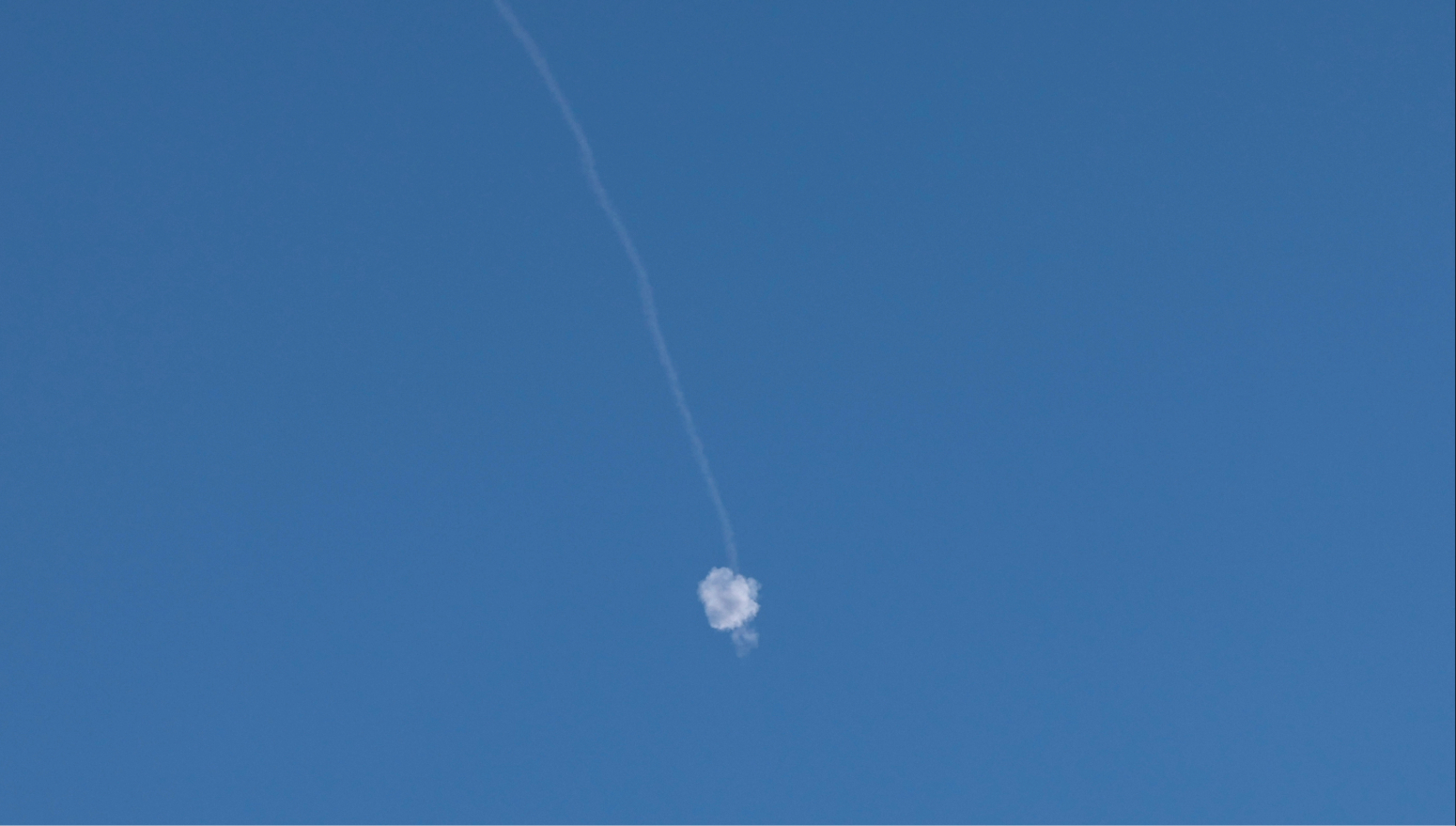
ERBIL (Kurdistan24) - Iran's Islamic Revolutionary Guard Corps announced on Monday that it launched targeted missile strikes against two Israeli military airbases, framing the barrage as direct retaliation for recent Israeli attacks on Iranian soil. The bold claim was accompanied by a stark warning that any further Israeli military action would trigger a massive and immediate expansion of the conflict.
In a formal statement released by its media center, the IRGC asserted that its Aerospace Force successfully executed a mission dubbed Operation "Haider-e-Karrar." Iranian authorities explicitly stated that the missiles were aimed at the Israeli Air Force's Nevatim and Tel Nof airbases.
The operation, which the Guard dedicated to the casualties of the recent "12-Day War," was described as a proportional response to Israeli strikes that recently disabled radar installations across three separate locations within Iran.
The IRGC's announcement went beyond claiming operational success, delivering a severe ultimatum to Jerusalem. The paramilitary organization warned that if Israel initiates any subsequent attacks, the geographic and military scope of Iran's retaliatory operations will be significantly broadened.
Furthermore, the IRGC emphasized that all of its combat units have been placed on maximum alert, positioned for large-scale operations to "punish" Israel should deterrence fail. The specific Iranian claims regarding the targets and the success of the strikes have not been independently verified.
The dramatic announcement has sent shockwaves through international diplomatic circles, with European leaders expressing profound alarm over the potential collapse of a delicate two-month truce. Speaking from Nicosia, Cyprus, European Union foreign policy chief Kaja Kallas issued an urgent appeal to halt the cycle of violence.
"Overnight, we have seen escalation again," Kallas stated, according to reporting by Agence France-Presse correspondent Dario Thuburn. "I think the region does not need an escalation, but actually that parties sit down to a negotiation table and agree."
As highlighted by a previous Kurdistan24 report, Kallas's remarks reflect a growing consensus in Western capitals that a full-scale war between Israel and Iran would have devastating global consequences.
Read More: Europe Urges Restraint as Renewed Israel-Iran Strikes Threaten Fragile Truce
Policymakers fear that an uncontained confrontation could severely disrupt global energy markets, destabilize vital maritime shipping corridors, and ignite a broader regional conflagration.
The IRGC's declared strikes occurred against a backdrop of rapidly intensifying military exchanges that threaten to permanently shatter the formal ceasefire established on April 8.
According to reporting by The Associated Press cited in Kurdistan24's coverage, intense cross-border fire erupted early Monday. The AP reported that the escalation began after Israel launched overnight airstrikes targeting central and western Iran, prompting Tehran to unleash successive waves of ballistic missiles.
The ensuing barrage triggered nationwide alarm across Israel. The AP noted that sirens blared in central and southern regions, including near the desert city of Dimona, forcing Israeli authorities to restrict public gatherings and cancel schools nationwide.
The AP reporting also highlighted how the violence risks engulfing neighboring states, further complicating the fragile security landscape.
For international stakeholders, the IRGC's latest operational claims and its explicit threats of a wider war underscore the extreme volatility of the current standoff.
As diplomats scramble to salvage the faltering April truce, the failure to transition from military retaliation back to the negotiating table suggests the Middle East remains perilously close to an uncontrollable regional conflict.
|
Summary Iran's IRGC claimed missile strikes on two Israeli airbases in retaliation for attacks on Iranian radar sites, warning of broader war if Israel responds. EU foreign policy chief Kaja Kallas urged an immediate return to negotiations, as escalating military actions threaten a fragile ceasefire. |