Europe Urges Restraint as Renewed Israel-Iran Strikes Threaten Fragile Truce
EU foreign policy chief Kaja Kallas warns against further escalation after a dangerous military exchange strains a two-month ceasefire and complicates diplomacy.
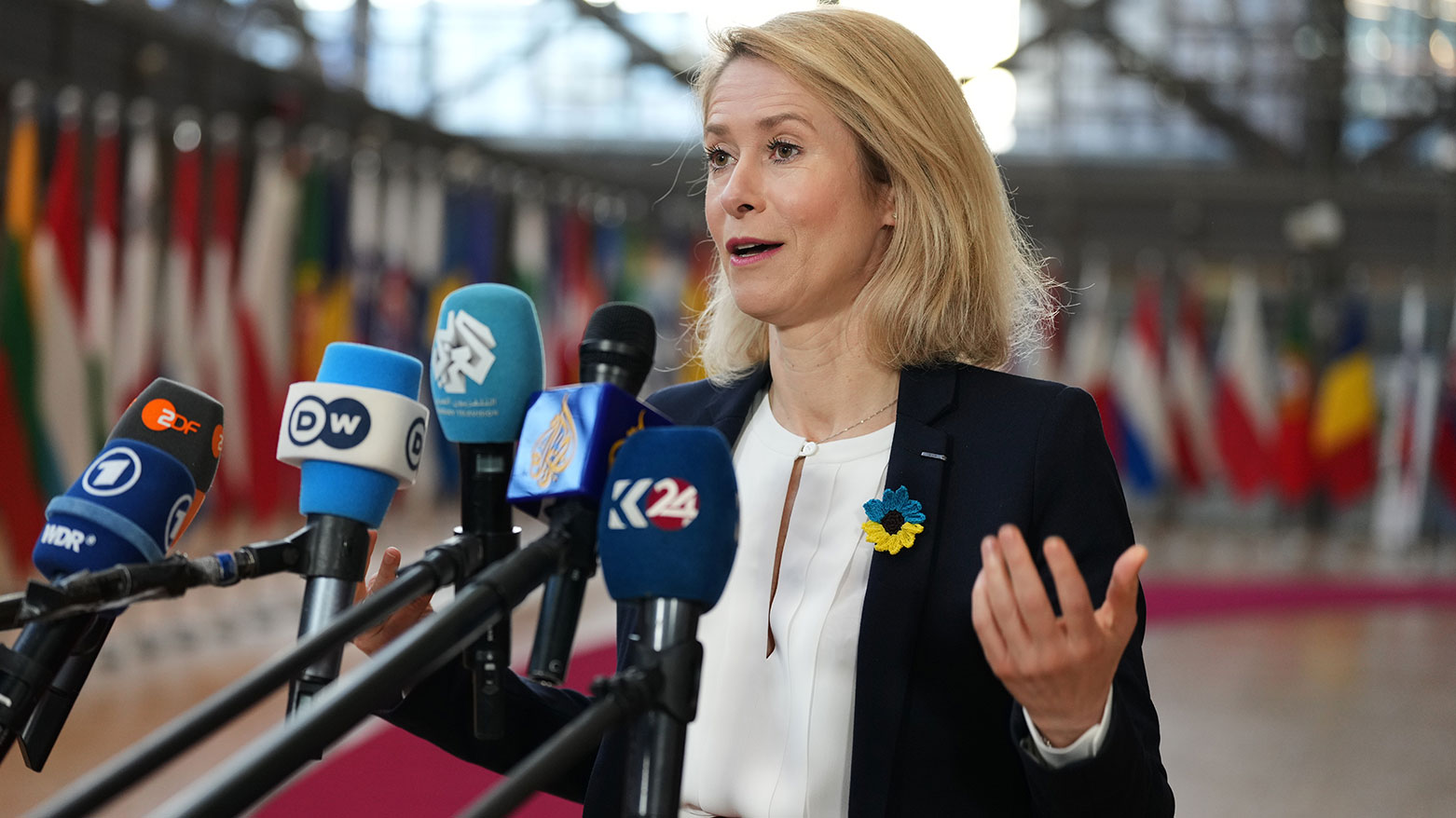
ERBIL (Kurdistan24) - As the Middle East teeters on the brink of renewed region-wide conflict, European Union foreign policy chief Kaja Kallas issued an urgent appeal for diplomatic restraint on Monday, warning that an escalating cycle of military retaliation between Israel and Iran threatens to collapse a fragile two-month ceasefire.
Speaking in Nicosia, Cyprus, the EU's top diplomat firmly rejected the necessity of the latest cross-border strikes, emphasizing that political solutions must supersede military force.
"Overnight, we have seen escalation again," Kallas stated, according to reporting by Agence France-Presse (AFP) correspondent Dario Thuburn. "I think the region does not need an escalation, but actually that parties sit down to a negotiation table and agree."
Kallas's remarks underscore the mounting alarm among European and international policymakers.
The prospect of an uncontrolled war between Israel and Iran poses severe risks to global energy markets, maritime security, and international stability.
By publicly pressing for an immediate return to the negotiating table, Kallas highlighted the consensus in European capitals that any further military exchanges could permanently shatter the diplomatic frameworks established to end the hostilities.
The urgent plea from the European Union followed a dramatic escalation in hostilities.
According to a comprehensive assessment by The Associated Press and its reporting team, Israel and Iran exchanged intense fire early Monday, plunging the region into its most severe crisis since a formal ceasefire took effect on April 8.
The fragile peace had already been fraying.
According to The Associated Press, Tehran had warned of severe retaliation after Israel struck the southern suburbs of Beirut, Lebanon, on Sunday, a move that reportedly defied requests from Washington to stand down.
The AP reported that the current volley began after Israel launched overnight airstrikes against targets in central and western Iran.
Although the Israeli military did not initially detail its objectives, semiofficial Iranian news agencies, including Fars and Mehr, indicated that the strikes hit a petrochemical complex in the city of Mahshahr in Khuzestan province.
In swift retaliation, Tehran launched three successive waves of ballistic missiles aimed at Israel.
The Iranian Islamic Revolutionary Guard Corps claimed responsibility for the barrage, dubbing it Operation "Nasr," or Victory. According to the AP, the Guard asserted that its strikes were a direct response to prior Israeli attacks on Iranian radar installations.
The incoming fire triggered nationwide alarm.
The AP noted that sirens blared across central and southern Israel, including in the remote desert city of Dimona, which houses Israel's primary nuclear research center.
As explosions echoed from interceptor missiles overhead, Israeli authorities took the extraordinary step of canceling schools nationwide and restricting large gatherings, measures not seen since the peak of the conflict in April.
The violence quickly demonstrated its potential to engulf neighboring states.
The Associated Press highlighted that Yemen's Houthi rebels, a key Iranian proxy, claimed their own missile attack on Israel while reiterating threats against commercial shipping in the Red Sea.
Furthermore, sirens were activated in neighboring Jordan and in Saudi Arabia's Al Kharj governorate, home to the Prince Sultan Air Base, which hosts United States military forces.
The rapid deterioration of the security environment directly challenges complex negotiations aimed at securing a lasting peace.
As Kallas warned of the dangers of further escalation, the strikes also appeared to defy direct pressure from Washington.
According to the AP, U.S. President Donald Trump told the Financial Times that he had dictated terms to Israeli Prime Minister Benjamin Netanyahu, insisting that he "calls the shots" and had urged Israel not to respond to earlier provocations. The White House withheld immediate comment on Monday's strikes, reflecting the diplomatic sensitivity of the crisis.
Kallas's intervention from Cyprus serves as a stark reminder of the international community's desperation to preserve the April 8 truce. For European leaders, the cascading violence, spanning from the Mediterranean to the Persian Gulf, demonstrates that military deterrence alone cannot resolve the deep-rooted geopolitical rivalries defining the conflict.
As the dust settles from Monday's barrage, the critical question remains whether the stark warnings from diplomats like Kallas can convince both Jerusalem and Tehran to abandon the battlefield and return to the negotiating table before the window for diplomacy closes completely.
|
Summary European Union foreign policy chief Kaja Kallas warned that the Middle East "does not need an escalation" following a dangerous exchange of airstrikes between Israel and Iran. The renewed hostilities severely threaten a fragile two-month ceasefire and complicate ongoing diplomatic negotiations. |