Political Stalemate in Kirkuk Leaves Thousands of Kurdish Youth Unemployed
More than 7,000 government positions remain suspended amid administrative gridlock, exacerbating an economic crisis that is pushing highly educated Kurdish graduates into the informal labor market.
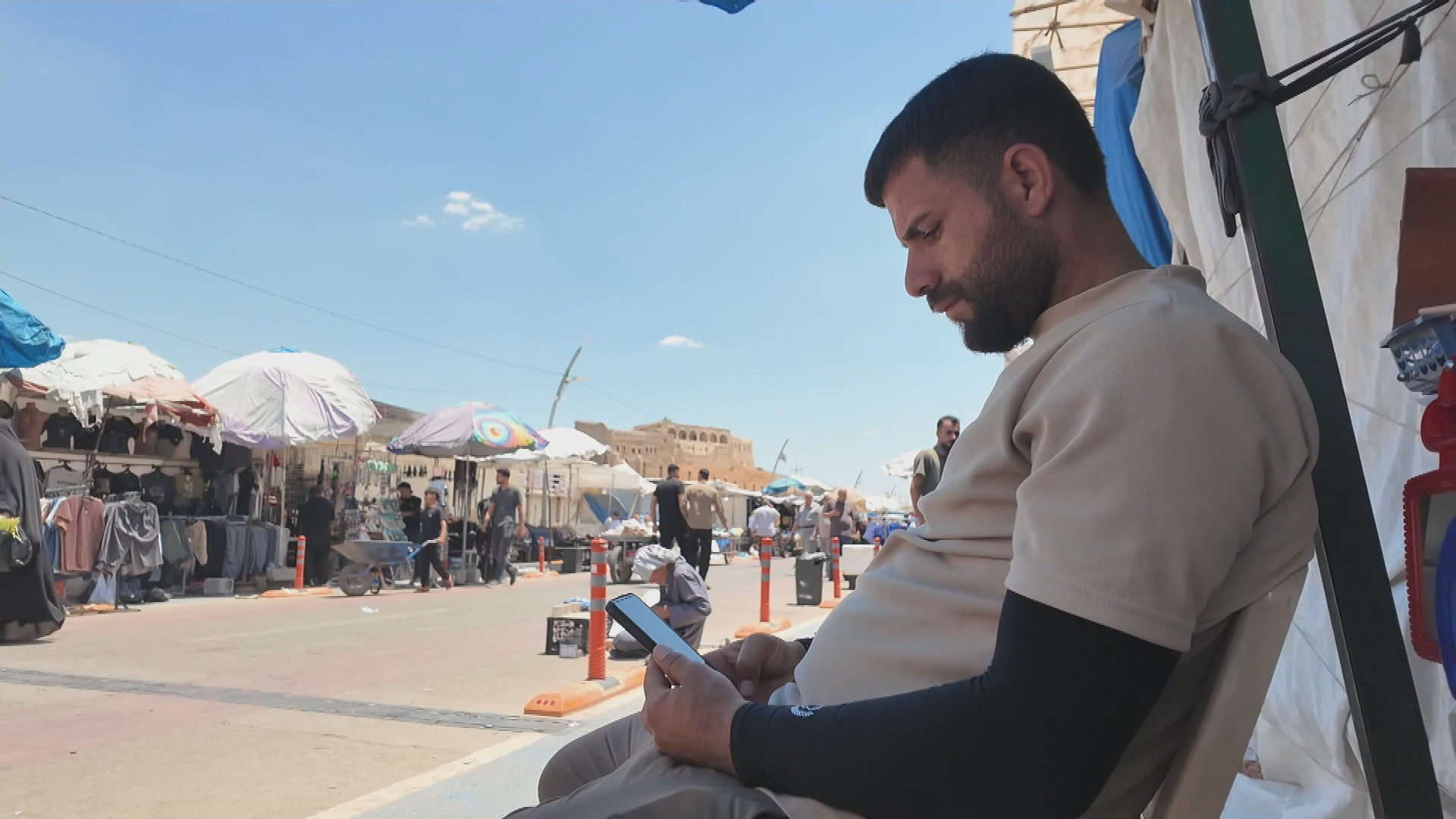
ERBIL (Kurdistan24) - In the city of Kirkuk, an intensifying political stalemate has effectively paralyzed the local government's administrative machinery, freezing the recruitment process for 7,304 desperately needed civil service positions. As competing factions vie for influence, the resulting institutional gridlock has left a generation of educated Kurdish youth languishing in unemployment, forcing many to abandon their professional aspirations for survival in the informal economy.
The human toll of this administrative failure is vividly apparent in the city's bustling, congested bazaars. Mohammed Imad, a recent law graduate, spends his days far from the courtrooms or government offices he trained to work in. Instead, he operates a small street cart, selling clothing to make ends meet.
"Kurdish youth are truly being oppressed here," Imad told a Kurdistan24 reporting team during a recent field interview, reflecting a pervasive sense of systemic neglect. "They claim there is no budget, no funding, and no vacancies. It isn't just me; there are doctors, engineers, and pharmacists who have completed their degrees only to sit at home."
Imad's frustration is echoed across countless households in the province. He noted that even his own brother, who graduated from the College of Pharmacy, remains without formal work. Their plight underscores a profound failure in public sector absorption, leaving highly qualified professionals sidelined in a region already grappling with severe economic pressures.
The hiring freeze is not merely a product of absent funding, but of deep-seated administrative dysfunction. According to an investigation by Kurdistan24, official documents reveal a troubling misallocation of provincial resources. Local authorities spent 61 million Iraqi dinars (approximately $46,500) to develop an online recruitment portal intended to process employment forms for the vacant positions.
Despite this substantial financial outlay, the digital platform has yielded zero practical results. To date, not a single applicant has been hired through the system, rendering the expenditure an empty bureaucratic exercise while the promised jobs remain conspicuously suspended.
Local officials acknowledge the severity of the crisis but point to entrenched procedural roadblocks. Nashat Shawis, Deputy Chairman of the Kirkuk Provincial Council, confirmed to Kurdistan24 that lawmakers are actively attempting to break the deadlock.
"We are actively following up on these 7,304 positions and aim to reach a final resolution on the matter," Shawis stated. "We are investigating the specific obstacles preventing the release of the names of successful applicants so that we can provide an official response."
However, identifying those obstacles inevitably points back to the city's complex political landscape. Factional rivalry in Kirkuk has long hindered effective governance, turning public sector employment into a highly contested arena. The inability to finalize the recruitment process reflects a broader institutional paralysis, wherein political disputes override public administration and economic development.
The socio-economic consequences of this stalemate are severe. In Iraq, where the public sector has traditionally served as the primary engine for employment and social mobility, the suspension of public hiring has driven a surge in the informal labor market. In this unregulated sector, job security and legal protections are virtually nonexistent. Furthermore, the prolonged freeze is rapidly eroding public trust in local governance, generating a deep-seated frustration that experts warn could accelerate youth migration away from the province.
For the thousands of graduates currently navigating Kirkuk's street markets, the frozen job slots represent more than just lost income; they symbolize a broader failure of local leadership to prioritize the city's future over its political divides. Until a viable political compromise is reached, the machinery of public employment will remain firmly at a standstill, leaving the ambitions of Kirkuk's educated youth suspended in perpetual uncertainty.
|
Summary A severe political stalemate in Kirkuk has frozen the recruitment of 7,304 civil service positions, leaving thousands of Kurdish graduates unemployed. A Kurdistan24 investigation reveals wasted public funds and youth forced into informal labor as factional rivalries paralyze local hiring. |
Soran Kamaran, Kurdistan24's correspondent in Kirkuk, contributed to this report.