Human Rights Investigator Joost Hiltermann Brings Anfal Story to Fiction With New Novel 'The Resurrected'
Author says fiction offers wider reach to global audiences and deeper human insight into Kurdish genocide survivors
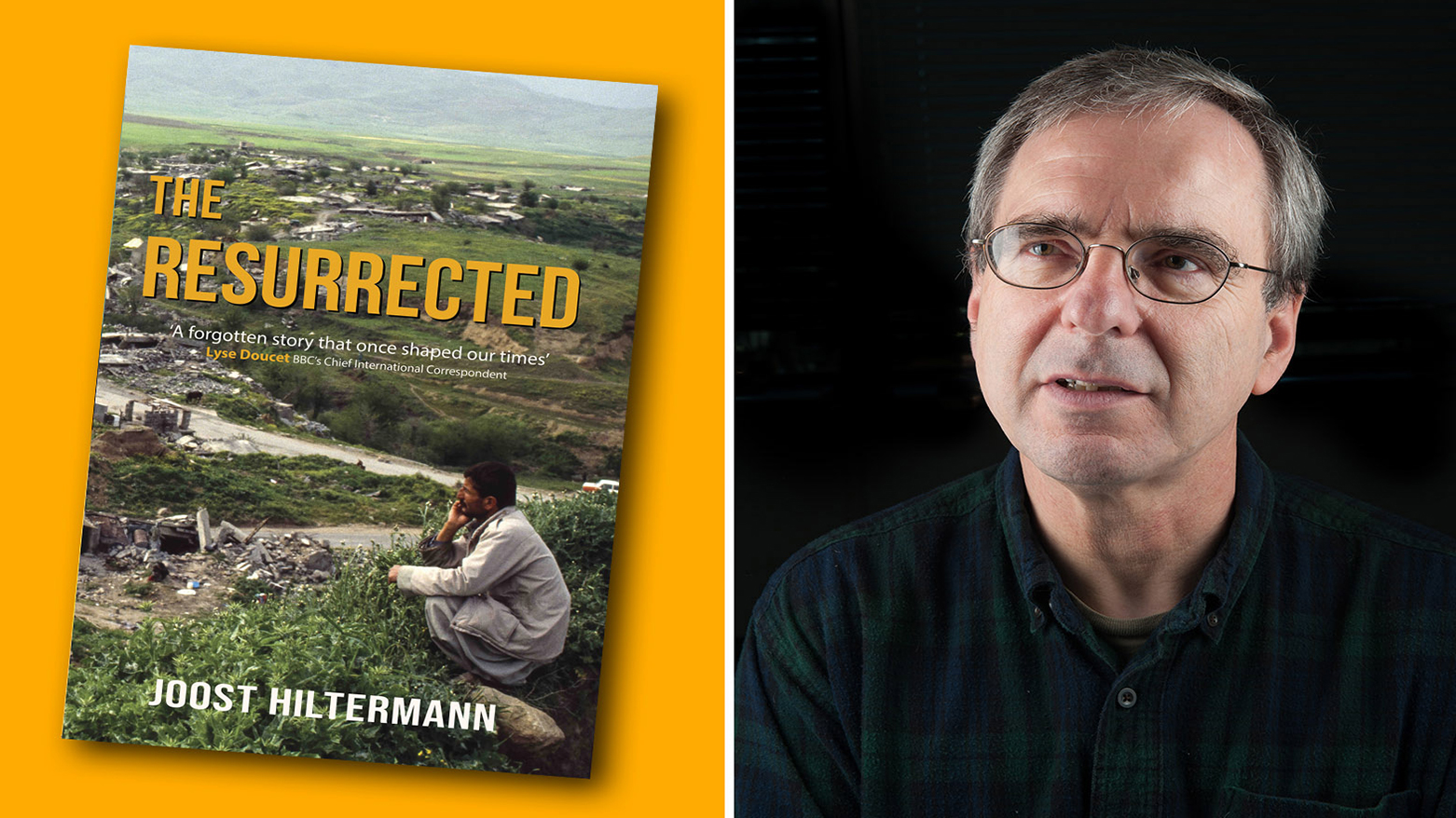
ERBIL (Kurdistan24) — Human rights investigator and author Joost Hiltermann says his decision to turn decades of research on the Anfal campaign against the Kurds into a novel is driven by a desire to reach a broader international audience and tell the story of Kurdish survivors in a more human and accessible way.
Speaking to Kurdistan24 during a ceremony held in the Kurdistan Region on Monday marking the introduction of his novel The Resurrected, Hiltermann explained that his earlier academic and human rights work had failed to reach the wider readership he believes the subject deserves.
“I decided to write a novel at this time because before I had written a lot about the Anfal campaign as non-fiction, as an academic or as a human rights activist, and I felt that I was not getting a large audience for this important story,” he said.
“I thought that if I put it in a fictionalized true story, I would get a broader Western audience in particular.”
Hiltermann said the novel is primarily aimed at Western readers, while acknowledging that Kurdish audiences have long been familiar with the history of Anfal.
“I was really trying to aim for a Western audience so that they understand and learn what happened during the Anfal campaign,” he noted.
His novel "The Resurrected" centers on Kurdish survivors of the Anfal campaign—young men who were arrested, transported to execution sites in Iraq’s western desert, and who miraculously managed to escape mass killings before returning to Kurdistan. The narrative blends fiction, oral history, and real testimonies collected over decades of research.
Hiltermann first arrived in northern Iraq in 1992 as part of a Human Rights Watch (HRW) mission to investigate reports that tens of thousands of Kurds had been systematically killed by dictator Saddam Hussein’s regime during the final stages of the Iran-Iraq war. At the time, Western governments largely maintained close ties with Baghdad, viewing Saddam Hussein as a strategic ally.
During months of fieldwork in the region, Hiltermann and fellow researchers interviewed more than 350 survivors of what became known as the Anfal campaign—a systematic military operation carried out between February and September 1988, involving mass executions, chemical attacks, and forced displacement.
The investigation later expanded to include the analysis of 18 tons of Iraqi government documents seized in northern Iraq, which helped establish that the campaign was centrally planned and meticulously documented by the Iraqi state. HRW estimated that between 50,000 and 100,000 Kurdish civilians were killed.
The legacy of Anfal has remained a defining trauma in the Kurdistan Region and continues to shape political and social dynamics in Iraq. Survivors, many of whom were displaced from rural lands and relocated to impoverished settlements, still rely heavily on state assistance.
Despite extensive documentation, Hiltermann noted that meaningful international accountability for the perpetrators was never achieved. HRW’s 1993 report described the campaign as genocide and attempted to bring the case before the International Court of Justice in The Hague, but the effort failed to gain sufficient international backing amid shifting global priorities following the end of the Cold War.
In The Resurrected, Hiltermann uses fictionalized characters such as Karwan and Kawa to reflect real-life survivors whose testimonies he collected during his fieldwork. The narrative also includes a character known as “A Human Rights Investigator,” mirroring Hiltermann’s own role in documenting the atrocities.
He said fiction allowed him to explore emotional and psychological dimensions that formal human rights reporting cannot capture. “I won’t pretend I know what went on in the heads of people caught up in the Anfal campaign,” he said. “But I hope I stay true to the idea.”
Hiltermann also revealed that the survivors who inspired the characters remain closely involved with him and were given the opportunity to review and approve the manuscript before publication.
Beyond his literary work, Hiltermann has continued his engagement with Middle East issues, previously working with HRW’s arms division and later joining the International Crisis Group as an adviser.
He also authored A Poisonous Affair: America, Iraq and the Gassing of the Kurds in 2007, a detailed academic study of Iraq’s chemical weapons campaign. However, he noted that academic writing reached only limited audiences, reinforcing his belief that fiction may offer a more powerful medium to preserve and communicate the lived experiences of Kurdish survivors of Anfal to the wider world.
Kurdistan24 Exclusive
— Kurdistan 24 English (@K24English) June 9, 2026
Human rights investigator and author @JoostHiltermann says his decision to turn decades of research on the Anfal campaign against the Kurds into a novel is driven by a desire to reach a broader international audience and tell the story of Kurdish survivors… pic.twitter.com/MxbCsddWj6