India Moves to Restrict Water Flow to Pakistan After Treaty Suspension
New Delhi says “not a single drop” will be allowed to cross borders as tensions rise over Indus Waters Treaty
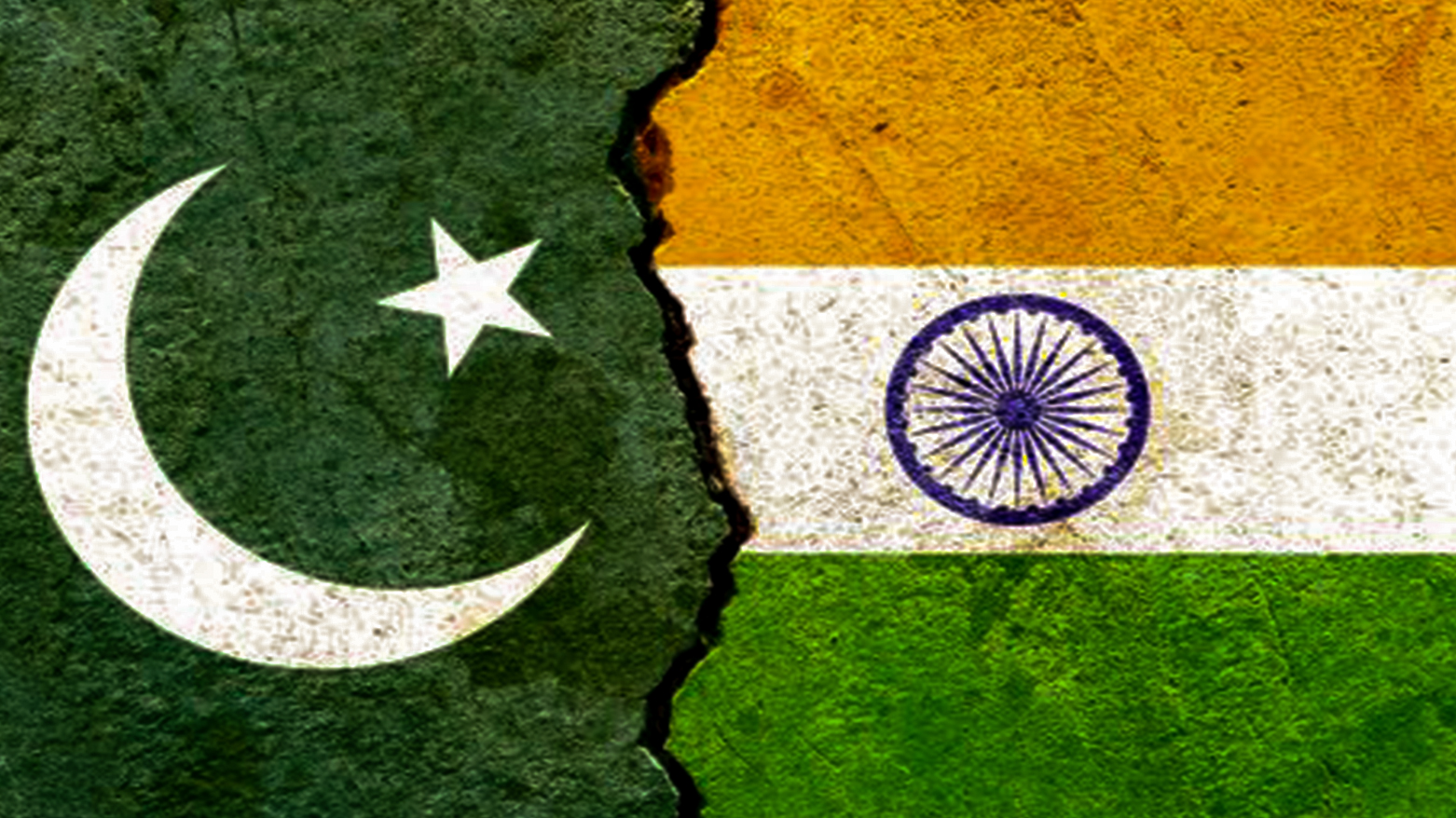
ERBIL (Kurdistan24) — India is working to ensure that “not a single drop of water” flows into neighboring Pakistan in the coming years, the country’s water minister said on Wednesday, following New Delhi’s suspension of a major water-sharing treaty last year.
The remarks by Water Minister C.R. Patil signal a further escalation in already strained relations between the nuclear-armed neighbors, with Pakistan warning that any attempt to alter cross-border water flows would be considered an “act of war.”
Speaking to India’s ANI news agency, Patil said the government was actively pursuing measures to restrict water flow into Pakistan under directives from Prime Minister Narendra Modi.
“It is certain, not a single drop of water will go [to Pakistan] in the coming years,” Patil said in Hindi, adding that India was “actively working on it.”
The dispute centers on the Indus Waters Treaty (IWT), a landmark agreement signed in 1960 that governs the use of water from six rivers in the Indus basin. The rivers originate in India but flow into Pakistan, where they serve as a critical resource for agriculture and millions of livelihoods.
India announced in May 2025 that it was suspending its participation in the treaty, following accusations that Pakistan supported a deadly attack on tourists in Indian-administered Kashmir. Islamabad rejected the allegations, and the treaty has no unilateral exit mechanism under its original framework.
Pakistan has since insisted the agreement remains legally binding and has repeatedly warned that any attempt to alter river flows would have severe consequences.
The water dispute has become one of the most sensitive flashpoints in the broader India-Pakistan rivalry, particularly given that the Indus River system runs through contested Kashmir, a Himalayan region claimed in full by both countries.
Tensions between the two sides escalated further in May when they engaged in a brief but intense four-day conflict involving drones, missiles, and artillery exchanges that left nearly 70 people dead on both sides.
Since then, water has emerged as a central point of contention. Pakistan recently accused India of attempting to “weaponize” water after New Delhi announced new infrastructure initiatives on the Chenab River, one of the key tributaries feeding the Indus system.
Among the projects is a proposed tunnel scheme by India’s state-owned National Hydroelectric Power Corporation, which aims to divert water from the Chenab River to the Beas basin.
Separately, India’s power ministry has also carried out sediment removal work at the Salal Hydroelectric Power Station, citing the termination of the treaty.
While Indian officials have framed these steps as infrastructure and maintenance measures, experts note that India’s current dam network does not have the capacity to fully block or significantly divert river flows. Instead, it can only regulate the timing and volume of water release.
Any large-scale diversion project would require years to complete. An official in Indian-administered Kashmir said work would likely not begin before mid-2027 and could take at least five years to finish.
Despite the long timelines, the prospect of altered river flows has raised alarm in Pakistan, where agriculture is heavily dependent on Indus basin waters. Analysts warn that any sustained disruption could have significant economic and environmental consequences.
As both countries maintain hardline positions, the future of the Indus Waters Treaty remains uncertain, adding another layer of instability to an already volatile regional relationship.