A Historic Aria: Kurdish Literature Breaks Onto the European Opera Stage
At the 79th Holland Festival, Tarza Jaff's poem 'Qaqnas' or 'Phoenix' becomes the first Kurdish-language text adapted into an operatic production, marking a cultural milestone for a marginalized language.
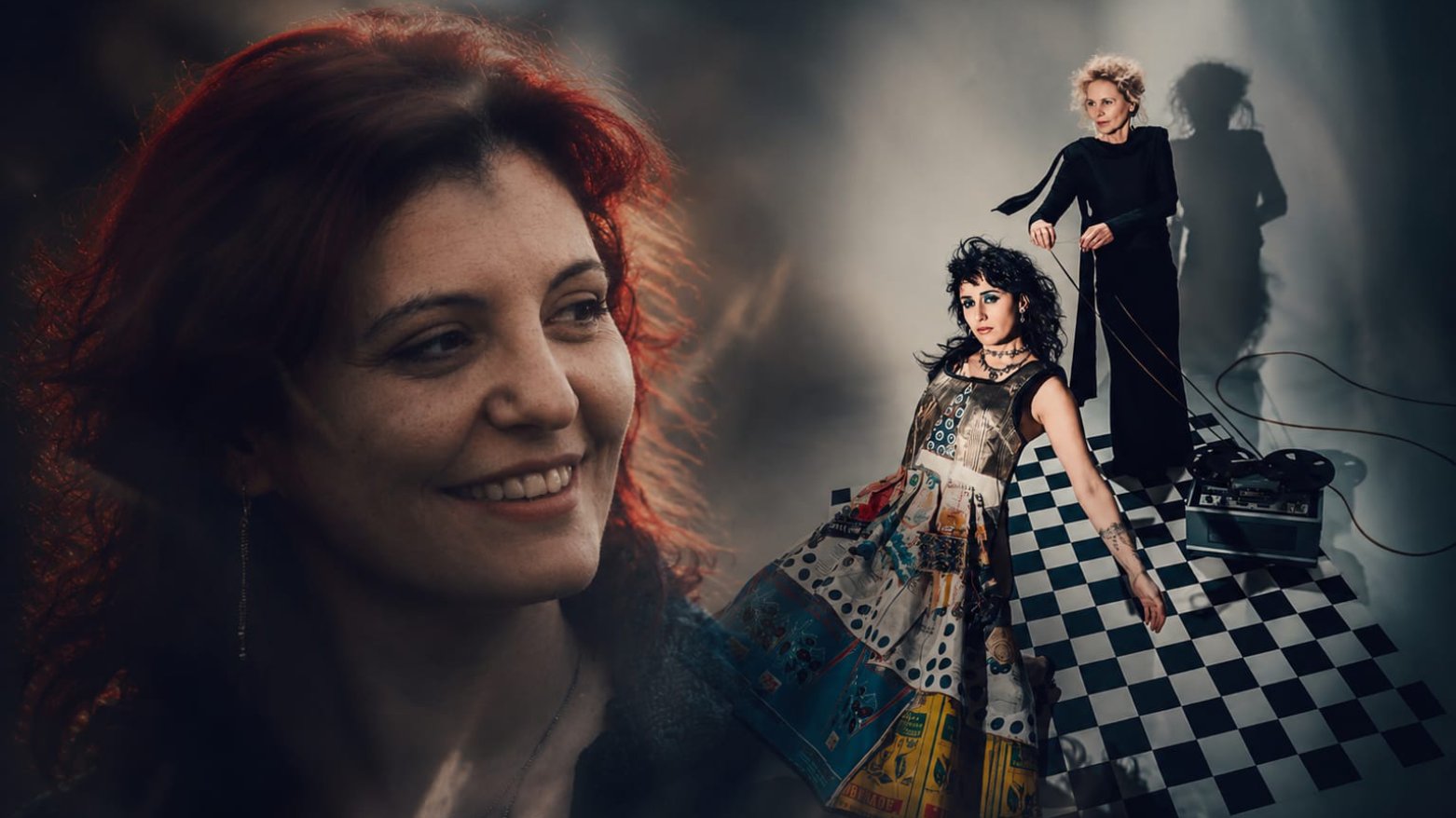
ERBIL (Kurdistan24) - For centuries, the soaring arias of classical opera have been the near-exclusive domain of major European languages, Italian, French, and German. But this week, a new linguistic melody is echoing through one of Europe's premier contemporary arts venues, as the Kurdish language makes a historic debut on the operatic stage.
At the 79th Holland Festival, which officially opens in Amsterdam on Friday, the evocative verses of Kurdish poet Tarza Jaff have been transformed into a groundbreaking musical production.
Her celebrated poem "Qaqnas," or "Phoenix," serves as the lyrical foundation for a newly commissioned opera, marking the first time a Kurdish poetic text has been adapted into the classical medium and performed entirely in its native tongue.
Titled "When Women Leave, God Becomes Angry; They Take Flight," the production is the result of an ambitious cross-cultural collaboration between Jaff and the renowned Dutch composer Huba de Graaff.
Hosted at Amsterdam's Frascati Theater, a prominent hub for avant-garde and contemporary performance, the opera weaves the cadence of Kurdish poetry into the complex structural arrangements of modern European theater.
According to remarks given to Kurdistan24, Jaff views the project as a watershed moment that extends far beyond her own literary career.
"My participation is more than just a personal achievement; it is a victory for the Kurdish language and Kurdish poetry," Jaff told Kurdistan24. "For the first time, a Kurdish poetic text serves as the foundation for an opera, performed in Kurdish on an international stage."
The significance of this linguistic breakthrough is profound.
Kurdish, a language spoken by tens of millions across the Middle East, has historically faced severe political restrictions and cultural marginalization in its native regions.
By thrusting Kurdish verse into a high-art form historically reserved for dominant global cultures, the production challenges traditional artistic boundaries and stakes a bold claim for cultural visibility.
"Historically, opera has been associated with major world languages and cultures. Now, through this poem, Kurdish has found its place on that stage,” Jaff told Kurdistan24.
She added that the performance carries a distinct cultural message, proving that Kurdish literature possesses the power to "transcend borders and reach the world's most important artistic venues."
The Holland Festival itself is a fitting venue for such a pioneering endeavor.
Established as one of Europe's oldest and most prestigious international festivals for the performing arts, it annually gathers leading directors, writers, and composers. Jaff noted that the event is widely celebrated as a premier platform for intercultural dialogue, making it an ideal launchpad for introducing Kurdish literature to major global artistic centers.
The driving force behind the text, Tarza Jaff, is a multifaceted cultural figure in the Kurdistan Region. Born in the cultural capital of Sulaimani in 1972, she holds a degree in geography and has cultivated a prolific career as a poet, translator, and journalist.
Jaff, who joined the Kurdistan24 Media Foundation as a television presenter in 2016, has published extensively across regional magazines and newspapers, building a diverse literary portfolio that has now captured international attention.
The dialogue surrounding this unprecedented collaboration will extend beyond the stage performance itself. According to information obtained by Kurdistan24, an exclusive public session featuring Jaff and de Graaff is scheduled for Saturday, June 13.
The two artists will engage in an open discussion with festival audiences, exploring the intricate process of translating poetry into the language of music and detailing their experience navigating a creative venture between two vastly distinct cultures.
As the curtain rises in Amsterdam, the operatic adaptation of "Qaqnas" stands as a testament to the resilience and richness of Kurdish artistic expression.
It not only elevates the profile of a marginalized language but also signals a new era of global visibility for Kurdish creatives seeking to share their stories on the world's most distinguished stages.
|
Summary In a historic milestone, Kurdish poet Tarza Jaff's 'Phoenix' has been adapted into a groundbreaking Kurdish-language opera. Debuting at Amsterdam's 79th Holland Festival, this unique collaboration elevates Kurdish literature and cultural identity onto the global performing arts stage. |