KRG Completes 810 Road Projects Since 2019, Expands Major Infrastructure Network
More than 3,000 kilometers of roads built and rehabilitated as government continues multi-trillion-dinar investment in transportation and development
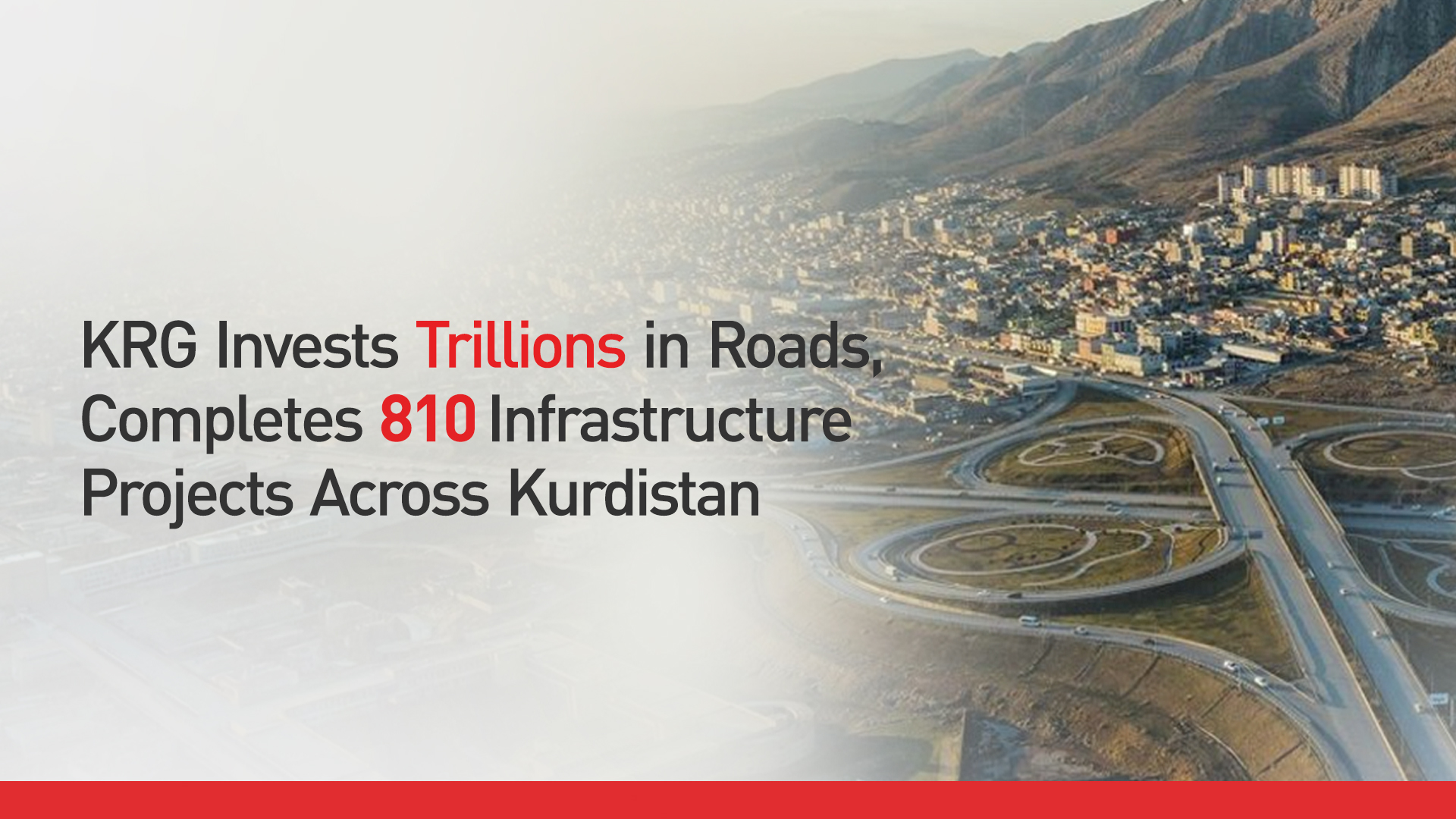
ERBIL (Kurdistan24) — The Kurdistan Regional Government (KRG) has completed hundreds of strategic and service projects across the Kurdistan Region between 2019 and 2026, investing several trillion Iraqi dinars in infrastructure aimed at strengthening connectivity, supporting economic growth, and improving public services.
According to figures released by the KRG Media and Information Office on Saturday, the government has implemented 810 road and transportation projects over the past seven years at a total cost of more than 1.057 trillion dinars.
The projects resulted in the construction and rehabilitation of 3,055 kilometers of roads across the Kurdistan Region, significantly expanding transportation networks and facilitating easier movement of people and goods between cities, districts, and border areas.
The government also revealed that 227 additional strategic road projects are currently under implementation. Upon completion, these projects will add or rehabilitate another 2,239 kilometers of roads at an estimated cost of 4.179 trillion dinars.
Among the largest ongoing projects are the dual-carriageway linking Korre, Shaqlawa, and Qandil, valued at 97.375 billion dinars and currently 50 percent complete; the Koya-Erbil dual carriageway project, costing 683 billion dinars and 40 percent completed; the Kalar-Darbandikhan road project, valued at 591.86 billion dinars and 30 percent complete; and the Dukan-Chwarqurna dual carriageway project, with a budget of 260.699 billion dinars and 16 percent of construction completed.
Alongside road construction, the KRG has invested heavily in transportation safety measures aimed at reducing traffic accidents and protecting citizens.
Over the same period, authorities completed road markings along 2,723 kilometers of highways and roads, installed 19,342 traffic signs, constructed 62 kilometers of protective barriers, and built 59 pedestrian bridges to improve safety and accessibility.
The government stated that funding for road construction and rehabilitation projects has been secured through multiple sources, including the regional investment budget allocated to major strategic projects, the Ministry of Reconstruction and Housing's regular budget, and a dedicated allocation of 30 percent of revenues generated by weigh stations for road maintenance and rehabilitation.
Officials said the achievements demonstrate the government's commitment to prioritizing transportation infrastructure despite years of financial challenges and budgetary pressures.
Road networks are widely regarded as a critical driver of economic development, linking markets, facilitating trade, supporting tourism, and improving access to public services.
The KRG described the transportation sector as an "artery of development" and emphasized its role in strengthening economic integration across the Region.
The infrastructure push forms part of broader efforts by the Kurdistan Region to modernize public services, attract investment, and diversify the economy.
In recent years, the KRG has launched a series of major development initiatives in transportation, electricity, water, housing, and tourism, seeking to meet the demands of a growing population and expanding private sector.
The expansion of modern road networks has also strengthened connections between major urban centers, including Erbil, Duhok, Sulaimani, Halabja, and the Garmian administration, while improving access to mountain resorts, agricultural areas, industrial zones, and border crossings that serve as important gateways for regional trade.
Observers note that continued investment in transportation infrastructure is expected to enhance the Kurdistan Region's competitiveness, reduce travel times, improve road safety, and create new opportunities for economic growth and tourism development in the years ahead.