Iran's Chief Negotiator Says Future U.S. Talks Must Respect Tehran's 'Red Lines'
He warned that Iran would respond forcefully to any attempt to pressure the country, saying, "If the enemy seeks to be excessive, we have proven that our fingers are on the trigger and we have no hesitation in giving a crushing response to the enemy."
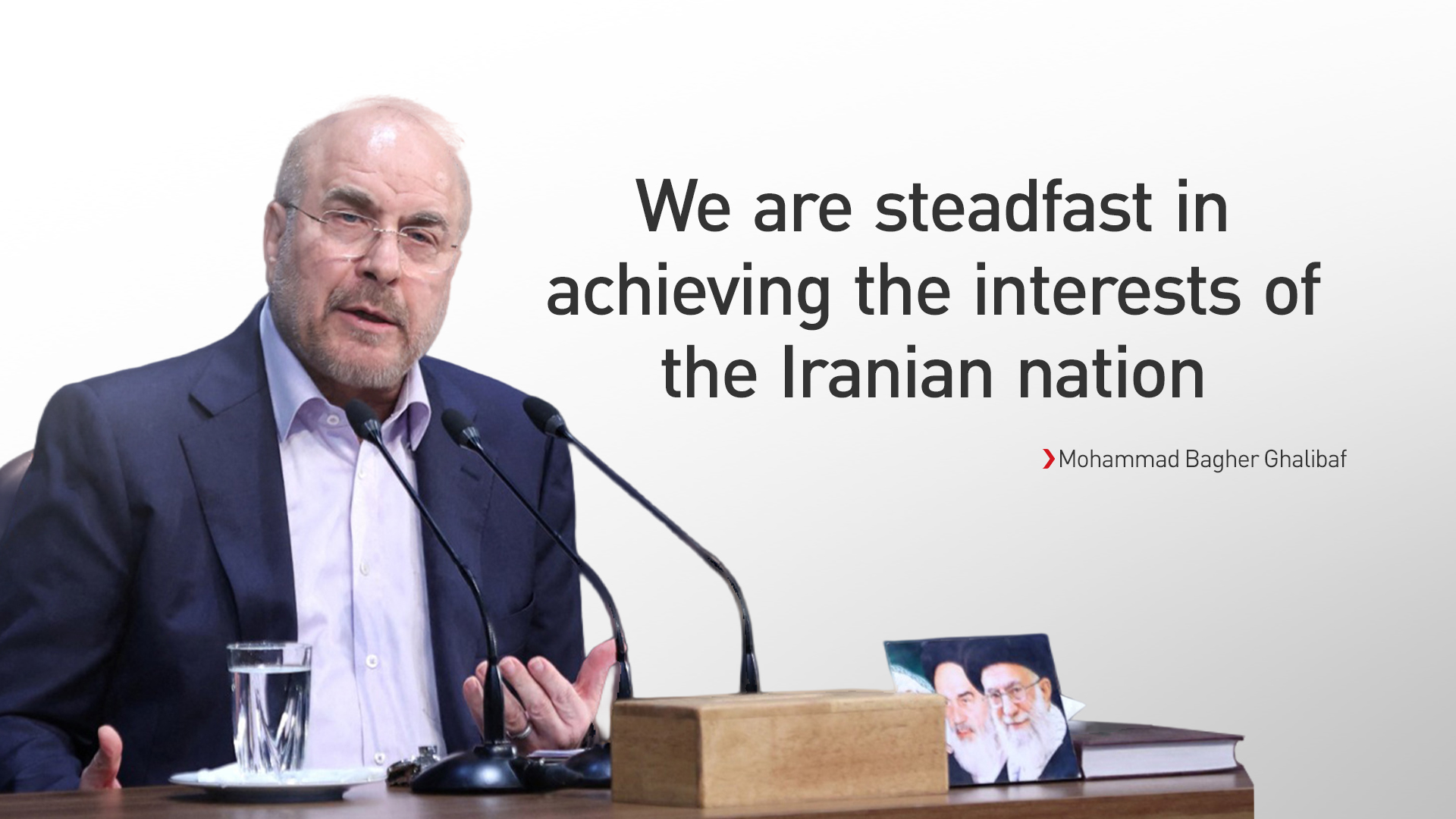
ERBIL (Kurdistan24) – Iran's chief negotiator, Mohammad Bagher Ghalibaf, said on Friday that any future negotiations with the United States would remain firmly bound by Tehran's "red lines," stressing that Iran would not compromise on its national interests despite a newly signed agreement aimed at ending the recent regional conflict.
"As we have shown in the past path of negotiations, we are steadfast in fulfilling the conditions and red lines set, and in achieving the interests of the Iranian nation," Ghalibaf said in remarks published by the official IRNA news agency.
He warned that Iran would respond forcefully to any attempt to pressure the country, saying, "If the enemy seeks to be excessive, we have proven that our fingers are on the trigger and we have no hesitation in giving a crushing response to the enemy."
His comments come days after Tehran and Washington signed a memorandum of understanding ending the regional war that erupted on Feb. 28 following U.S.-Israeli strikes on Iran.
Ghalibaf's remarks also followed a message from Iran's Supreme Leader Ayatollah Mojtaba Khamenei, who said he had approved the agreement despite holding a "different view" on the matter, without elaborating on his reservations.
In a message broadcast on state television, Khamenei emphasized that direct negotiations with the United States "will not mean accepting the enemy's point of view."
Iranian Foreign Minister Abbas Araghchi responded by pledging that the country's diplomatic efforts would focus on securing Iran's national interests and protecting the rights of its people.
President Masoud Pezeshkian, who signed the agreement on Iran's behalf, likewise vowed that his administration would uphold Iran's red lines while safeguarding the country's "dignity, honor and authority."
The agreement, signed separately by U.S. President Donald Trump and Pezeshkian, establishes a framework for detailed 60-day negotiations covering Iran's nuclear program and potential sanctions relief.
However, uncertainty remains over when substantive negotiations will begin after an initial meeting scheduled for Friday in Switzerland was postponed.
The memorandum also calls for an end to hostilities across the Middle East, including in Lebanon, the lifting of the two-month U.S. naval blockade on Iranian ports, and the reopening of the Strait of Hormuz with no transit charges for a 60-day period.
In addition, Iran committed not to procure or develop nuclear weapons, an objective Tehran has consistently denied pursuing.
Despite the agreement, conservative figures in Iran have voiced deep skepticism about Washington's intentions, warning that Tehran could surrender strategic leverage before obtaining meaningful sanctions relief.
Hossein Shariatmadari, editor-in-chief of the ultraconservative Kayhan newspaper, said the United States had repeatedly failed to honor past commitments.
"The Americans do not honor any commitments, they have not been loyal to any agreements, and they will not be," he said during an interview on state television, adding that "the Strait of Hormuz is the way to get compensation."
Meanwhile, Ebrahim Rezaei, spokesperson for the Iranian parliament's National Security Commission, criticized reports suggesting that inspectors from the U.N. nuclear watchdog could be granted access to Iranian nuclear facilities.
"I hope the government denies this, but if this claim is true... the parliament will stand up to lawlessness and disobedience," he wrote in a post on X.