Can a Business-First Partnership Work in Iraq if the Guns Remain Unchecked?
The U.S. and Iraq are sketching out a new relationship built on oil, technology, and investment. But analysts warn that billions of dollars in foreign capital cannot thrive in a nation where militias still dictate terms.
ERBIL (Kurdistan24) - When Tom Barrack, the U.S. special presidential envoy for Iraq and Syria, sat down with Iraqi Prime Minister Ali Faleh al-Zaidi in Baghdad this month, the public messaging was remarkably clear: Washington and Baghdad want to do business.
The readout of the last Monday's meeting read like a corporate prospectus. The two men discussed multi-billion dollar negotiations with Chevron to develop southern oil fields. They welcomed the licensing of Elon Musk's Starlink for high-speed internet. They talked up floating liquefied natural gas terminals with Excelerate Energy and the ambitious rehabilitation of the Kirkuk-Baniyas pipeline.
Read More: Iraq, U.S. Reaffirm Strategic Partnership, Discuss Security, Energy, and Investment Cooperation
For the Trump administration, the emphasis on energy diversification, technology, and investment signals an attempt to pivot U.S.-Iraq relations away from the grueling counterterrorism focus of the past two decades toward a forward-looking economic partnership. Prime Minister al-Zaidi, a former businessman positioned as a potential reformer, is scheduled to visit the White House in mid-July to cement this "mutually beneficial" strategy.
Yet beneath the optimistic corporate announcements lies an unresolved contradiction.
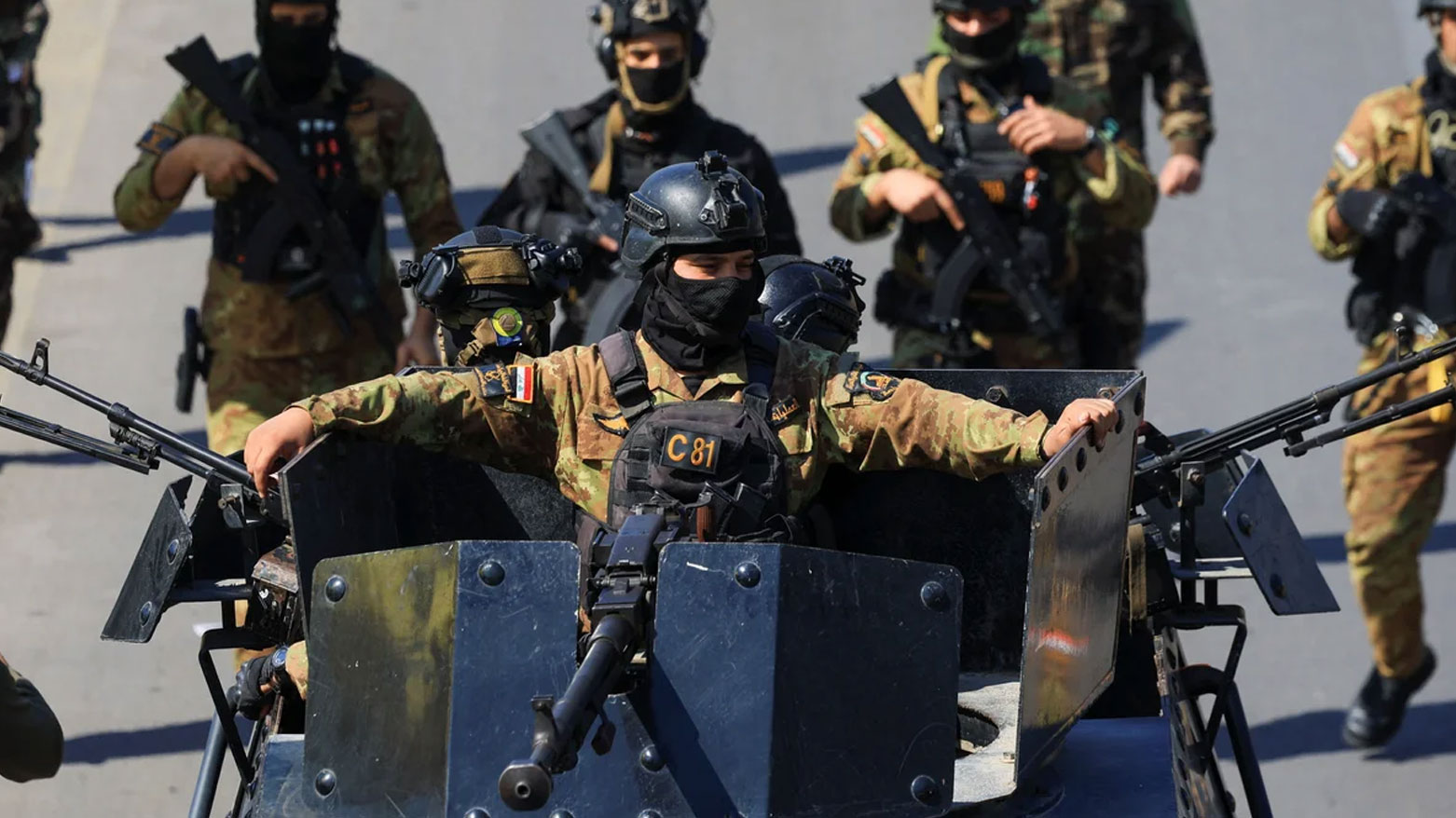
The U.S. and Iraqi governments are attempting to build an economic partnership atop a fractured security landscape, one where Iran-backed armed groups operating outside constitutional command structures routinely target the very foreign companies Baghdad is trying to attract.
Yet this raises an important question: Can a business-centered partnership succeed if fundamental security questions remain unresolved?
A recent analysis by the Foundation for Defense of Democracies (FDD) suggests the answer is no.
In a sharp assessment titled "Washington Wants a Relationship With Iraq Focused On Business, but Security Can't Be Ignored," FDD research analyst Bridget Toomey argues that attempting to decouple Iraq's economic development from its militia problem is a recipe for failure.
"Zaidi has received enthusiastic support from the Trump administration, which views him as the right choice to support American priorities in Iraq, including countering Iranian influence," Toomey notes. "However, Zaidi... has no political track record to substantiate his commitment to Washington's priorities. Furthermore, his political mandate comes from the Coordination Framework — a coalition of Iran-aligned, Shiite parties."
The Rhetoric of Disarmament
The tension between economic ambition and security reality is most evident in the current debate over militia disarmament.
In recent weeks, Baghdad has aggressively promoted a narrative of state consolidation. On the anniversary of the fall of Mosul, Prime Minister al-Zaidi issued a resolute statement pledging to restrict weapons exclusively to the state and protect Iraq's independent national decision-making.
Read More: Iraqi Government Reaffirms Commitment to Security, Sovereignty, and State Monopoly on Arms
This rhetoric appeared to yield results when two of Iraq's top militia groups, Asaib Ahl al-Haq and Kataib Imam Ali, announced they would disarm. These declarations followed a similar move by Saraya al-Salam, an armed faction affiliated with the influential Shiite cleric Muqtada al-Sadr.
Read More: Iraq Faces New Security Test as Key Militia Signals Intent to Disarm and Integrate
But the FDD analysis warns that this disarmament may be largely rhetorical. "Huge questions remain around where fighters and weapons will go," Toomey writes.
The crux of the issue is the Popular Mobilization Forces (PMF), an official state security institution comprised largely of Iran-backed militias.
Toomey points out that militias claiming to place their weapons under state control likely intend to fold their assets into the PMF structure. Because the PMF legally answers to the prime minister but practically operates under the heavy influence of commanders loyal to Tehran, this maneuver provides militias with legal cover without truly submitting them to a centralized Iraqi chain of command.
"Even after promises of disarmament, militia leaders, including Qais Khazali... defended the necessity and legality of the PMF," Toomey notes. For Washington, symbolic disarmament that merely shuffles weapons from one Iran-aligned ledger to another does not constitute a state monopoly on force.
Security Guarantees and Corporate Risk
This distinction is not merely an academic debate over chain of command; it has direct, billion-dollar consequences for Iraq's economy.
During Envoy Barrack's visit, the U.S. Embassy commended Iraq's efforts "to enable U.S. companies HKN, Western Zagros, and Hunt to resume operations with full security guarantees."
These guarantees are critical. Following the closure of the Strait of Hormuz by Iran and a subsequent wave of militia attacks targeting American organizations, many Iraqi oil fields were forced to shut down production in early March.
Yet, as the FDD analysis starkly points out: "Any guarantees are meaningless so long as Iran-backed terror groups... retain weapons. The Iraqi government condemns such attacks, but it has proven unable to stop them."
Foreign investors require predictable regulatory environments and physical safety.
If militias retain the capability to bombard oil infrastructure or extort international logistics networks whenever regional tensions flare between Washington and Tehran, major multinational corporations will remain hesitant to deploy capital in Iraq, regardless of the lucrative contracts offered in Baghdad.
The Limits of Economic Statecraft
The current U.S. approach reflects a belief that economic engagement can eventually crowd out malign influence.
By helping Iraq modernize its energy grid, expand its internet infrastructure, and diversify its export routes, Washington hopes to build an Iraqi state robust enough to resist Iranian coercion organically.
But the FDD argues that Washington cannot afford to wait for economic development to slowly erode militia power.
Toomey suggests that the U.S. must demand concrete transparency regarding where militia arms are going and require Baghdad to take steps toward dismantling the PMF entirely.
Furthermore, she argues that Washington should push to expand prohibitions on militia affiliates holding powerful positions within Iraqi government ministries, using tools like Global Magnitsky sanctions to target corruption.