Erbil Launches Excavations at 14 Sites Along 150-Meter Road Corridor
As modern infrastructure expands, local archaeologists and academic experts race to survey newly discovered sites yielding artifacts from the Parthian, Sassanid, and early Islamic eras.
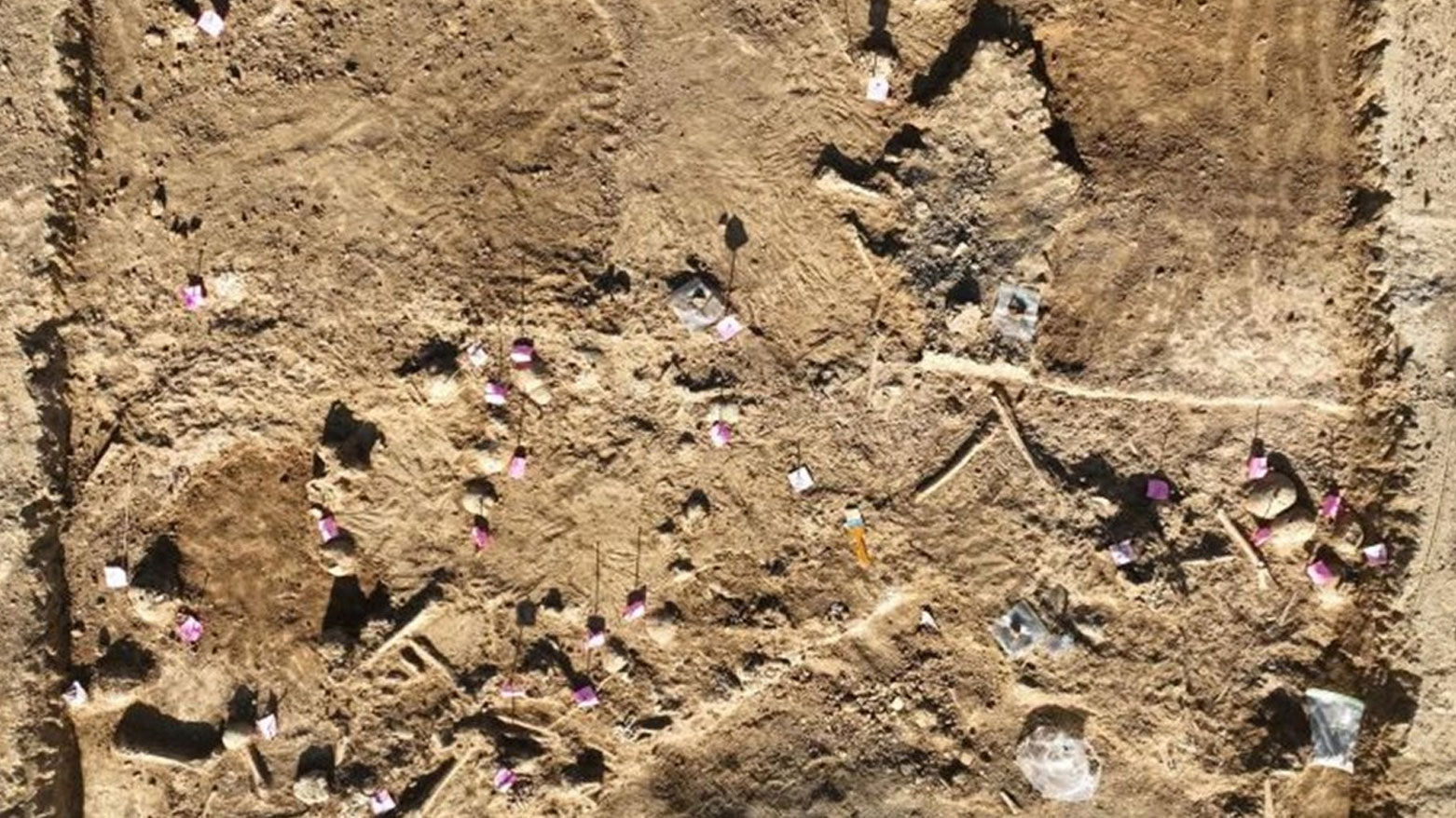
ERBIL (Kurdistan24) - In a striking intersection of ancient history and rapid modern urbanization, authorities in the Kurdistan Region have launched a comprehensive archaeological excavation across 14 newly identified historical sites in the capital.
The sweeping survey is concentrated along the corridor of Erbil's rapidly expanding 150-meter ring road, where development projects have unveiled buried layers of the region's rich, multi-millennial past.
The initiative, announced by the Director of Erbil Antiquities and Heritage, Dr. Nadir Babakir Mohammed, highlights the delicate balance required to modernize one of the oldest continuously inhabited cities in the world without erasing its foundational history.
In an exclusive interview with Kurdistan24 on Sunday, Dr. Mohammed confirmed that technical teams have initiated detailed archaeological surveys and excavations in the Baghlominara neighborhood, specifically within the historic Azza site area situated between the 120-meter and 150-meter ring roads.
The 14 identified sites stretch along a massive developmental corridor running from the Kasnazan road to the Mosul-Gopal road.
"At this intersection, we have begun excavations across a designated strip approximately 600 meters in length," Dr. Mohammed told Kurdistan24's Lavin Omer, referring to the specific zone where a planned 60-meter road project intersects with the larger 150-meter highway.
The director emphasized a firm policy regarding urban expansion: thorough archaeological investigations and clearance must be completed before any service or infrastructure construction is permitted to proceed in these historically sensitive zones.
This proactive approach ensures that the physical evidence of Erbil's deep past is properly documented and preserved before heavy machinery alters the landscape.
The ambitious preservation effort is a strictly domestic endeavor, managed entirely by local expertise. The operations are operating under the direct supervision of the General Directorate of Antiquities and the Erbil Antiquities and Heritage Directorate.
Furthermore, the project has drawn on the academic resources of the region, featuring the active participation of archaeological experts from Salahaddin University.
This collaboration between government directorates and local academia underscores a growing institutional capacity within the Kurdistan Region to independently manage complex, large-scale heritage preservation projects.
While the excavations remain in their preliminary stages, the initial findings have already proven historically significant. Dr. Mohammed revealed to Kurdistan24 that early digs have unearthed numerous pottery shards that provide a tangible link to some of the most dynamic periods of Near Eastern history.
Read More: Discovery of 100 Human Skulls, Sassanid-Era Coins Unearthed in Erbil
According to the director, the ceramic fragments appear to date back to the Parthian and Sassanid empires, as well as the early Islamic period.
These findings suggest that the sites contain continuous historical layers roughly spanning from the early centuries of the Common Era through to the 7th century CE.
The discovery of artifacts from these distinct yet overlapping eras indicates that the areas currently slated for modern highway development were likely vibrant hubs of habitation, trade, or agriculture during antiquity.
The Parthian and Sassanid eras were characterized by intense geopolitical rivalry and profound cultural exchange across Mesopotamia, while the transition into the early Islamic period brought sweeping societal transformations.
Documenting the material culture left behind in Erbil's outer districts offers archaeologists crucial insights into how local populations navigated these monumental shifts in regional power.
As the technical teams carefully sift through the soil of the Baghlominara neighborhood, expectations for further discoveries remain high. Dr. Mohammed noted that because the excavation is still in its early phases, a comprehensive assessment of the site's historical value will require time.
However, he assured that once the rigorous technical procedures are finalized in the coming days, the Directorate of Antiquities plans to release further results and provide detailed visual documentation of the recovered artifacts to the public and the media.
For now, the ongoing digs along the 150-meter road serve as a powerful reminder of Erbil's unique urban character. As the city pushes its boundaries outward to accommodate economic growth and modern infrastructure, it continues to uncover the enduring, unbroken legacy of the civilizations upon whose foundations it was built.
|
Summary Erbil has launched excavations at 14 archaeological sites along the 150-meter road corridor near the Azza site. Led by the Erbil Antiquities Directorate and Salahaddin University, the digs have unearthed artifacts from the Parthian, Sassanid, and early Islamic eras amid infrastructure expansion. |