KRG Lays Foundation for Zakho Pharmaceutical Plant, Announces Drug Pricing Reforms
A new pharmaceutical plant in Zakho is more than an industrial project, it signals a broader attempt to close critical gaps in the Kurdistan Region's medicine supply chain while simultaneously tightening control over pricing and regulation.
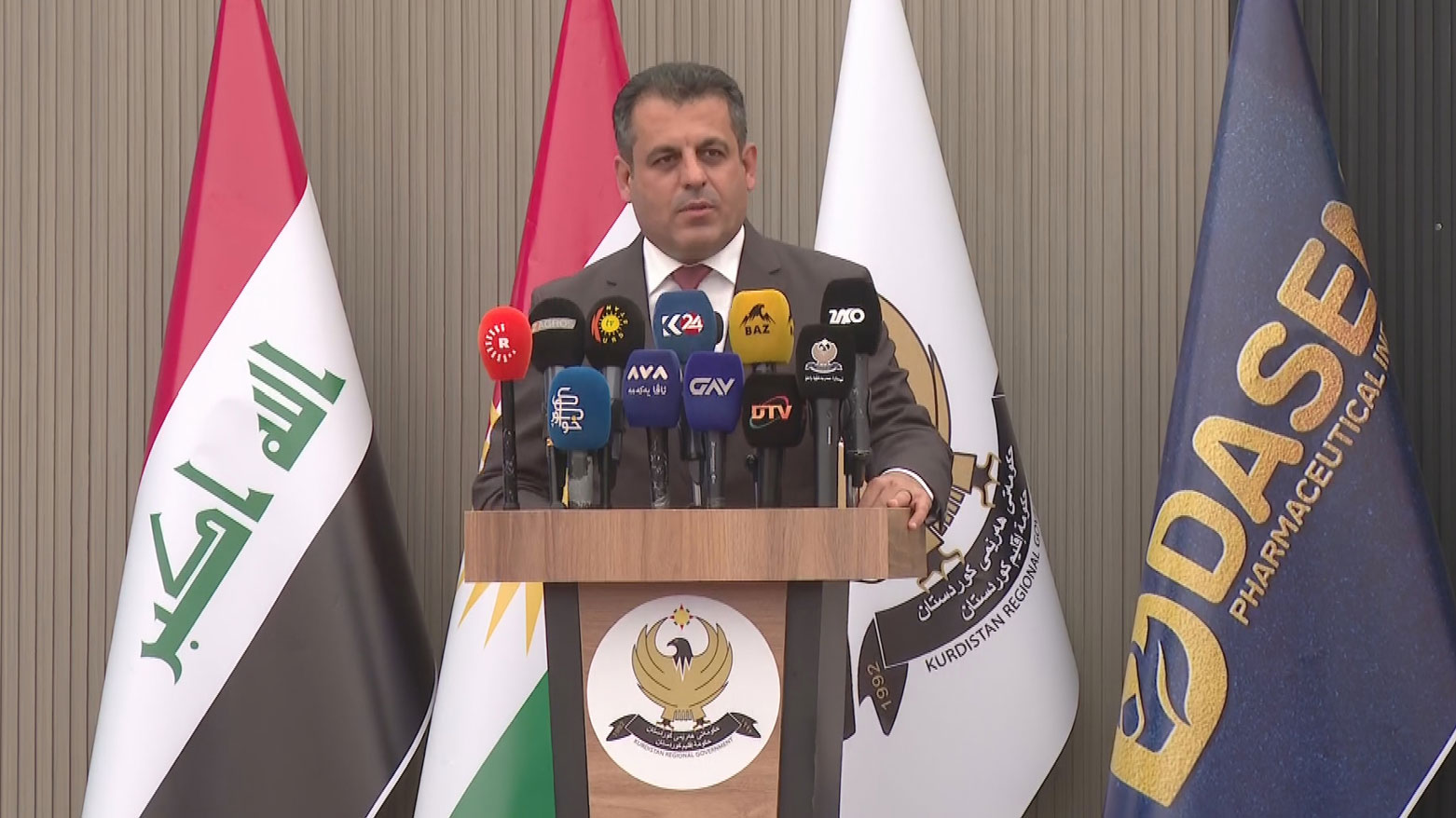
ERBIL (Kurdistan24) - The Kurdistan Region took a significant step toward expanding its domestic healthcare infrastructure on Tuesday as officials laid the foundation stone for the new Dasen pharmaceutical plant in the Zakho Independent Administration.
The facility, which will specialize in the manufacturing of intravenous (IV) fluids and liquid medical supplies, is being positioned by authorities as a strategic investment intended to reduce the region's reliance on imported medical goods while simultaneously strengthening domestic supply chains.
The groundbreaking ceremony also served as a platform for Kurdistan Regional Government (KRG) Health Minister Dr. Saman Barzinji to outline a sweeping series of regulatory and economic reforms currently reshaping the region's pharmaceutical sector.
"Today we are launching one of the most vital strategic projects in the Kurdistan Region," Dr. Barzinji declared during the event.
He emphasized that the plant aligns directly with the Ninth Cabinet’s broader economic agenda, which focuses heavily on incentivizing private-sector investment to bolster domestic production capacity.
The push toward localized pharmaceutical manufacturing highlights a growing awareness of the vulnerabilities inherent in import-dependent healthcare systems.
By developing the capability to produce essential supplies like IV fluids domestically, the KRG aims to build supply-chain resilience and enhance overall pharmaceutical security, ensuring that regional hospitals and clinics are better equipped to respond to future health emergencies.
Reforming the Pharmaceutical Sector
Beyond the physical construction of the Dasen plant, Dr. Barzinji devoted a significant portion of his address to detailing the government's aggressive campaign to overhaul pharmaceutical oversight.
For years, the Kurdistan Region's drug market suffered from a lack of centralized control, leaving it vulnerable to exploitation by illicit networks.
According to the Health Minister, those vulnerabilities are being systematically dismantled.
Under the direction of Prime Minister Masrour Barzani, the KRG has introduced 12 new regulatory directives aimed at formally restructuring the entire pharmaceutical ecosystem, from local factories and importers to wholesale warehouses and neighborhood pharmacies.
"In the past, smuggled and counterfeit medicines from unverified sources were entering the Kurdistan Region," Dr. Barzinji acknowledged in his remarks at the ceremony. "Today, we have achieved full control over this sector."
By instituting stringent accountability measures, the government is attempting to restore public confidence in the safety and efficacy of the medical supplies available within the region.
Lowering Costs and Expanding Consumer Protection
A central component of this regulatory overhaul involves mitigating the financial burden on patients. Historically, a fragmented regulatory environment allowed for severe price discrepancies across different pharmacies.
To combat this, Dr. Barzinji announced that the Ministry of Health has conducted a comprehensive review of medication pricing. According to figures provided by the minister, this initiative successfully lowered the prices of more than 8,000 types of medication.
Dr. Barzinji claimed that between 2024 and 2025, these pricing adjustments saved citizens approximately 295 billion Iraqi dinars (roughly $225 million).
To ensure these reductions are permanent and enforceable, the KRG has implemented an electronic pricing system.
This centralized digital framework is designed to prevent pharmacies and pharmaceutical companies from selling medications at inconsistent or inflated rates, effectively locking in consumer protections.
As heavy machinery begins preparing the site for the Dasen plant in Zakho, the project represents more than a localized industrial development. It serves as a physical manifestation of the KRG's broader strategy to modernize its healthcare infrastructure.
By simultaneously expanding domestic production, tightening regulatory oversight, and aggressively controlling costs, the regional government is attempting to build a pharmaceutical sector defined by transparency, affordability, and resilience.
Project Overview
- Project Name: Dasen Factory for the Production of Intravenous (IV) Fluids and Medical Supplies.
- Location: Batel Sub-district, Zakho Independent Administration.
- Total Area: 45,000 square meters.
- Investment Volume: $22,250,000.
- Investor: Shamalk Medical Company (Owned by Ali Ghazi Abdullah).
- Timeline for Completion: 36 months.
Annual Production Capacity:
- Intravenous (IV) Fluids: 12 million bottles.
- Tablets: 3.5 million units.
- Medical Drops: 2 million units.
- Syringes and Needles: 1 million units.
Significance, Objectives, and Infrastructure:
- Health Security: To bolster high-quality domestic production, reduce reliance on imported pharmaceuticals, and ensure preparedness for unforeseen medical crises by providing essential supplies at affordable prices.
- Job Creation: The project will create more than 200 job opportunities for the local workforce during its development and operation.
- Scientific Advancement: To serve as a hub for scientific research and educational support in the medical field.
- Modern Infrastructure: The facility is designed to meet the highest international medical standards and will include state-of-the-art quality control laboratories, specialized warehouses for raw materials and finished products, dedicated production halls, administrative service buildings, green spaces, and ample parking.
|
Summary The KRG laid the foundation for the Dasen pharmaceutical plant in Zakho to produce IV fluids locally. Health Minister Dr. Saman Barzinji highlighted the project amid sweeping reforms that have curbed smuggled medicines and reduced prices for over 8,000 drugs, saving citizens 295 billion IQD. |