Syrian President Arrives in Ankara for High-Stakes Meeting With Trump at NATO Summit
Leaders expected to discuss Syria's reconstruction, regional security, and bilateral ties as Damascus seeks greater international engagement
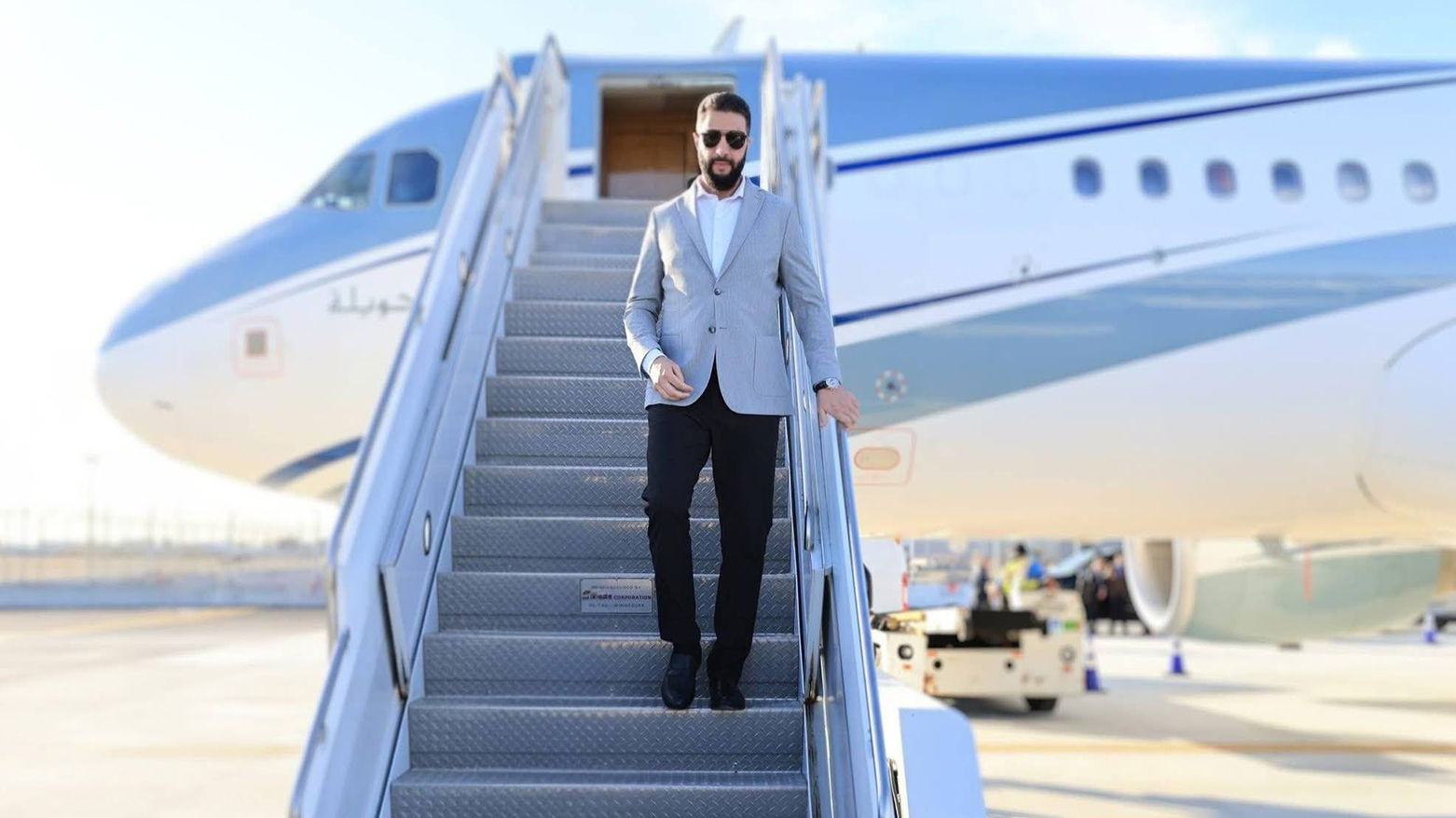
ERBIL (Kurdistan24) — Syria's President Ahmed al-Sharaa arrived in Ankara on Wednesday for a closely watched meeting with US President Donald Trump on the sidelines of the NATO summit, marking another significant step in the evolving relationship between Washington and Syria's post-Assad leadership.
The meeting comes as leaders gather in the Turkish capital for the NATO summit, which concludes Wednesday after bringing together 36 heads of state and government, alongside representatives from several Gulf countries to discuss regional security, defense cooperation, and conflicts spanning Europe and the Middle East.
Sharaa attended the summit at the invitation of Turkish President Recep Tayyip Erdoğan, whose government has played a central role in supporting Syria's political transition following the collapse of the Assad government.
The anticipated Trump-Sharaa meeting underscores the rapid shift in US engagement with Damascus since Sharaa assumed power after the overthrow of longtime president Bashar al-Assad in December 2024.
Trump praises Syria's new leadership
Ahead of the meeting, Trump offered unusually warm praise for Sharaa, highlighting the role Erdoğan played in fostering closer ties between Washington and Syria's new leadership.
"Because of the president (Erdogan), we have a very good relationship with Syria's new leader," Trump told reporters on Tuesday.
The US president described Sharaa as a strong leader who had stabilized a country emerging from more than a decade of civil war.
"He's done an amazing job in a year and a half, he's pulled the whole country together. And I have a very, very good relationship with him," Trump said.
Addressing Sharaa's background as a former jihadist fighter before entering politics, Trump added: "Somebody said, well, he's pretty tough... I approved him along with the president (Erdogan). We were the two that really wanted him. And he's done a great job, he's pulled it together. Not an easy job."
Trump's remarks reflect a remarkable transformation in US policy toward Syria, where Washington had long maintained sanctions and diplomatic isolation under Assad's rule.
Syria seeks reconstruction and investment
More than 13 years of war left Syria's infrastructure, economy, and public services severely damaged, with millions displaced and much of the country's industrial and urban capacity destroyed.
Although large-scale fighting has subsided since the political transition, Syria continues to face security challenges and remains heavily dependent on international financial assistance to rebuild its economy.
Sharaa has made attracting foreign investment and international support a central priority of his administration.
During a visit to Washington in November last year, he sought financial backing for reconstruction efforts and urged international partners to expand economic cooperation with Damascus.
The meeting with Trump is expected to include discussions on reconstruction, sanctions relief, regional stability, and avenues for strengthening bilateral cooperation.
Security challenges persist
Despite political progress, security threats remain.
On Tuesday, two bomb attacks in Damascus wounded 18 people near a hotel where French President Emmanuel Macron was staying during a visit aimed at strengthening ties with Syria's new government.
The attacks highlighted the continuing threat posed by extremist groups and other armed actors seeking to undermine the country's fragile recovery.
Lebanon policy highlights Damascus' priorities
The Trump-Sharaa meeting also comes weeks after the Syrian leader declined US calls to intervene militarily in neighboring Lebanon against the Iran-backed group Hezbollah, which remains engaged in hostilities with Israel.
Instead, Sharaa emphasized that his government intends to prioritize economic cooperation over military involvement.
"We are looking for economic channels between Lebanon and Syria, not military ones," he said in an interview last month.
His position reflects Damascus' broader effort to focus on domestic reconstruction while avoiding new regional military entanglements that could jeopardize Syria's recovery.
The meeting in Ankara is expected to build on growing diplomatic engagement between Washington and Damascus, with both sides seeking to expand cooperation on reconstruction, counterterrorism, regional stability, and economic development while navigating the complex political landscape of the post-Assad era.