Lindsey Graham's Final CBS Interview Gains New Attention After Senator's Death
In his last appearance on CBS News' Face the Nation, Lindsey Graham outlined his expectations for U.S. policy toward Iran and the Strait of Hormuz.
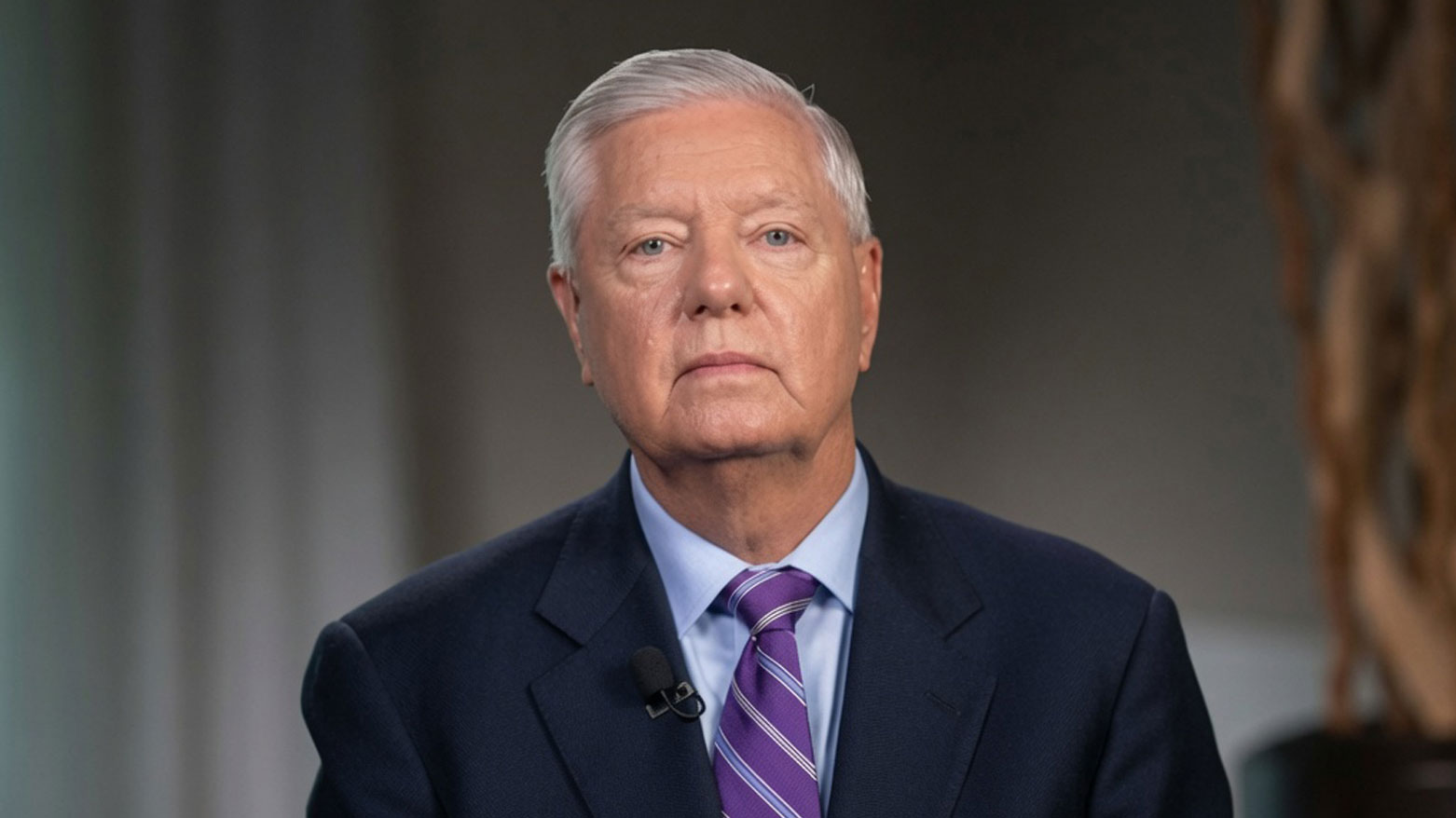
ERBIL (Kurdistan24) - The final major television interview given by U.S. Senator Lindsey Graham before his death has taken on renewed significance, as policymakers and regional observers revisit the veteran Republican's assessment of Iran, the Strait of Hormuz, and the future direction of U.S. strategy in the Middle East.
Speaking on CBS News' Face the Nation with Margaret Brennan on June 21, 2026, Graham presented what he viewed as the likely trajectory of U.S. policy under President Donald Trump if diplomatic efforts with Iran failed.
His comments, delivered less than three weeks before his death, reflected many of the foreign-policy positions that defined his Senate career and have resurfaced following the announcement that he died Saturday after what his office described as a "brief and sudden illness."
During the interview, Graham argued that diplomacy should be given an opportunity despite expressing doubts that negotiations with Tehran would ultimately succeed.
He suggested that pursuing a negotiated outcome remained preferable to immediate military confrontation, while maintaining that Washington should be prepared to adopt significantly stronger measures if talks collapsed.
The South Carolina Republican framed diplomacy as an essential step before any broader escalation, describing negotiations as a test of whether Iran was prepared to alter its regional behavior.
At the same time, he indicated that he remained skeptical a lasting agreement would emerge.
One of the interview's most closely examined sections centered on the Strait of Hormuz, the strategic waterway through which a substantial share of global oil shipments passes.
According to the CBS News interview, Graham predicted that if diplomacy failed, President Trump would seek to place the Strait of Hormuz under U.S. control through military force in order to guarantee freedom of navigation.
He portrayed such a move as part of a broader effort to reshape Gulf security and deter further Iranian military activity.
Those remarks were presented as Graham's own assessment of how the administration might respond rather than as an official statement of U.S. policy.
Although Graham referenced conversations he had recently held with President Trump, he also said he would allow the president to speak for himself regarding future decisions.
The interview has attracted additional attention as tensions surrounding the Strait of Hormuz have intensified in recent weeks, making Graham's predictions particularly relevant to ongoing debates over regional security and maritime commerce.
Beyond the Gulf, Graham outlined a broader strategic vision that combined military deterrence with expanded diplomatic engagement.
He argued that increased pressure on Iran could create conditions for further regional realignment, including the possible expansion of the Abraham Accords and eventual normalization between Saudi Arabia and Israel.
He also suggested that stronger deterrence against Iran and its regional allies, including Hezbollah, would form part of a more assertive U.S. approach to Middle East security.
Those observations reflected Graham's longstanding support for maintaining an active American role in the region and strengthening security partnerships with U.S. allies.
Foreign policy remained one of the defining themes of Graham's decades in Congress.
Throughout his Senate career, he became one of the Republican Party's most prominent voices on national security, advocating robust U.S. engagement in the Middle East and close cooperation with longstanding regional partners.
According to the Office of U.S. Senator Lindsey Graham, the veteran lawmaker died on the evening of Saturday, July 11, following what it described as a brief and sudden illness.
The statement said his family appreciated prayers and requested privacy but did not disclose additional details.
Graham first entered Congress after winning election to the U.S. House of Representatives in 1994 before joining the Senate in 2002. He was subsequently re-elected in 2008, 2014 and 2020, and most recently served as chairman of the Senate Budget Committee.
His influence extended beyond Washington. Graham maintained close ties with the Kurdistan Region over many years, consistently supporting stronger relations between the United States and Erbil and advocating continued backing for the Peshmerga in the fight against ISIS.
Earlier this year, he joined Democratic Senator Richard Blumenthal in introducing the bipartisan Save the Kurds Act, legislation intended to protect Kurdish forces in northeastern Syria.
Graham argued at the time that the Syrian Democratic Forces, whose ranks include a large Kurdish component, had played a decisive role in the campaign against ISIS and warned that attacks on Kurdish partners would undermine regional stability and U.S. credibility.
In the hours following news of his death, Kurdish leaders highlighted those longstanding ties.
Kurdistan Region Prime Minister Masrour Barzani described Graham as a steadfast friend whose support for the Kurdish people would be remembered, while Kurdistan Region President Nechirvan Barzani called him "a valued friend of the people of Kurdistan" and praised his enduring advocacy for the region.
As tributes continue from Washington and abroad, Graham's final television interview has become more than one of his last public appearances.
It has come to encapsulate the strategic outlook that shaped much of his career, one that emphasized diplomacy backed by deterrence, sustained U.S. engagement in the Middle East, and continued support for partners ranging from Israel to the Kurdish people.
|
Summary Lindsey Graham's final CBS News Face the Nation interview has drawn renewed attention after his death, highlighting his predictions on Donald Trump's Iran strategy, the Strait of Hormuz, and regional security, alongside his longstanding support for the Kurdistan Region. |