New London Festival Celebrates Kurdish Women's Voices
The two-day festival will bring together rare sound archives, scholarly discussions, exhibitions, and experimental performances celebrating the richness and resilience of Kurdish women's oral heritage.
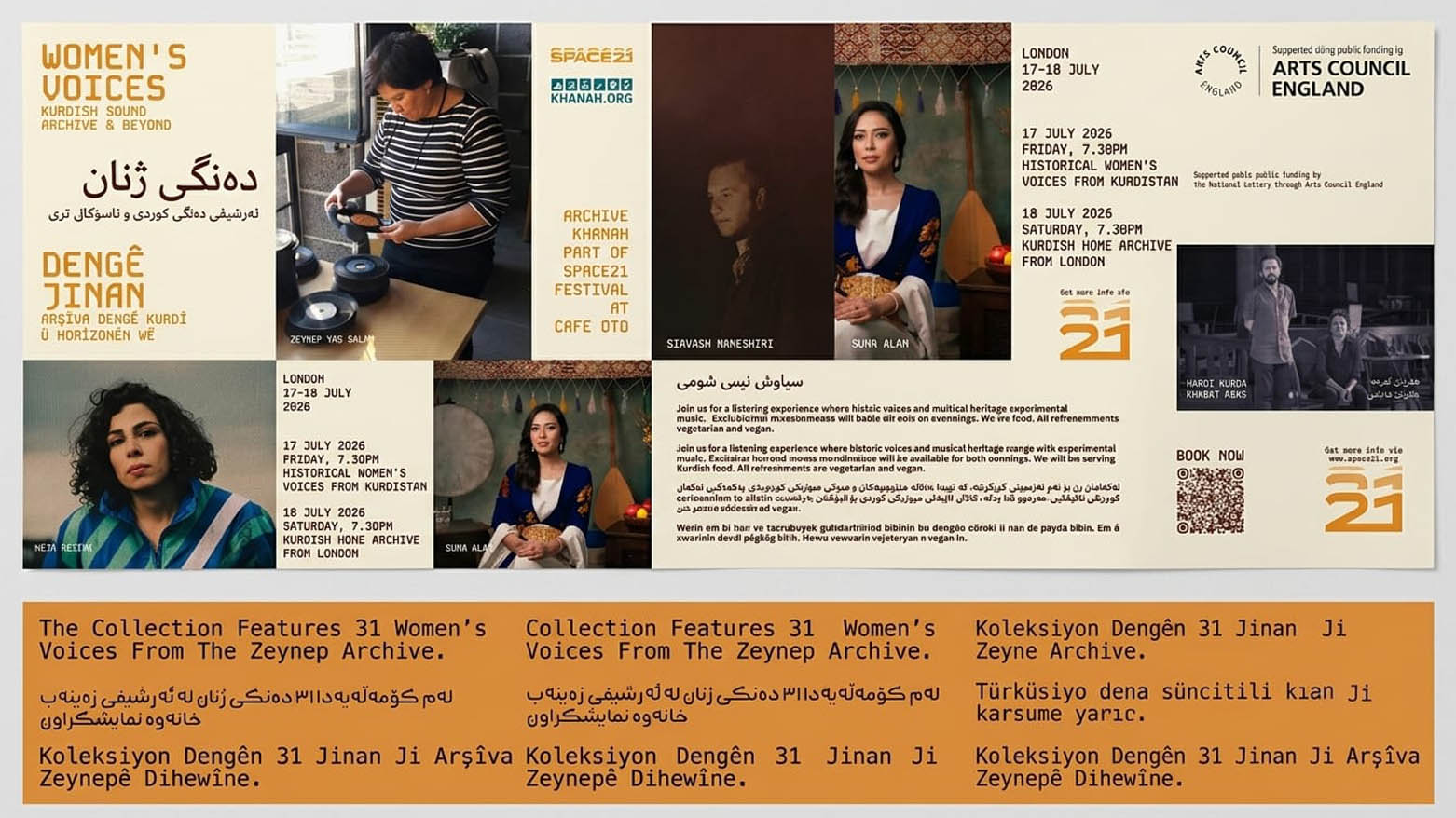
ERBIL (Kurdistan24) - A pioneering cultural initiative celebrating Kurdish women's sonic heritage will take place in London this week, bringing together archival research, live performance, and artistic experimentation to preserve and reimagine Kurdish oral history.
Titled "Women's Voices: Kurdish Sound Archive and Beyond", the festival will be held at Café OTO as part of the SPACE21 International Festival on July 17 and 18, 2026.
Speaking to Kurdistan24, Kurdish musician Dr. Hardi Kurda described the festival as "a serious and impactful effort to shed light on one of the richest and most significant dimensions of our cultural identity: the voices, songs, and oral histories of Kurdish women from different parts of Kurdistan."
Kurda said the festival's two-day program centers on historical sound recordings that preserve the memories and lived experiences of Kurdish women.
"The festival will feature archival recordings, panel discussions bringing together researchers, archivists, and artists to discuss the importance of preserving oral history, exhibitions of rare documents, photographs, and sound materials related to the history of women's voices, as well as new experimental performances that reinterpret memory and the past through contemporary musical language," he said.
The opening evening on July 17 focuses on rare historical recordings of Kurdish women's voices from across Kurdistan. The program includes a panel discussion and sound exhibition led by Zeynep Yaş Salam and her team, followed by live performances that reinterpret the traditional dengbêj storytelling tradition through contemporary artistic approaches.
The second evening, on July 18, shifts attention to contemporary Kurdish home archives in London, featuring a video presentation drawn from personal family collections, followed by a solo performance inspired by those intimate recordings.
Throughout the festival, archival listening sessions, discussions, and experimental performances will explore the diversity and resilience of Kurdish women's voices across generations.
Kurda said the festival is intended to create more than an exhibition of historical materials.
"Its fundamental goal is not simply to display an old archive," he said. "It seeks to build a cultural bridge between the memories of the past and younger generations so that these voices, stories, and experiences are not forgotten but are rediscovered in new ways."
He added that the festival aims to demonstrate the importance of preserving cultural heritage by using archives, dialogue, and artistic activities to document the history of women's voices and transform archives into a living resource for learning, research, and dialogue between past and future.
Kurda also said the project seeks to place Kurdish women at the center of their own historical narrative.
"The festival strives, through documenting and reinterpreting women's voices, to create an authentic and enduring history in which Kurdish women become the primary narrators of their own identity, pain, hope, and struggle," he said.
He added that this effort extends beyond physical preservation by combining deep listening, archival research, and contemporary artistic methods to ensure Kurdish women's voices continue to resonate in international cultural spaces.
The festival features a diverse group of Kurdish artists and researchers, including Zeynep Yaş Salam, a Kurdish music researcher and archivist whose work has focused on preserving Kurdish oral culture and women's musical heritage.
Also participating are Zurich-based Kurdish composer and sound artist Siavash Namehshiri, experimental performer Hêja Netirk, the improvisational duo Moment—formed by Dr. Hardi Kurda and Khabat Abas—and London-based Kurdish Alevi singer Suna Alan, whose repertoire spans Kurdish folk traditions alongside Armenian, Greek, Arabic, Sephardic, and Turkish music.
Festival visitors will also be able to explore Kurdish music releases and cultural merchandise, including books, limited-edition recordings, musical instruments, posters, and other cultural materials.
The two-day festival will be held at Café OTO in London as part of the SPACE21 International Festival.