Drone Hits Ship Near Iraq's Basra Port as U.S.-Iran Conflict Spreads Across Gulf
Kuwait intercepts Iranian drones, U.S. and Iran exchange fresh strikes, and regional tensions deepen over the Strait of Hormuz
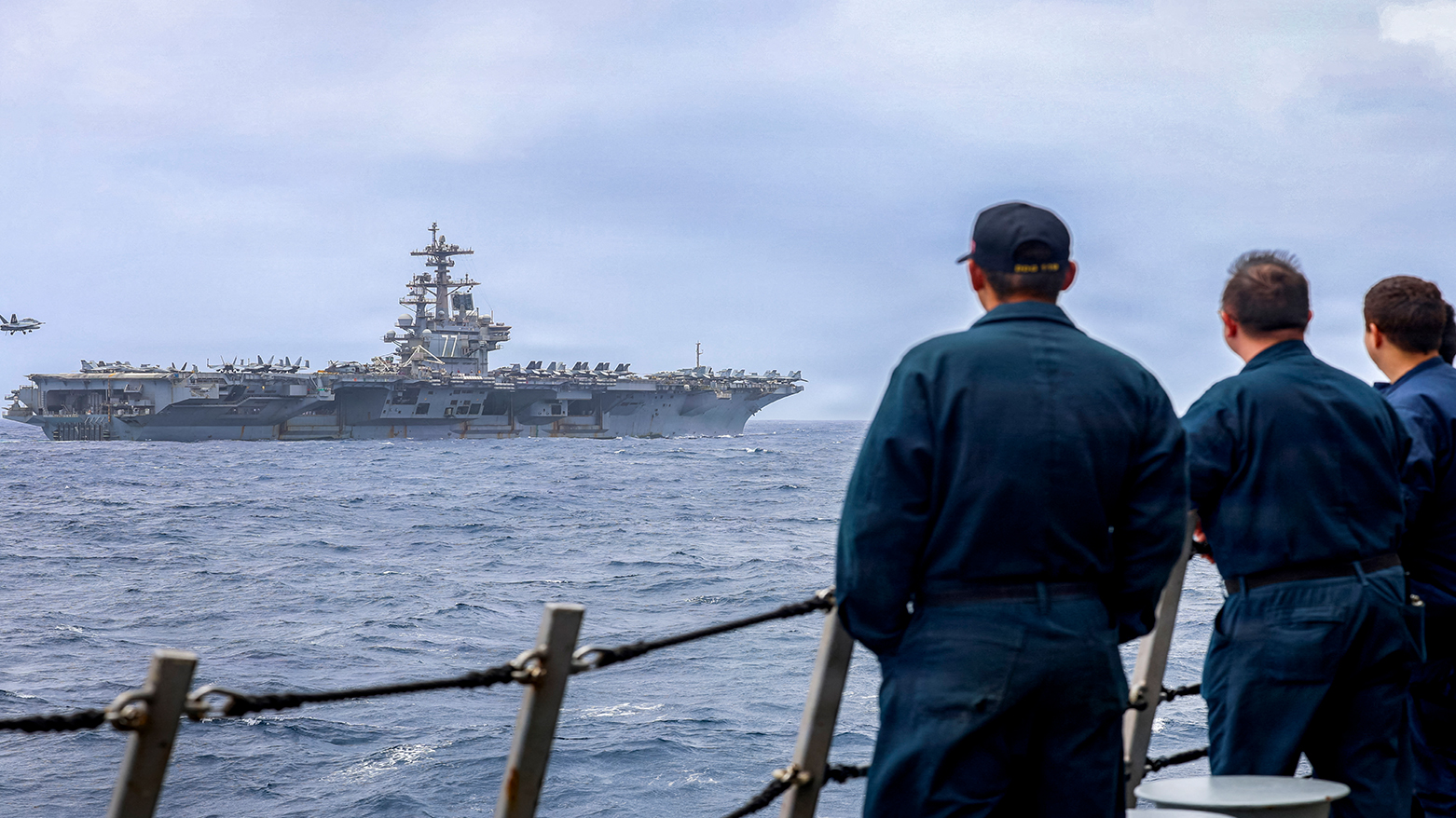
ERBIL (Kurdistan24) — A drone struck a cargo ship off Iraq's southern port of Basra on Thursday as the United States and Iran exchanged another round of military strikes across the Gulf, widening a regional conflict centered on the strategic Strait of Hormuz.
A security official told AFP that the vessel, carrying American-branded vehicles from the United Arab Emirates, was hit near an oil terminal in Basra province.
Iraq's Oil Ministry said it was investigating reports that an unidentified object had struck a tanker, while authorities worked to determine the extent of the damage. However, later, a source at the General Company for Ports of Iraq told the Iraqi News Agency (INA) that the vessel struck by an unidentified drone was located outside Iraqi ports in the country's territorial waters at the time of the attack.
The source stressed that cargo unloading and handling operations at all Iraqi ports are continuing normally without interruption, indicating that port operations have not been affected by the incident.
The maritime incident came as Kuwait announced its air defenses were intercepting renewed Iranian aerial attacks.
"Kuwaiti air defenses are currently engaging hostile drone attacks following the Iranian aggression," the Kuwaiti military said in a statement, as explosions were heard near Kuwait City.
The latest escalation follows a month-old memorandum of understanding brokered with Pakistani mediation that had temporarily eased hostilities after the conflict erupted on Feb. 28 with large-scale U.S.-Israeli strikes on Iran.
Fresh strikes exchanged
On Thursday, Iran warned it would target infrastructure across the region if U.S. President Donald Trump carried out his threat to attack Iranian power plants and bridges.
The warning came after another exchange of strikes between Washington and Tehran.
Iran's Revolutionary Guards said they launched ballistic missiles at a U.S. air base in Jordan in retaliation for what they described as an American strike near a children's cancer hospital in Iran.
Iranian state media reported that the hospital in Ahvaz, southwestern Iran, was evacuated after nearby U.S. airstrikes, with patients transferred to other medical facilities.
Foreign Ministry spokesperson Esmaeil Baqaei condemned the attack as "barbaric."
Residents described intense bombardment in the city.
"My hands are shaking. There were at least 11 or 12 explosions. My ears are exploding," Hani, a 34-year-old teacher from Ahvaz, told AFP.
The U.S. military's Central Command (CENTCOM) said its forces struck Iranian military targets at multiple locations, including Bandar Abbas, to reduce Iran's ability to threaten commercial shipping through the Strait of Hormuz.
CENTCOM said earlier operations had also targeted coastal defense systems and cruise missile sites on Greater Tunb Island in the Gulf.
Meanwhile, Iranian state news agency IRNA reported that a projectile struck parts of Semnan Airport in northern Iran without causing casualties. Additional explosions were reported in Lorestan province, while air defense systems were activated in parts of Tehran.
Strait of Hormuz remains flashpoint
The Strait of Hormuz remains at the center of the confrontation.
Iran imposed a blockade on the strategic waterway after the war began in late February, briefly lifting restrictions following last month's memorandum of understanding before announcing it would once again close the strait "until the U.S. ends its aggression."
The United States has also reinstated a blockade of Iranian ports.
Pakistan, which helped broker the June agreement, renewed calls for diplomacy.
Foreign Office spokesperson Tahir Andrabi said Islamabad would continue encouraging both sides to "end violence and resume technical-level talks" under the memorandum.
However, Iran's chief negotiator, Mohammad Bagher Ghalibaf, questioned the future of the agreement.
"If Iran is not to derive any benefit from the memorandum of understanding, we have no reason to adhere," he said.
Trump also renewed pressure on Tehran, warning that attacks would intensify unless Iran returned to negotiations.
"Next week it gets really bad for them," he told Fox News.
Iran's military responded by warning that if Washington expanded its campaign, "all infrastructure in the region" would be targeted by Iranian forces.