Zakharova Revives Trump's Campaign Pledge as Rubio Urges Patience on Ukraine Peace
Russian Foreign Ministry spokesperson Maria Zakharova contrasts President Donald Trump's repeated campaign pledge with the current U.S. assessment that ending the war will require sustained diplomacy.
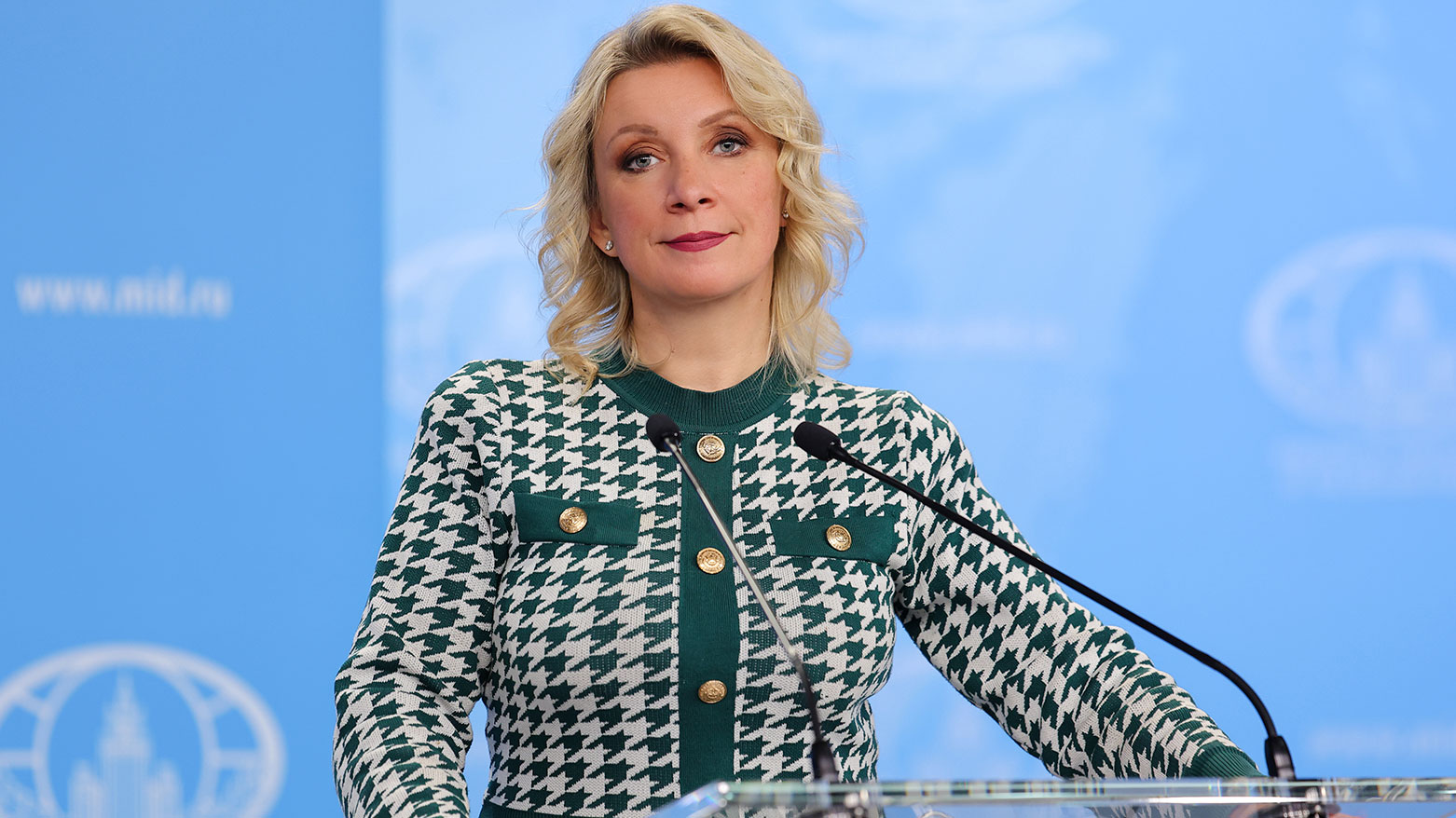
ERBIL (Kurdistan24) - Russia's Foreign Ministry has publicly revived one of President Donald Trump's most frequently repeated campaign promises on Ukraine, using the latest high-level diplomatic contacts between Washington and Moscow to underscore the widening gap between campaign rhetoric and the realities of negotiating an end to Europe's longest-running war.
In a statement published Thursday on her official Telegram channel, Russian Foreign Ministry spokesperson Maria Zakharova responded to remarks made by U.S. Secretary of State Marco Rubio following talks with Russian Foreign Minister Sergey Lavrov in Manila.
Referring to Rubio's observation that the conflict could not be resolved in a matter of minutes, Zakharova said nobody had expected such an outcome but argued that Trump had pledged on more than 80 occasions to end the war within 24 hours.
Her comments came after Rubio acknowledged that reaching peace would require prolonged diplomatic work and an agreement acceptable to both Russia and Ukraine, a recognition that reflects the complexity facing negotiators more than four years into the conflict.
The exchange unfolded against the backdrop of renewed U.S.-Russia engagement on the sidelines of the Association of Southeast Asian Nations (ASEAN) foreign ministers' meetings in Manila, where Lavrov and Rubio held their first face-to-face discussions since September 2025.
Read More: Rubio Uses Manila Briefing to Present Broad U.S. Foreign Policy Agenda
According to Agence France-Presse (AFP), the meeting covered Ukraine as well as wider regional and international issues, including developments in the Middle East.
While the two sides described the conversation as constructive, they continued to present sharply different public messages regarding the path toward ending the war.
According to the Russian Foreign Ministry, Lavrov warned Rubio that continued U.S.-backed arms deliveries to Ukraine were unacceptable and reiterated Moscow's position that it remains prepared to pursue a political and diplomatic resolution of the conflict.
AFP reported that Rubio responded by saying there had been no change in Washington's policy, with U.S.-made weapons continuing to reach Ukraine through purchases by NATO allies under an existing arrangement.
At the same time, Rubio reiterated that the United States wants to help secure a peace agreement that both Moscow and Kyiv could accept, while emphasizing that achieving such an outcome would require significant effort.
Zakharova's remarks placed those diplomatic realities alongside Trump's earlier campaign messaging, drawing attention to the contrast between promises made before returning to office and the administration's current assessment of the negotiations.
Speaking after the Manila meeting, Rubio said previous attempts to mediate between the two sides had failed to produce meaningful progress but stressed that the United States remained prepared to facilitate negotiations if circumstances evolved, according to The Associated Press (AP).
He said any future breakthrough would depend on developing proposals capable of gaining acceptance from both Russia and Ukraine rather than expecting a rapid settlement.
Those comments represented one of the clearest acknowledgments by senior U.S. officials that ending the war will require sustained diplomacy instead of a swift political agreement.
The diplomatic exchanges also coincided with renewed Ukrainian efforts to revive negotiations.
According to AFP and AP, Ukrainian President Volodymyr Zelenskyy said he had spoken with senior U.S. envoys about ways to reinvigorate diplomatic contacts and move closer to peace, describing the discussions as important for restoring momentum to stalled negotiations.
Even as diplomatic activity increased, fighting continued across the battlefield.
AFP reported that Russian missile and air strikes struck eastern Ukraine while Ukrainian attacks targeted locations inside Russia and Russian-controlled Crimea, highlighting the persistent military pressure confronting negotiators on both sides.
The Manila discussions took place amid a broader agenda dominated by international security issues, with ASEAN foreign ministers addressing conflicts in both Europe and the Middle East alongside regional tensions in the Indo-Pacific.
Although Ukraine was only one element of those meetings, the Rubio-Lavrov talks offered another opportunity for Washington and Moscow to test whether renewed dialogue could narrow differences that have repeatedly frustrated previous mediation efforts.
Zakharova's intervention illustrates how public messaging has become part of the diplomatic contest surrounding the war.
By pointing to Trump's repeated campaign pledge after Rubio acknowledged the limits of rapid diplomacy, Moscow highlighted the contrast between earlier political commitments and the practical challenges now recognized by both sides.
The latest exchanges suggest that despite continued diplomatic engagement, the search for a negotiated settlement remains constrained by fundamental disagreements over security, military support and the conditions under which both Russia and Ukraine would be willing to accept peace.
|
Summary Russia's Maria Zakharova cited President Donald Trump's repeated campaign pledge to end the Ukraine war within 24 hours after Secretary of State Marco Rubio acknowledged peace will require sustained diplomacy, highlighting contrasting public narratives amid renewed U.S.-Russia talks in Manila. |