Rubio says Hormuz is open "right now," confirms denuclearization talks underway
Secretary of State declares ships and oil moving through the strait in real time, describes a two-track Iran strategy covering immediate Hormuz access and a longer-term nuclear deal, while confirming Venezuela's democratic transition and formalizing a nuclear memorandum with Paraguay
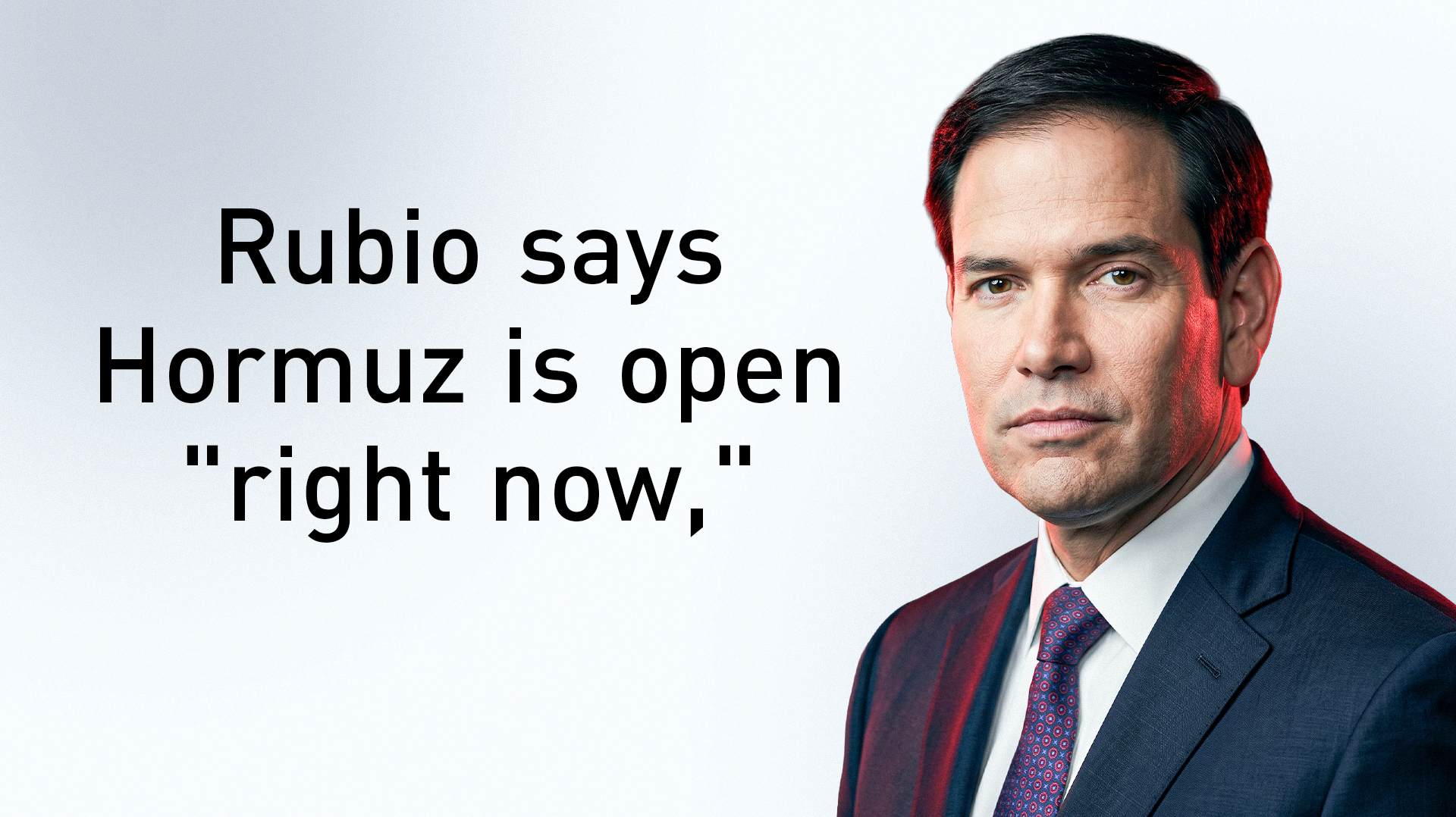
WASHINGTON, D.C. (Kurdistan 24) - Secretary of State Marco Rubio confirmed on Monday that the Strait of Hormuz is open and oil is moving through it in real time, declared denuclearization of Iran the "ultimate deal," described an active Oman-Iran negotiation on safe passage as a bridge to longer-term nuclear talks, confirmed Venezuela's shift away from communist dictatorship six months after Maduro's removal, and signed a major nuclear memorandum with Paraguay, in one of the most consequential single diplomatic sessions of Trump's second term.
"There are ships moving through the straits. There's oil moving right now through the straits. The straits are open," Rubio said, delivering the most direct and unambiguous American confirmation yet that the Strait of Hormuz has resumed commercial operations following months of Iranian interdiction that devastated global energy markets and pushed oil prices toward $100 a barrel.
Hormuz: Immediate Deal and the Ultimate Deal
Rubio drew a clear distinction between the two phases of the Iran diplomatic framework President Trump has described since Saturday's cancellation of the planned massive strike. "The denuclearization of Iran is the ultimate deal," Rubio said. "The immediate deal, the one that you see a lot of focus on, is the straits."
He confirmed that active negotiations are underway between Oman and Iran on expanding safe passage through the waterway in the short term as both sides move toward the longer-term denuclearization framework. "There is a conversation and a negotiation that we are involved in between Oman and Iran on how more ships can be able to go through there safely in the short term as we move towards these longer-term talks about denuclearization," Rubio said.
On the overall state of the Hormuz talks, Rubio's assessment matched the cautious optimism he expressed earlier in the day. "Suffice it to say there's more progress between those talks, but not finality yet," he said. "We're hoping that will happen very shortly."
The confirmation that ships and oil are moving through the strait right now represents a significant operational development. As Kpler data had confirmed in early July, tanker traffic through Hormuz had remained at roughly a third of pre-war levels even at its highest point following the June 17 memorandum of understanding, with the strait never fully recovering to pre-war operational normality. Rubio's real-time declaration that the strait is open goes further than any previous American official statement on the waterway's status.
Venezuela: Six Months After Maduro, a Work in Progress
Rubio also addressed Venezuela's political trajectory, confirming that the country is shifting away from communist dictatorship six months after the removal of Nicolás Maduro and validating what he described as Trump's correct assessment of the situation. "It's been about six months since Maduro was removed, and there's a lot going on at the same time with economics and so forth," Rubio said.
He outlined the conditions required for a genuine democratic transition. "There's a lot of work that has to happen to lay the groundwork for an election. You have to have true freedom of the press. You have to have multi-party participation. You have to have national reconciliation, and you have to have an electoral commission that will accurately count the votes," Rubio said.
The secretary described Washington's approach as a two-track strategy combining economic improvement with political transition. "We want to improve the daily lives of Venezuelans economically, so that they're better off. They're more prosperous. I think that helps us both facilitate the political transition, and you also have to have a process for every element of political society in Venezuela to have a role to play, not just in constructing elections, but constructing the government in the future of the country," he said.
Rubio acknowledged the timeline requires patience without being open-ended. "I think it's going to require some persistence and a little bit of patience, not years, but certainly once in a while, it's going to take some time to get there," he said.
Paraguay Nuclear Memorandum Signed
Immediately following his remarks, Rubio signed a major nuclear memorandum with Paraguay, formalizing a new phase of nuclear cooperation between Washington and Asunción as part of President Trump's broader push to deepen alliances and cooperation frameworks across Latin America. The signing places Paraguay within the expanding network of American nuclear partnerships in the Western Hemisphere, a strategic initiative that sits alongside the recently approved civilian nuclear cooperation agreement with Saudi Arabia as part of Washington's effort to shape the global nuclear landscape through allied partnerships rather than adversarial pressure alone.
The combination of Rubio's Hormuz declaration, his Venezuela assessment, and the Paraguay nuclear signing in a single diplomatic session reflects the breadth of the Trump administration's foreign policy ambitions at a moment when the Iran conflict, now in its 154th day, is simultaneously approaching what both sides are describing as its most promising diplomatic moment and its most dangerous military threshold.
| BRIEF: Secretary of State Marco Rubio confirmed on Monday that the Strait of Hormuz is open with ships and oil moving in real time, described denuclearization as the "ultimate deal" with Hormuz access as the immediate priority, confirmed Venezuela's democratic transition six months after Maduro's removal, and signed a nuclear memorandum with Paraguay as Trump deepens Latin American alliances. |