Vice-Chairman of KCK Executive Council: Öcalan’s Freedom Essential for Peace Process
“Disarmament is not a one-sided process. It requires dialogue and trilateral negotiations between the state, İmralı, and our movement,” Bayik said.
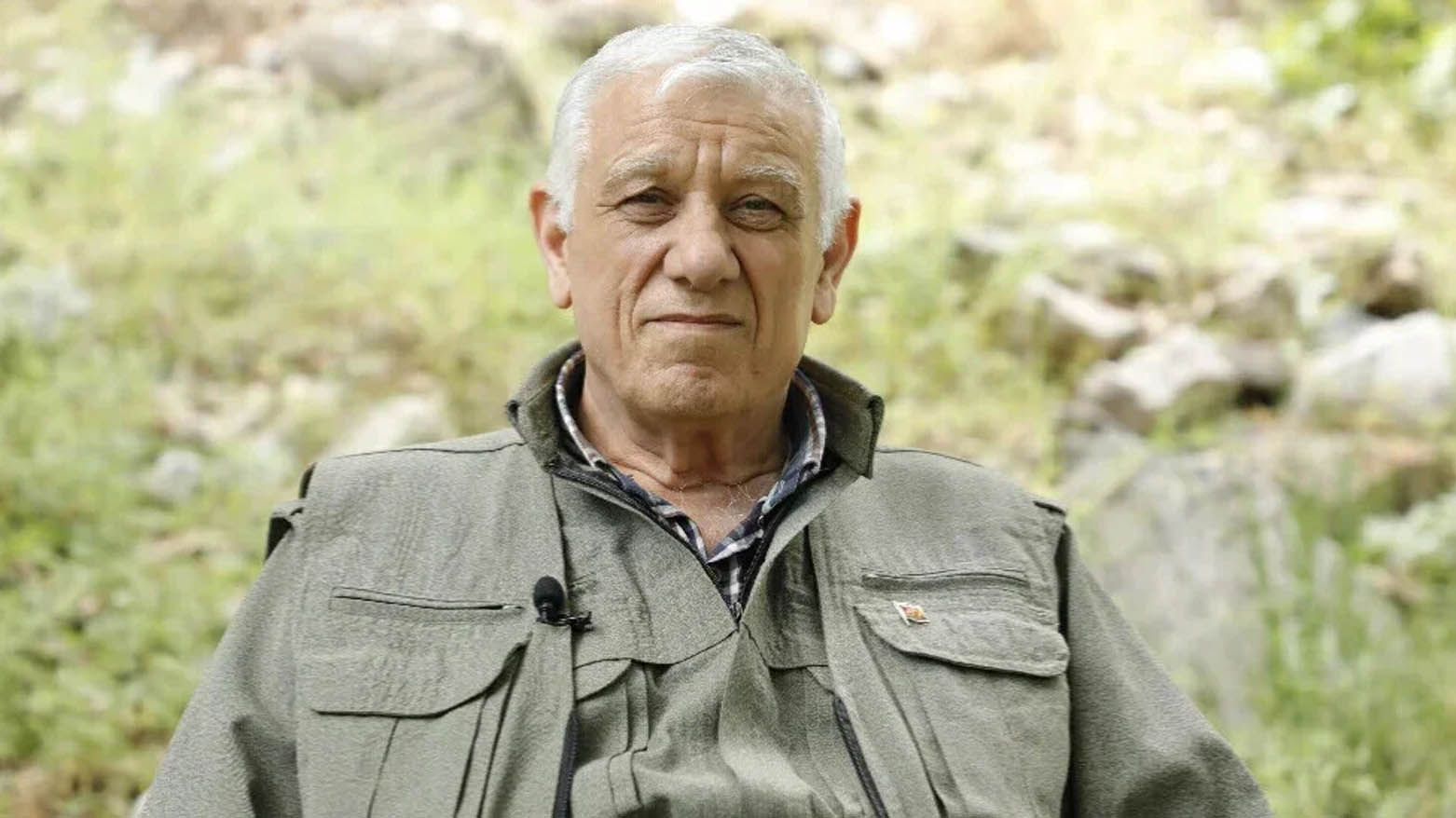
ERBIL (Kurdistan24) – Cemîl Bayik, Vice-Chairman of the Kurdistan Communities Union (KCK) Executive Council, has said Turkey’s “framework law” for the peace process is insufficient on its own, stressing that the process must also address the political and legal rights of Kurds and the status and freedom of Abdullah Öcalan.
Speaking to media outlets close to the Kurdistan Workers’ Party (PKK) on Friday, Bayik described the framework law as a starting point but said it has “serious shortcomings” because it cannot be implemented without the necessary political and constitutional groundwork.
“Disarmament is not a one-sided process. It requires dialogue and trilateral negotiations between the state, İmralı, and our movement,” Bayik said.
He said the purpose of laying down arms was to facilitate the PKK’s participation in democratic politics, arguing that democratization measures should therefore proceed alongside disarmament.
“Otherwise, the process will be stifled, and the authorities will bear the responsibility,” he said.
Bayik also emphasized Öcalan’s role in the process, recalling that following the PKK’s 12th Congress decision to end its armed struggle against Turkey, responsibility for managing the process had been entrusted to Öcalan.
He argued that unless Öcalan is given the freedom to play a coordinating and organizing role, the Kurdish movement would not be convinced that the peace process could succeed.
Bayik further criticized the exclusion of the movement’s leadership cadres from the framework law, describing it as a fundamental problem. He called for conditions that would allow them to participate freely in political life, warning that otherwise previous failures could be repeated.
On Kurdish rights, Bayik criticized what he described as the historical exclusion of Kurds from Turkey’s judicial and legal system.
“The slogan of ‘equal citizenship’ remains merely a discourse as long as Kurds are kept outside the law,” he said.
According to Bayik, a lasting peace requires constitutional guarantees for the existence of the Kurdish people, freedom of language and culture, and the right to local self-government. He also called for revisions to Turkey’s anti-terrorism and punitive legislation.
The current peace initiative began in late 2024, when Devlet Bahçeli, leader of Turkey’s Nationalist Movement Party (MHP) and an ally of President Recep Tayyip Erdoğan, unexpectedly called on Öcalan to appear in parliament and announce the PKK’s dissolution.
The initiative was formally announced on November 26, 2024. On December 28, DEM Party lawmakers Pervin Buldan and Sırrı Süreyya Önder met with Öcalan at İmralı Prison.
In early 2025, Öcalan issued a video message from prison calling for the PKK to lay down its arms and end its armed struggle. A formal ceasefire was announced on March 1, 2025.
The PKK subsequently held its 12th Congress from May 5–7, 2025, announcing decisions to dissolve the organization and end its armed struggle.
On July 11, 2025, a group of 30 PKK fighters led by Besê Hozat, co-chair of the KCK, symbolically burned their weapons during a ceremony near Jasana Cave in Sulaimani province, signaling their acceptance of Öcalan’s call to end the armed struggle.