Hiva Panahi: 'Even When There Is No Light, We Create It' — On Kurdish Poetry, Philosophy, and the Pursuit of Justice
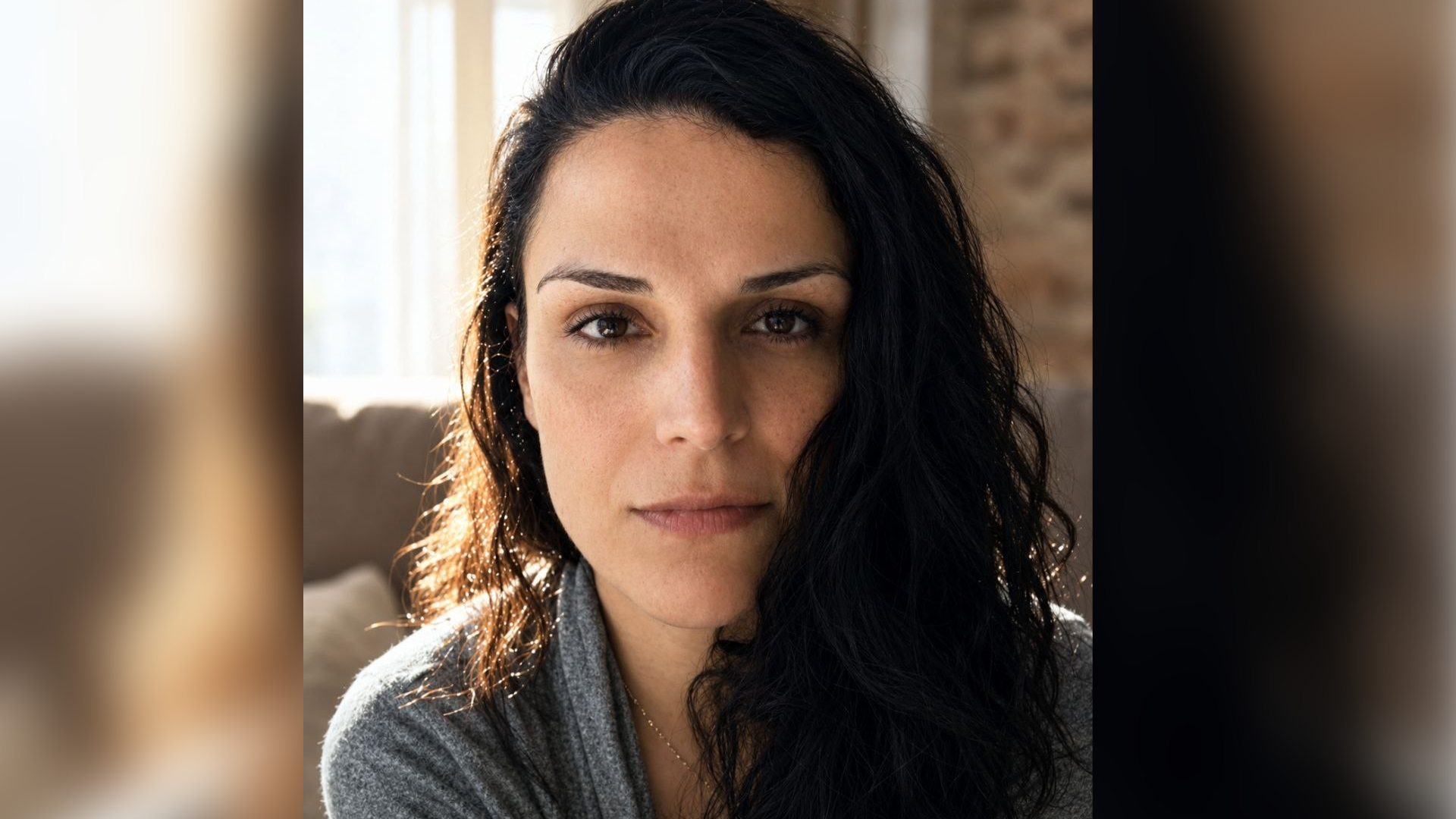
In an interview with Kurdistan24, Hiva Panahi, an award-winning Kurdish poet, author, and political sociologist born in Sanandaj, Iran, reflects on the intersection of poetry, philosophy, and politics, the challenges she says she has faced in academia, and the role of literature in preserving Kurdish language and identity. A recipient of an award from the Mitterrand Foundation and a Ph.D. holder in political sociology from Greece’s Panteion University, Panahi has gained international recognition for her contributions to Kurdish literature and classical studies, with her poetry translated into several languages, including Greek, English, and Bengali.
Kurdistan24: Your academic work and your poetry might appear to be two distinct worlds. How do these two facets of your intellectual and creative life interact?
Hiva Panahi: I am one of those academics who, in my capacity as an internationally renowned poet, have managed to approach that elusive material known as "myth" and transform it into the subject matter of political sociology. This demonstrates that poetry as a creative act serves as the matrix for all the humanities. Furthermore, for me, both poetry and the social sciences are linked through a spirit of contribution and a love for the values that define us as beings in this world.
Kurdistan24: Could you tell us about your most significant academic works? What inspired you to explore these specific topics, and what contribution do you hope they will make to your field?
Hiva Panahi: My most significant academic work is my doctoral thesis, which focuses on the sociopolitical structures related to the myth of Prometheus and Kaveh Ahangar. It is, in essence, a work of global originality; based on a theory I developed entirely on my own, I conduct a comparative study of Persians, Greeks, and Kurds—drawing from ancient texts, and bridge this with modern thought from thinkers rooted in the liberal intellectual tradition. Specifically, I distinguish the despotic nature of the myth and the non-democratic "Promethean" figure as understood by the Persians; I reconstruct the theocratic order that existed among the Greeks prior to their struggle for a more democratic system in ancient Greece; and I examine the role of Aeschylus—a poet I deeply admire, within the context of our own culture, through the lens of events from the fifth century BC. This is because the conflicts of that era were of a fundamentally different nature than those we see today. Culture was alive, a ceaseless impulse toward creation. Aeschylus, the poet, was a creator who inspired love for humanity; he also found himself in intense conflict with the oligarchs of Athens at that time. They and his own work became the source of his persecution, leading to his permanent exile in Southern Italy. In 2002, as a young student of twenty, I found myself in Eleusis, a region near Athens. I had no idea then that I would become lifelong-connected to the birthplace of Aeschylus. I encountered a theater there—it was an incredibly poignant, heart-wrenching experience. I have always been drawn to theater, even as I continued my own academic and linguistic journey. Learning a language from scratch is an immense struggle.
In 2004, I translated the tragedy Prometheus from Ancient Greek (along with other sources) into modern Kurdish. Our great national poet, Sherko Bekas, described this translation as a "diamond," and it was published in a bilingual Kurdish-Greek edition in Sulaimani. In fact, it was not a prose translation; I drew upon the rhythmic, musical six-beat meter “ Shashbandy” from our own tradition to craft a powerful, ancient-style tragedy centered on a battle for the good of humanity a theme that resonates deeply with our psyche and our pursuit of freedom. This work is now used as an original text in our universities, particularly within theater programs. The unforgettable Dr. Amir Hassanpour honored me with an award, remarking that in certain passages, this work even surpasses Goethe a gesture that was both a great honor and deeply encouraging. I had identified an invisible thread that dynamically connected our Promethean cave to the Prometheus who, defying the gods, gave fire to humanity. In European philosophical discourse, Prometheus is typically a symbol of technology and progress or, in the case of Marx, a reference to the revolutionary spirit of the masses.
My own work, however, a comprehensive treatise that consumed ten years of my life (2006–2014), following six years of preparation, offers a profound structural analysis of the myth of the "Promethean man" and the art of politics. Specifically, drawing on my own research findings and original theory, I examine the Persians, the Greeks, and the Kurds, analyzing their power structures, political systems, cultural heritage, and their respective inclinations toward (or away from) democracy. By exploring the cultural roots that constitute "political Prometheanism," this work—the defining project of my life thus far—seeks to enrich the humanities and classical studies concerning these peoples, and beyond. I hope for a normalization of my academic circumstances so that I may finally reap the fruits of the immense labor and suffering I have endured over these years; I seek recognition and an escape from the academic isolation—the "Labyrinth" of punishment imposed upon me by certain individual Greek professors in Greece.
Kurdistan24: As a woman working in academia, what challenges have you faced in your professional career, and how have these experiences influenced your research and writing?
Hiva Panahi: I spent a total of 22 years in Greece the greater part of my life—investing boundless energy a "veritable ocean" of energy, I might say—to master the Greek language to a level reached by only a few distinguished foreigners worldwide. I had a mentor, Neoklis Sarris; he spoke beautiful Greek and specialized in the sociology of Asia Minor and the peoples of the Balkans under Ottoman rule. He discovered me as a student in 2001; he was truly impressed by my command of Greek and my breadth of knowledge. He held me in such high regard and with such affection. In 2005, I was planning to go to Montpellier, France, to pursue a PhD, but he asked me to stay; I ended up working as his teaching assistant for seven years, focusing on Ottoman politics and history. Sadly, he passed away in 2011, and that is when my persecution within the halls of Panteion University began. This left its mark on my health; I lost my job, my home, and my sense of security, and professionally, it stalled my path as an academic.
To tell the truth, I haven’t experienced any sense of normalcy since 2011. I have fought an immense, Herculean battle. Recently thanks to Google alerts—I discovered that a young Greek man plagiarized my doctoral thesis (which was written in Greek), took it to Britain, and had it published as a book by a major publishing house. Such things usually happen due to the sexism or "gender-based" discrimination perpetrated by the dominant gender.
My experience as a woman who has endured great tragedies is reflected in my poems. I have a collection titled *The Story of a Foreign Stone*, and in several poems, I reconstruct my beloved former homeland depicting it as a "stony land devoid of culture." This is because, to this day, the media and official institutions remain silent. Yet, the pursuit of justice is a duty incumbent upon everyone not just for my sake, but for the well-being of their own children and out of respect for their individual humanity. I served the Greek language; at the university, I was diligent and carried out my duties with genuine care. I never quarreled with anyone. Honestly, I still don’t understand why all of this is happening, why this "war" against me, leading to the theft of my intellectual work? Is it because I was, in some way, better than them? I am currently writing a memoir too!
Kurdistan24: Let us turn to your poetry. What are the central themes of your poems, and what personal experiences, emotions, or social realities inspire you to write?
Hiva Panahi: At the beginning of my journey as a poet, I knew there was a path I had to follow; I pursued this "calling" with dedication, without hesitation or doubt. I remember my brother carrying me on his back and reading me stories; later, it was he who bought me my first professional pen—an exceptionally expensive item for the 1990s—and asked me to remain "faithful" to the principles such a pen represents, as well as to the responsibility it entails. I received an excellent upbringing, and my environment was steeped in culture—I even describe the colors of our carpets in one of my poems. When I draw inspiration from intense pain or events, I find that these are often intertwined with elements of tenderness and beauty; I believe this is simply my way. I believe that poets—and I don’t mean those who merely string words together—are distinct entities; in the sense that what they express, even when it concerns them personally, belongs to the very human being who inhabits them. It is as if they are sitting somewhere, experiencing life, nature, and the atmosphere. As for me, I speak and write based on my own experiences. Since the age of 18, I have traveled extensively—across Europe for research, carrying only a backpack, a sandwich, and some water. There were times when I would dress like a princess—a brief respite from the 24-hour cycle of intellectual labor. In recent years, I lived in New York, traveling to various states for book presentations before returning to the city, often staying in the homes of American writers and academics.
Experiences are things we undergo—we cannot avoid them when they arrive—and they have all left their mark on me. Some are brighter, others less so; I have tried—as my grandmother used to say—to remain "brave" during difficult times, and never to lose my humility during moments of joy. In recent years, due to brutal persecution, I have known extreme hunger; I lived through times when I lacked even the bare essentials. That is why, even now, when I go out, I dress with care—yet I might be wearing, for instance, an old, worn-out shoe with a hole in it. It serves as a reminder—a gem, a badge of dignity and struggle, belonging to a woman, a writer, and an academic who, in the heart of a democracy, is enduring tyranny. She remains alone, cut off from everyone—solitary upon this dark Earth—and cries out: "My God, where are you?"
Among my cherished experiences in Kurdistan was a chance encounter with the profound thinker Hakim Mala Salih Khlabatzi when I was only 11 years old; he would correct my Kurdish and offer me guidance. He had arrived in our city in the wake of the events in Halabja and was working as a construction laborer. Every day after school, I would go to him—he was tireless in his efforts to correct me and from him, I learned how to analyze poetic texts and engage in deep, contemplative thought. Among my illuminating experiences in Greece was meeting the unforgettable Nanos Valaoritis a poet and professor emeritus at the University of California, specializing in comparative mythology. Valaoritis provided valuable advice for my thesis and inspired me to write in Greek; he was a remarkable man in every respect. We collaborated for 19 years. He was a man of the world a friend to figures like Thomas Miller, André Breton, and Pablo Picasso—alongside his extraordinary American wife, Marie Wilson. I have friends all across Europe people from the world of culture as well as in New York, a city I hold dear to my heart; I lived there for six years.
Kurdistan24: How do you perceive the role of poetry in reflecting society, expressing women’s experiences, and preserving cultural and national identity?
Hiva Panahi: One of the tangible contributions of poetry is the development and enrichment of language; it serves as a vessel for our philosophy and anthropology. Women inherently create culture by bestowing language along with boundless love upon their children, ensuring they can live in the future. In this sense, our language is a living entity. For us women, in particular—those of us gifted with the art of poetry language is, in a way, a second child. Our role is not merely to protect it, but to enrich it; it is the great love of our souls, and wherever we go, our language goes with us. I believe and through this platform, I propose that our universities should establish their own publishing houses. Each year, they could commission a new work from Kurdish authors, taking responsibility for its publication and for all other efforts necessary for the development and nurturing of our language.
Kurdistan24: Do you believe that poetry and academic discourse have a responsibility to challenge established ideas and encourage critical thinking? How do you approach this responsibility in your own work?
Hiva Panahi: Yes, without a doubt. However, as history shows us, any new achievement will inevitably face adversaries entrenched figures who feel they are losing a part of their "ego" and who take offense, seeing themselves as the sole masters of the intellectual realm. In Greece, this tendency is particularly pronounced a male-dominated culture rooted in Ottoman-era structures. Since this same system was imposed not only in Greece for over 400 years but also in places like Afghanistan and under the Seljuks, anything that deviated from this norm was deemed unacceptable. As a foreign woman with a significant achievement, I became a target even though I had arrived in the country at the invitation of a high-ranking figure: the late Margaret Papandreou, a former First Lady, with whom I collaborated on gender issues at the Women’s Action Center for Peace.
Kurdistan24: Looking toward the future, what are your current or upcoming academic and literary endeavors, and what message would you like to convey to the next generation of female researchers and poets?
Hiva Panahi: I have three books in various stages of publication. Primarily, I am focused on releasing a collection of three of my poetry books compiled into a single volume in Kurdish. I am also working on a monograph in the social sciences, as well as a memoir covering my life during the dark years of my persecution (2011–2025) that bleak period and how I navigated it all; certainly, by the "grace of God."
I want to say that a life of writing and academic innovation is not easy; the path is not paved with a red carpet for anyone. You must walk a very long way and endure pain, but one must never lose faith. Even when there is no light, we create it. A poet has the power to speak of light, to generate light, and to act as light. It is a gift from God from life itself along with all the secrets that the Almighty reveals to us; not for personal gain, but for the greater good. Let us hold fast to a sense of the greater good a feeling of responsibility and cherish our language with a maternal love. Let us continue to balance our pain with strength, grace, and inner depth much as our ancestors did when they cultivated "sophia" (wisdom). I hope the next generation remains humble and creative, avoiding the trap of superficiality; in every field, may they look to themselves and work with sincerity and love. I wish us good fortune. Thank you.